Aparthotel Santa Marina
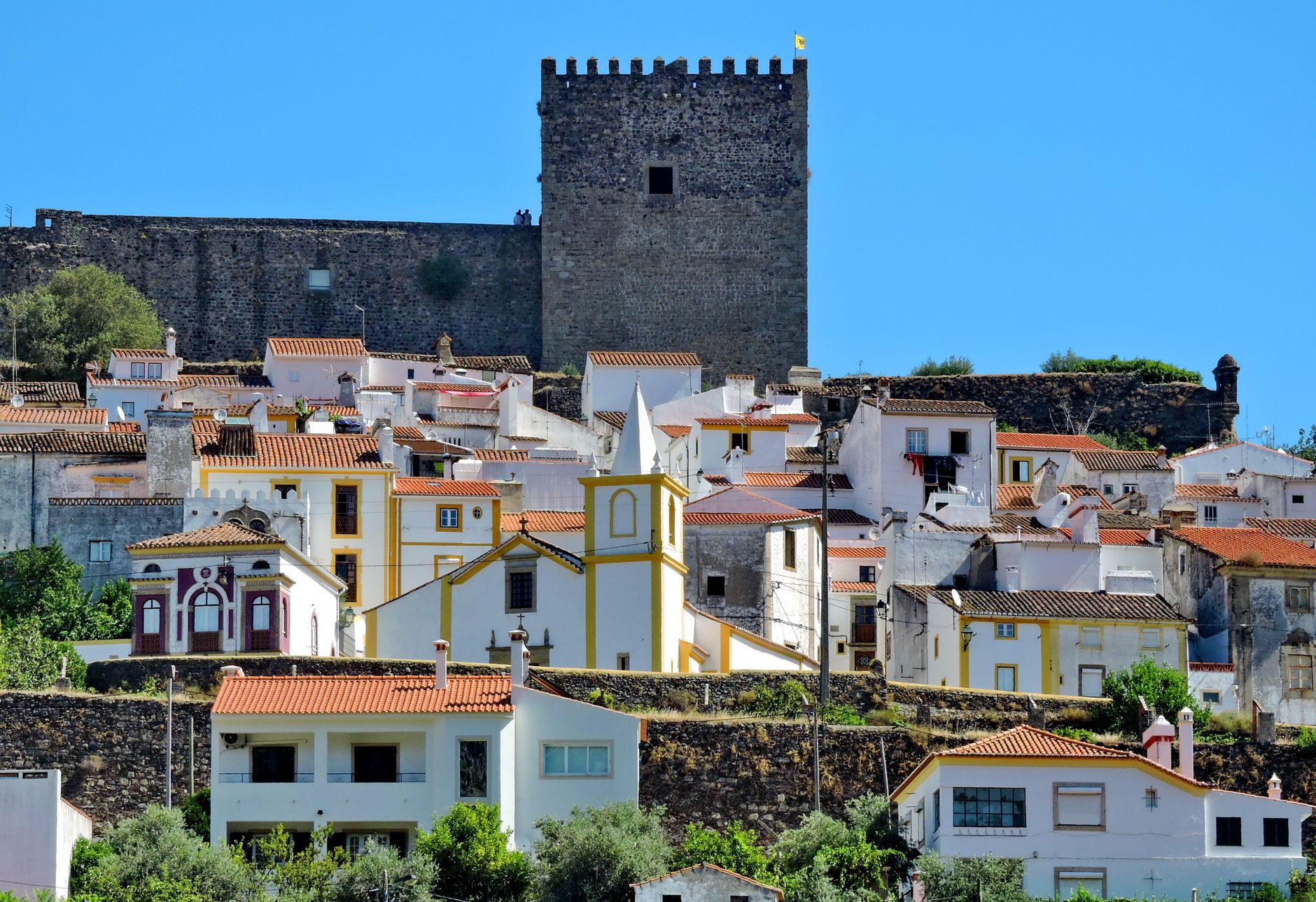
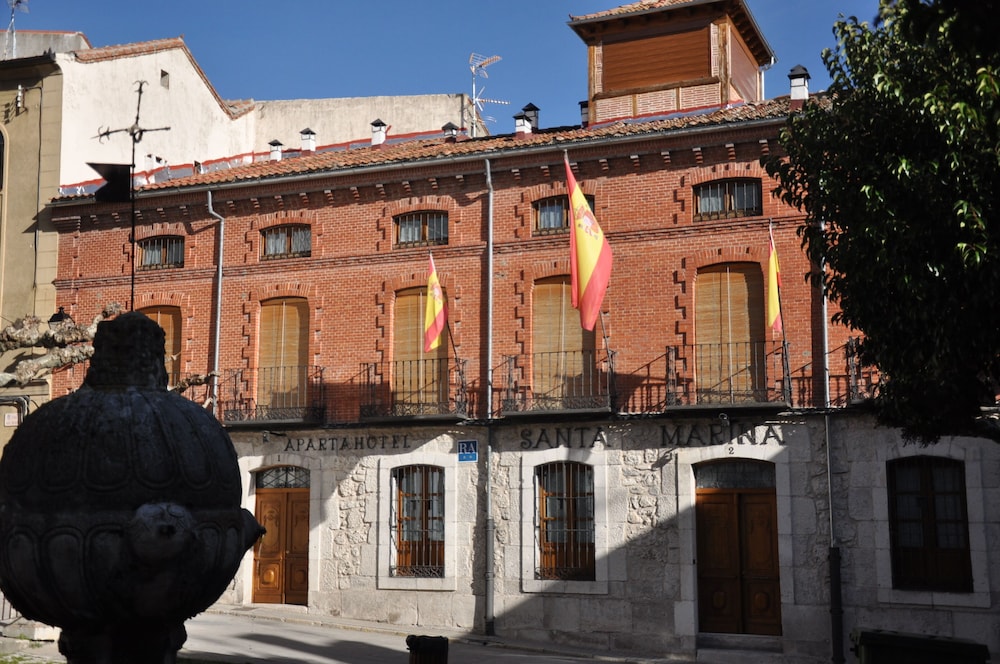
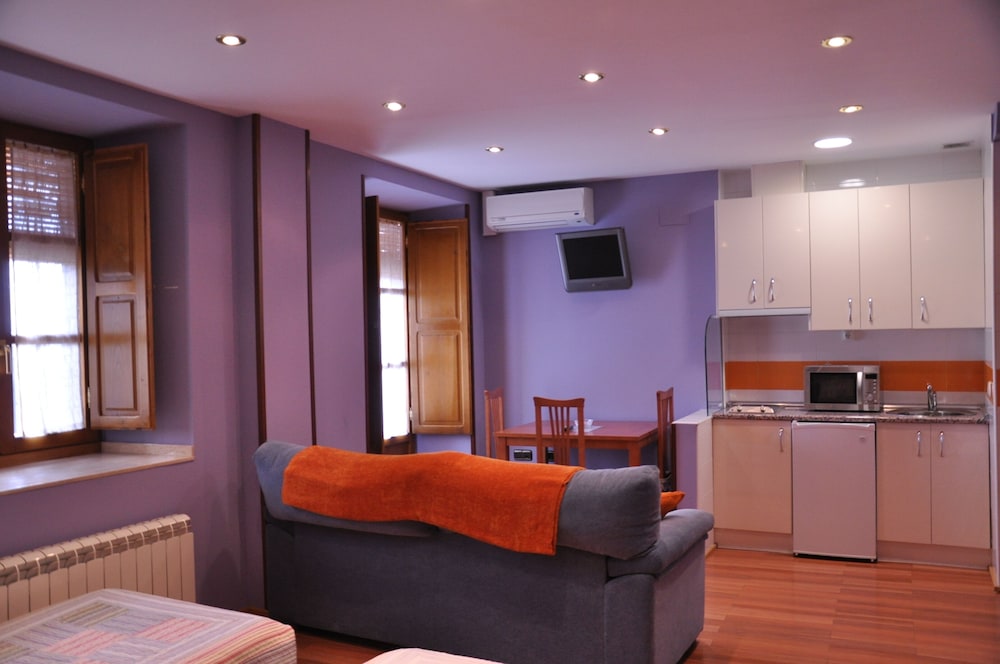
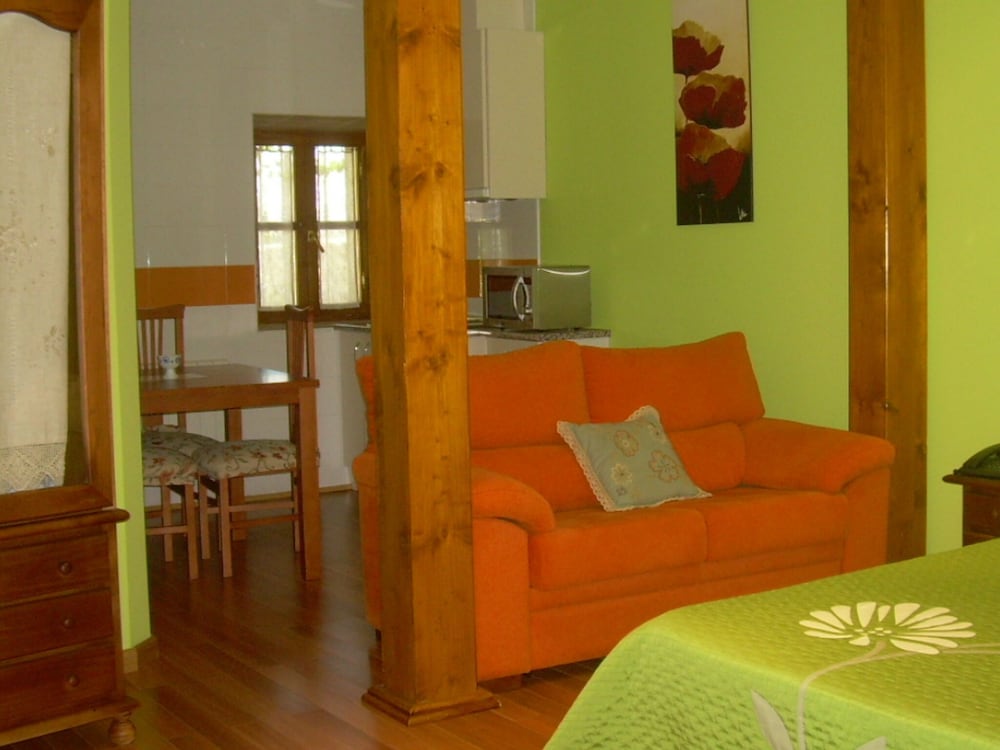
Aparthotel Santa Marina is an economical option in Cuéllar, Segovia, handy for travellers focused on Castillo de Cuéllar and the main sights.
Guests typically choose Cuéllar for its balance of location and price; Aparthotel Santa Marina is a good fit if you want to be near the action in Segovia.
Because pricing is set live by the hotel and its suppliers, the figure shown here is a recent snapshot; check the current rate for your exact dates before booking.
Key facts
What’s included
Around Cuéllar


Best time to visit Segovia, month by month
September and early October are the best all-round months in Segovia: daytime highs around 24°C, the Hay Festival in mid-September filling the old town, and hotel rates a clear step below the spring peak. January and February are the cheapest and the coldest — the city sits at 1,005 m and overnight lows of -3°C are normal, with snow on the Guadarrama — and doubles that cost €120 in April go for €55–70. The one February exception is the Sunday nearest 5 February, when Santa Águeda in Zamarramala fills every bed within a few kilometres of the city. March and April are unpredictable weather-wise and expensive around Semana Santa, when rooms in the Casco Antiguo commonly double and two-night minimums appear on the Friday and Saturday.
May is busy: Titirimundi, the international puppet festival, takes over the streets for around nine days mid-month, and 30 May is one of the three dates when all the fountains at La Granja de San Ildefonso run. Late June brings the city fiestas of San Juan y San Pedro, roughly 24–29 June, and prices climb accordingly. July and August hit 32–35°C in the afternoon but cool sharply after dark; the first two Saturdays of July are the Noches de las Velas in Pedraza, which sells out beds for 30 km around, 25 July and 25 August are the other two full-fountain days at La Granja, and the last week of August brings the Cuéllar encierros, the oldest running bull-run in Spain. November is the quietest month of the year outside the Christmas period, while the puentes — 1 May, 15 August, 12 October, 1 November and 6–8 December — are short, sharp spikes when Madrid arrives en masse.
Getting around Segovia, the airport and the province
Inside the walls you walk; a car is a liability there. From Madrid, the AVE from Chamartín reaches Segovia-Guiomar in about 27 minutes, with fares roughly €13–25 depending on how far ahead you book, and Guiomar sits 5 km south-east of the centre — urban bus lines 11 and 12 meet the trains and drop you at the aqueduct in around 15 minutes, or a taxi runs about €10–12. Coming from Madrid-Barajas, the simplest chain is Cercanías C-1 from T4 to Chamartín in around 12 minutes, then the AVE. The Avanza coach from Madrid Moncloa takes about 1h15 and arrives at the bus station on Paseo Ezequiel González, a five-minute walk from San Millán and the aqueduct. By car it is roughly 95 km from Barajas, 1h15–1h30 via the M-40 and the AP-6/AP-61 tolls, or free over the Alto del León on the N-603 at 1,511 m.
Within the city, the distances are small: Plaza del Azoguejo to the Alcázar is about 1.3 km along Calle Real, San Lorenzo to Plaza Mayor is 20–25 minutes with a real climb, and San Marcos to the Alcázar is short but steep. The trap is parking — traffic in the Casco Antiguo is restricted, most old-town hotels have no garage of their own, and an underground space costs roughly €14–20 a day. For the province, a car is close to essential: La Granja is 11 km on the CL-601, Riofrío 11 km, Torrecaballeros 11 km on the N-110, Turégano 34 km on the CL-603, Pedraza 37 km, Coca 52 km, Sepúlveda around 58 km and Cuéllar 60 km, and the public buses to most of those run once or twice a day on weekdays only. La Granja is the exception, with a frequent urban-style bus taking about 25 minutes.
How many nights in Segovia, and what to do with them
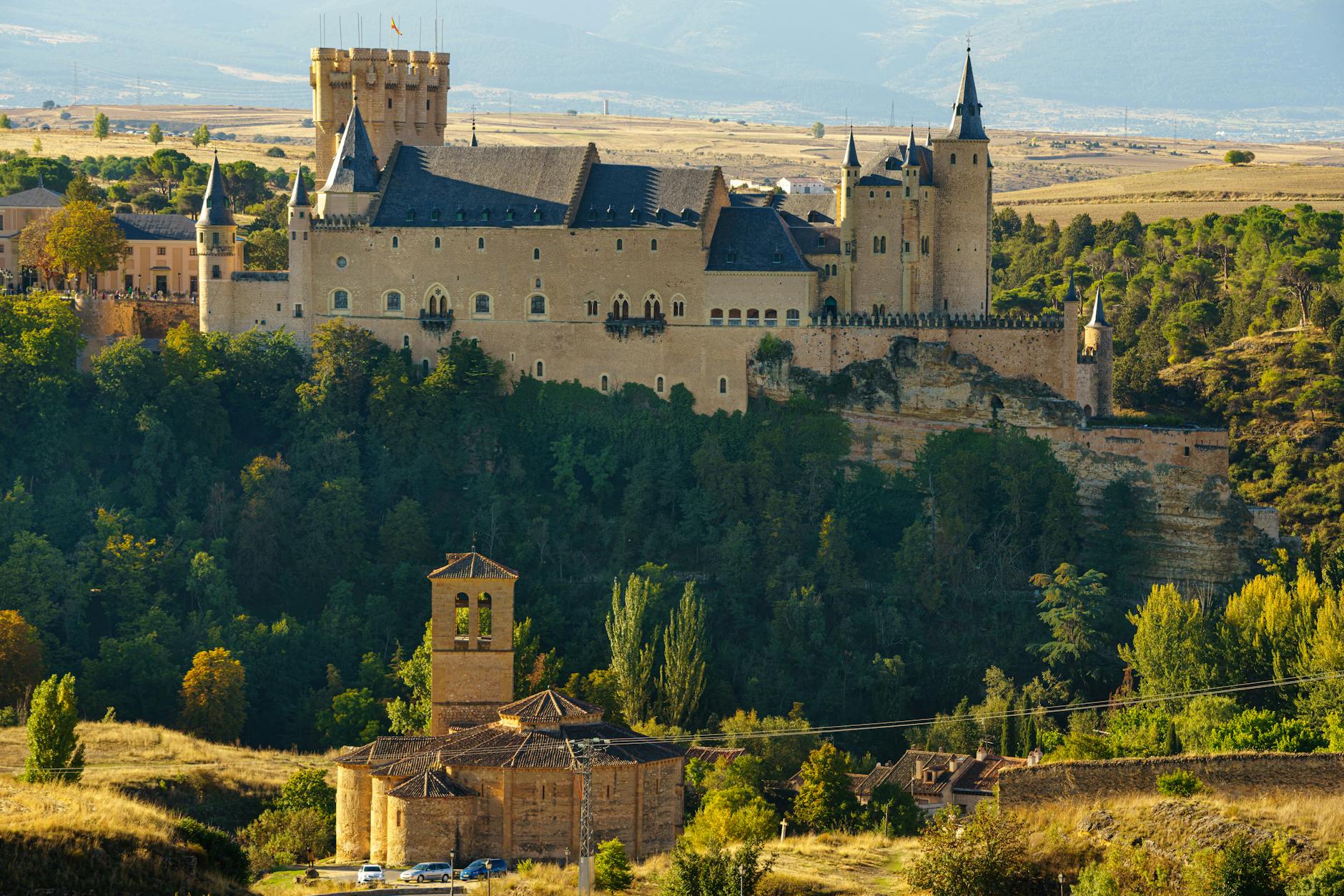
Two nights is the minimum that makes Segovia more than a Madrid day trip, and three or four is right if the castles are the reason you came. Day one: the aqueduct at Plaza del Azoguejo — 813 m of it, 28.5 m high at the tallest point — then Calle Real up to Plaza Mayor and the Cathedral, the last great Gothic cathedral built in Spain, at about €4 to enter. Finish at the Alcázar, roughly €9 for the palace with a few euros more for the 152 steps of the Torre de Juan II, and walk out through the Puerta de Santiago into the Eresma valley for the Vera Cruz church and El Parral. Book cochinillo asado for the evening; a full roast menu at one of the old asadores runs €30–40 a head.
Day two belongs to Real Sitio de San Ildefonso: the Palacio Real de La Granja at around €9, the gardens free, and if you have timed it for 30 May, 25 July or 25 August, the full fountain display. Riofrío and its deer estate is 11 km further south, and Valsaín puts you at the Boca del Asno entrance to the Sierra de Guadarrama National Park. With a third night, pick one direction: north-east for Pedraza’s walled square and Zuloaga’s castle plus Sepúlveda and the Hoces del Duratón vulture cliffs, or north-west for the mudéjar brick of Coca and the Alburquerque castle at Cuéllar. A fourth night lets you add Turégano’s fortified church-castle and Ayllón’s red-stone square, 95 km out on the N-110.