Where to stay in Cuéllar (and the week when you can’t)
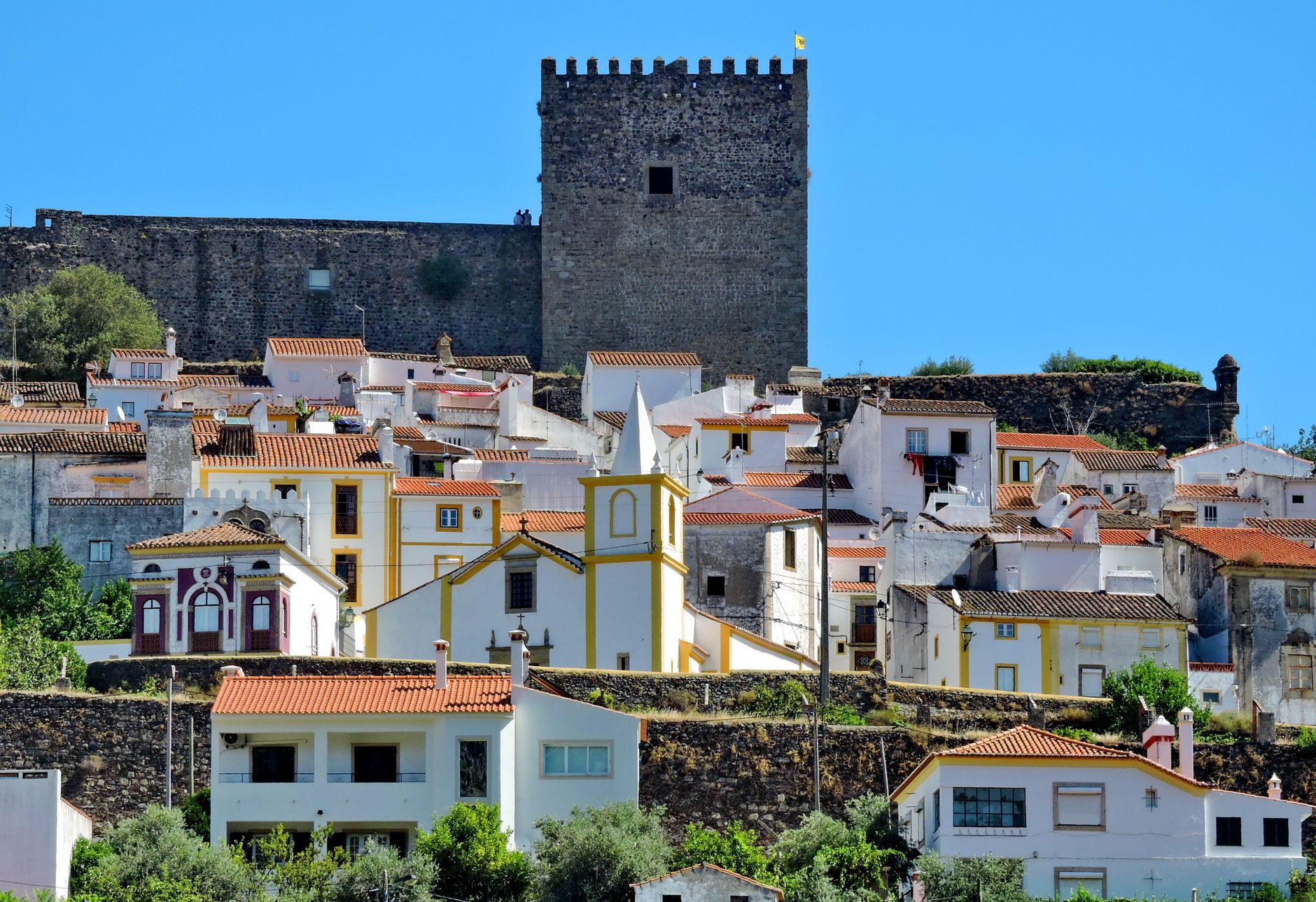 The ducal castle of Cuellar rising above the town rooftops and pinewoods
The province's best-value town beds at €50-95 a night, 60 km from Segovia — except during the late-August encierros, when the whole place sells out.
A town, not a village, and why that changes things
Cuéllar has around 9,500 residents, which makes it the largest place in this batch by a factor of five and gives it something the picture-postcard villages cannot: infrastructure. There are supermarkets, banks, a bus station, several pharmacies, a health centre, hardware shops and bars that stay open on a Monday in February. If you are travelling for a week with children, or working remotely for part of it, or simply tired of villages where dinner is a gamble, this is the practical choice in northern Segovia.
What you trade is compactness and postcard density. Cuéllar sprawls, its outskirts are functional rather than lovely, and the historic core — the castle, the walls, the Mudéjar churches — sits on the hill above the modern town. Anyone whose entire trip is a two-night romantic escape should look at Pedraza or Sepúlveda instead. Anyone using Segovia province as a base for a longer regional trip, including Valladolid 50 km away, should look hard at Cuéllar and be pleasantly surprised by the bill.
What you pay here
Hostal and pensión doubles start around €50-70, and the small hotels sit at €70-95 with breakfast. That is the lowest reliable band anywhere in this group of towns and roughly €25-40 below an equivalent room inside Segovia's walls in high season. Family rooms and triples are unusually easy to find because the local trade is not built on couples, and whole-apartment lets run €90-140 a night. Free street parking is normal outside the historic core, which removes another €14-18 a night from a city budget.
Two things move the price. The late-August fiestas, dealt with below, and the autumn mushroom weekends, when the pinewoods fill with pickers and beds tighten across the whole Tierra de Pinares. Outside those, you can book two weeks ahead in most months and still choose. If the absolute floor matters, the plainer hostales on the approach roads go to €45-55 for a double, but check whether the room faces the road; the through traffic here is real and starts early.
The encierros week: book by spring or stay away
Cuéllar runs what the town documents as the oldest bull-running festival in Spain, with references going back to 1215, and it is nothing like the city-street version people picture. The bulls are driven in from the pinewoods outside town at dawn by riders on horseback before entering the streets — the encierro comes through open country first, which is why people travel from across Spain to see it. It falls at the end of August as part of the town's patronal fiestas; confirm the exact dates with the ayuntamiento.
The accommodation reality is simple. Every bed in Cuéllar and much of the surrounding area is taken well in advance, minimum stays appear, and prices rise sharply. If you want to attend, book in spring. If you do not, and your dates land on that week, sleep 20-30 km away in Sanchonuño, Olombrada or towards Cantalejo and drive in, or move your trip by seven days. Turning up during fiestas without a reservation means driving to Segovia at midnight and paying city high-season rates.
The castle and what is walkable from it
The Castillo de los Duques de Alburquerque dominates the hill, a fifteenth-century palace-fortress with a courtyard, a gallery and a genuinely unusual second life — part of the building has served as a secondary school. Visits are guided and timed, and there have been evening and dramatised tours in summer; hours vary through the year, so check before you climb up. From the castle the walk down through the three rings of medieval wall to the Plaza Mayor takes about fifteen minutes, all of it downhill and all of it worth doing slowly.
On the way you pass the Mudéjar churches that are the town's real distinction: San Martín, San Esteban and San Andrés, brick apses of blind arcading built by Muslim craftsmen for Christian patrons, among the finest of their kind in Castilla y León. San Martín has been used as an exhibition space. Add the surviving town gates and you have a solid three hours on foot without a car. Coming back up to the castle after dinner is a twenty-minute climb; take the taxi if the lamb was heavy.
Pinewoods, resin and mushrooms
Cuéllar sits in the Tierra de Pinares, tens of thousands of hectares of Pinus pinaster and Pinus pinea that have supported resin tapping and pine-nut harvesting for centuries. Resin is worked commercially again, and you will see the spiral cuts and collection pots on trunks along the tracks north of town. It is a flat, sandy, quiet landscape, ideal for cycling and undemanding walking, and completely different from the sierra scenery an hour south — worth a morning if you have been touring stone villages all week.
In October and November the woods produce níscalos and boletus, and the whole comarca goes picking. Collection is regulated, with permits required in many managed forests and rules that differ between municipalities, so ask locally or check with the ayuntamiento before you fill a basket. The upside for a visitor who never picks a mushroom is the menus: from late September the restaurants put wild fungi on everything, and a mushroom-heavy lunch here costs €25-35 against considerably more in the city.
Eating, and the price of a plate
This is a town where locals eat out, so the value is better than the tourist villages. A weekday menú del día runs €13-17 with wine and bread, and it will include a decent stew. Lamb roasted in a wood oven is the special-occasion dish here as it is everywhere in this province, running €40-50 a head with wine; pine nuts turn up in desserts and sauces, and the local bakeries do good empiñonados. Reserve for Sunday lunch, which is a serious institution and fills by 2.30pm.
Evening service is more reliable than in the villages: several bars serve tapas and raciones until late, and you will not go hungry arriving at nine on a Tuesday. What Cuéllar does not have is a fine-dining scene, so if you were hoping for tasting menus you should be in Segovia city instead. Plan the food side of a Cuéllar stay around long cheap lunches and casual dinners, and put the money you save towards a proper roast lunch in Pedraza or Sepúlveda one day.
Getting there, and where it sits on a route
From Segovia it is roughly 60 km north-west on the CL-601, about 50 minutes across the plain. Valladolid is only 50 km further north, which makes Cuéllar an unusually sensible overnight between the two cities, and Olmedo, Coca and Arévalo are all inside 40 km for a Mudéjar architecture loop. Regional coaches link Cuéllar with both Segovia and Valladolid, run by the operators serving that corridor; frequencies are moderate on weekdays and thinner at weekends, so verify current times with the operator directly.
Best months: May, June and late September to early November, with mushroom season adding a reason to come in October. July and August afternoons routinely hit 34-36 °C on this plain with little shade in town, though the pinewoods stay cooler. Winter is cold and flat-grey but the town keeps functioning, prices sit at the €50-65 floor and the castle looks superb against frost. Avoid the encierros week unless you are there for it, and avoid assuming a Sunday evening arrival will find a kitchen open.
Before you book
The questions people ask about Cuéllar, answered with this month’s numbers.
They fall at the end of August during the town's patronal fiestas, with the bulls driven in from the surrounding pinewoods by mounted riders before reaching the streets. Dates shift slightly year to year, so confirm with the ayuntamiento, and book accommodation in spring if you plan to attend.
Only if price is your priority. It is 60 km and about 50 minutes each way on the CL-601, so a city-focused trip wastes close to two hours a day. It works better as a base for northern Segovia, Valladolid, Coca and Olmedo.
Roughly €25-40 a night. Hostal doubles start around €50-70 and small hotels run €70-95, against €85-120 for a mid-range city double in high season. Free street parking outside the historic core saves another €14-18 a night against a city garage.
In many managed forests you need a permit, and rules differ between municipalities and estates. Ask at the ayuntamiento or a local shop before collecting anything. If you would rather just eat them, restaurant menus from late September through November are full of níscalos and boletus.