Casco Antiguo
The walled medieval core where Roman engineering meets late-Gothic ambition. Cobbles, crowds, and the Alcázar.
 Segovia's ancient aqueduct and medieval streets at sunset
Why people stay in Casco Antiguo
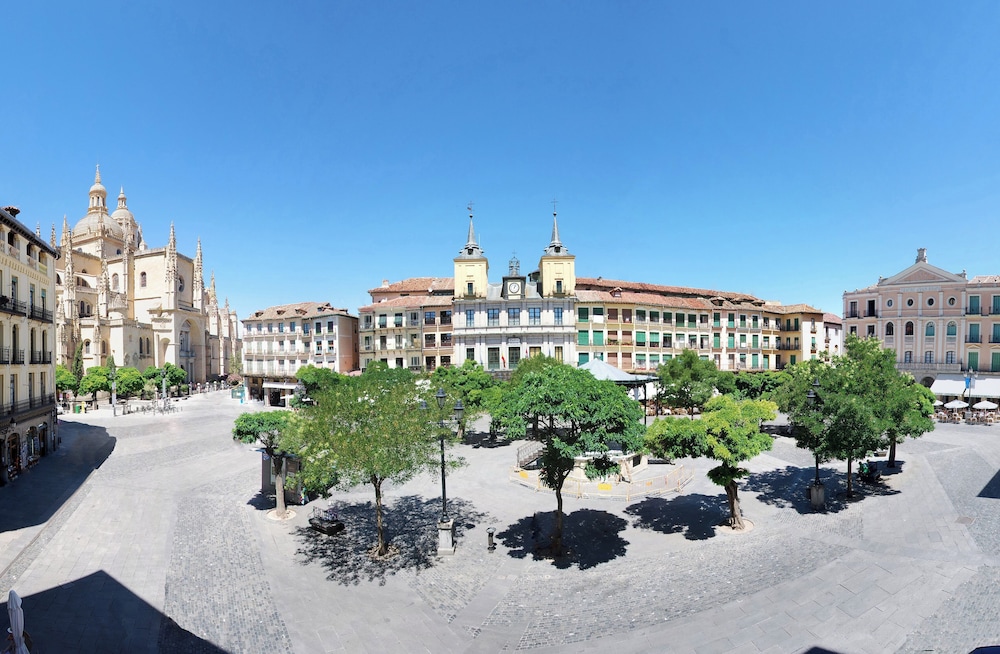
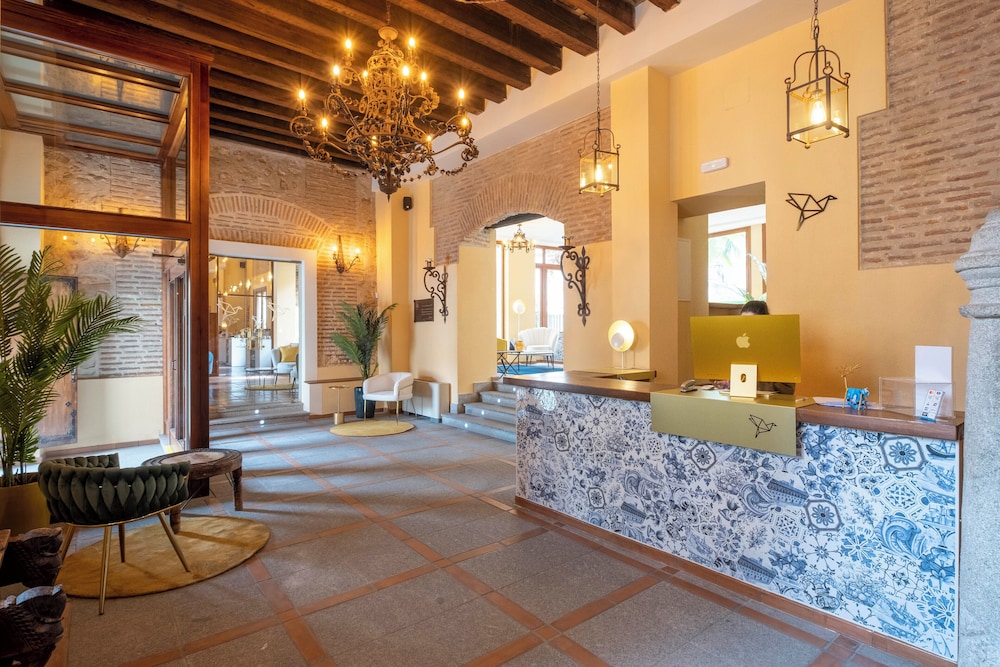
Casco Antiguo is the reason you came to Segovia, a granite-and-stone core that runs from the Roman aqueduct to the castle-fortress of the Alcázar. Between those two monuments you get fifteen churches, three plazas, and enough cochinillo restaurants to keep every tour bus in Castile fed until 2030. The streets are steep, the cobbles are murder on wheeled luggage, and in high summer the Plaza Mayor feels like a theme park. But the light at 8pm in September, when the tour groups have gone and the cathedral turns gold, makes every complaint irrelevant. Most hotels here are converted noble houses with beam ceilings and €140-a-night price tags; a few newer places on Calle de San Francisco undercut that by thirty percent.
The aqueduct end of town—around Plaza del Azoguejo—is pure spectacle and pure chaos. You will stand under the arches, you will take the photo, and you will push through a scrum of selfie-sticks to do it. The restaurants here are tourist traps with multilingual menus and €18 menú del día deals that taste like they were reheated in 2019. Walk five minutes uphill to Calle de Cervantes or Calle de la Judería Vieja and the quality doubles, the prices drop, and you can actually hear your companion speak. The cathedral quarter, around Plaza Mayor, is more breathable: outdoor tables under the arcades, a morning market on Thursdays, and enough gelato stands to suggest the Italians have quietly annexed this corner of Spain.
Nights in the old town are gentler than you expect. A few bars around Calle de los Leones stay open past midnight, but this is not Salamanca—most places shutter by 11pm and the streets empty out. If you want late-night noise, go to Nueva Segovia. What you get here instead is stone silence, gas lamps reflected on worn cobbles, and the cathedral floodlit like a stage set. It is romantic in the most unironic sense, which is exactly what the boutique hotels are counting on when they charge €180 for a junior suite with a view of the apse.
You do not need to stay inside the walls to experience the old town—most of it is a fifteen-minute walk end to end—but if you are here for atmosphere over convenience, this is the only area that delivers. Just know that cars cannot reach most hotels; you will be wheeling your bag over sixteenth-century paving stones and wondering if those €95 rooms in San Millán were really such a bad deal.
Book on the quiet streets west of the cathedral—Calle de Daoíz, Calle del Marqués del Arco—where you get old-town charm without the aqueduct-area circus. Prices start around €110 in shoulder season, €160 in summer. Avoid anything on or just off Plaza del Azoguejo unless you enjoy the sound of tour-group commentary at 9am. The best-value places are the small family-run hostales on Calle de San Francisco and Calle Ochoa Ondátegui, where you trade antique beams for modern plumbing and save €50 a night. If you are driving, confirm your hotel has a parking arrangement—most do not, and the nearest public lot is a ten-minute walk downhill.
Things to do in Casco Antiguo

Plaza del Azoguejo, before 8am, is the only time you will have the arches to yourself. The granite turns pink in the early sun and you can actually see the stonework instead of the backs of heads. The structure is 28 meters tall, held together by gravity and Roman confidence, and it still looks impossible. Go early or go home.

The tower entrance is inside the cathedral, accessed from the cloister. €7 gets you 190 steps and a panorama that takes in the Alcázar, the Sierra de Guadarrama, and every terracotta roof in town. The guide stops groups at the belfry level, but if you are not afraid of ladders you can ask to go higher. Open 10:30am to 6:30pm, closed Sunday mornings.

Plaza del Azoguejo 5, in the shadow of the aqueduct. Yes, it is a tourist institution; yes, the waiters perform the plate-breaking trick for every table; yes, it is still the correct answer. The suckling pig is lacquered, tender, and €28 for a half portion that feeds two. Book ahead or arrive at 1pm sharp. Closed Mondays.

The old Jewish quarter runs between Calle de la Judería Vieja and the city wall, a tangle of alleys that still feel medieval. The Corpus Christi church was the main synagogue until 1410; the interior is closed except for mass, but the mudéjar brick courtyard is visible from the street. Wander without a map—this is the one part of town where getting lost improves the experience.

The quietest plaza in the old town, just south of the cathedral. Bar La Concepción has outdoor tables, house vermouth on tap for €3, and a crowd that is 80% local. Order the tabla de quesos—€9 for six Castilian cheeses—and watch the light fade on the Romanesque apse across the square. Opens at 11am, best from 7pm onward.

The north section of the city wall is accessible and empty. Enter at Puerta de San Andrés, near the bus station, and follow the rampart west. You get views over the valley, zero crowds, and a perspective on the Alcázar that no postcard has ever captured. The walk is 1.2 km and ends at the castle moat. Free, always open, uneven footing.
What to see
Hotels near Casco Antiguo
No hotels are listed in Casco Antiguo yet. The nearest ones are on the region page.

Getting around Casco Antiguo
Madrid-Chamartín to Segovia-Guiomar is 27 minutes on the AVE high-speed train; trains run every 90 minutes and cost €13-28 depending on when you book. From Guiomar station, bus line 11 reaches Plaza Mayor in 20 minutes for €2. If you arrive at the old Segovia station (conventional trains from Madrid-Príncipe Pío), you are already 10 minutes' walk from the aqueduct. Inside the old town, you walk—buses do not enter the walled area and taxis can only drop you at the gates. The aqueduct is downhill from everything; remember that when planning your return trip with luggage.
Questions about Casco Antiguo
No. The streets inside the walls are pedestrian-only or restricted to residents. The closest you can get by car is the parking lot at Padre Claret, a 10-minute walk downhill from the aqueduct, or the underground lot at Calle de San Francisco. Both charge around €18 for 24 hours. If your hotel claims parking, confirm whether that means a spot at the hotel or a discount at a public lot three blocks away.
Walkable, yes. Comfortable, no. The cobbles are uneven, the hills are steep, and there are stretches—especially around the Judería—with steps and no alternate route. Strollers are a fight. Wheelchairs will struggle outside the main plazas. If mobility is a concern, base yourself in Nueva Segovia and visit the monuments by taxi.
A lightning visit—aqueduct, cathedral, Alcázar—can be done in three hours. To actually absorb the place, wander the back streets, and eat a proper lunch, give it a full day. If you are staying overnight, two days lets you see everything at a human pace and catch the evening light, which is when Segovia earns its reputation.
In summer and on weekends, yes, especially for the cochinillo places and anything with a plaza view. Midweek in shoulder season you can walk in at 2pm and find a table, but the best spots—Mesón de Cándido, José María, Restaurante Duque—fill up. Book a day ahead to be safe. The tapas bars around Calle de los Leones do not take reservations; arrive at 8pm or be prepared to stand.


