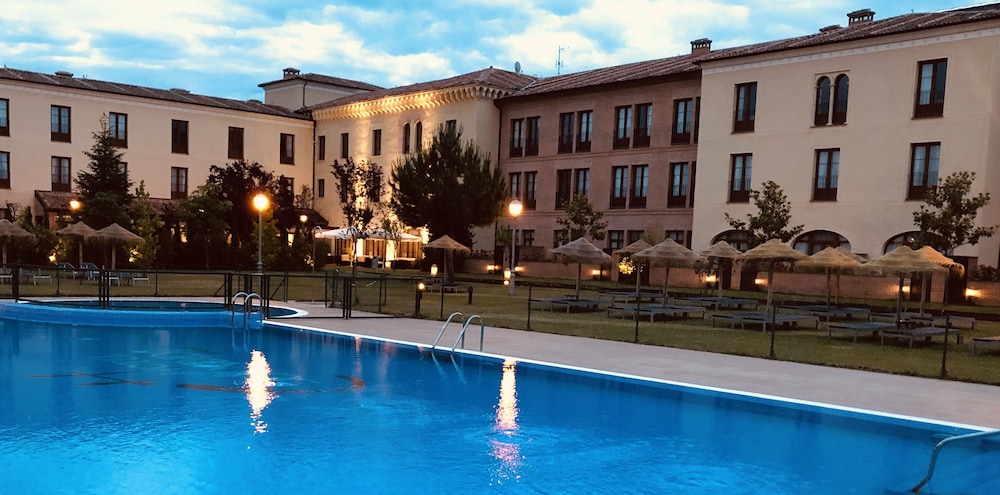
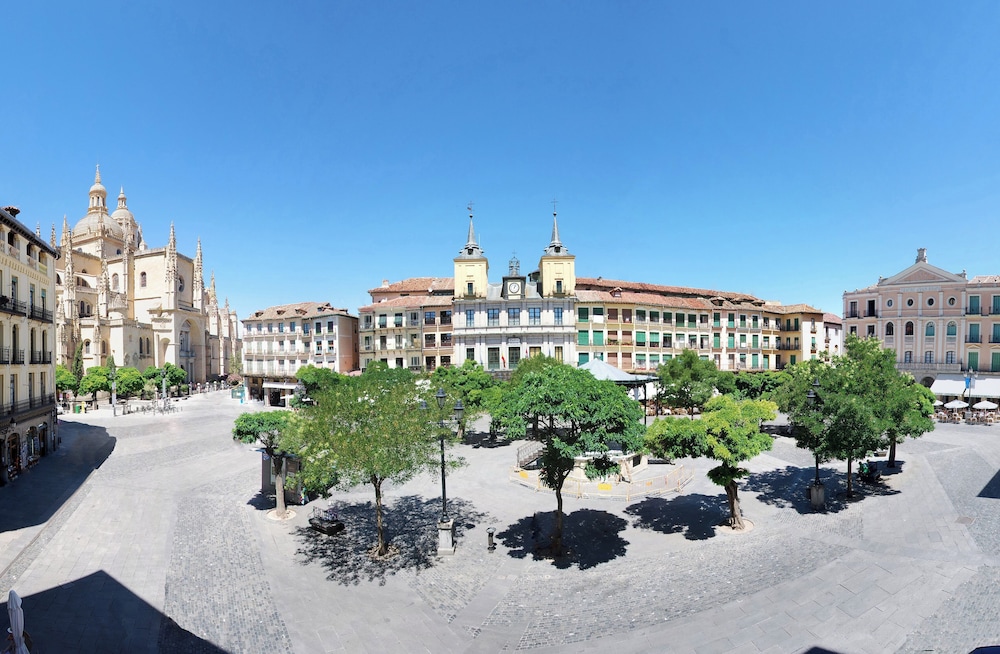
Where to stay in Sepúlveda: the best base for the Hoces del Duratón
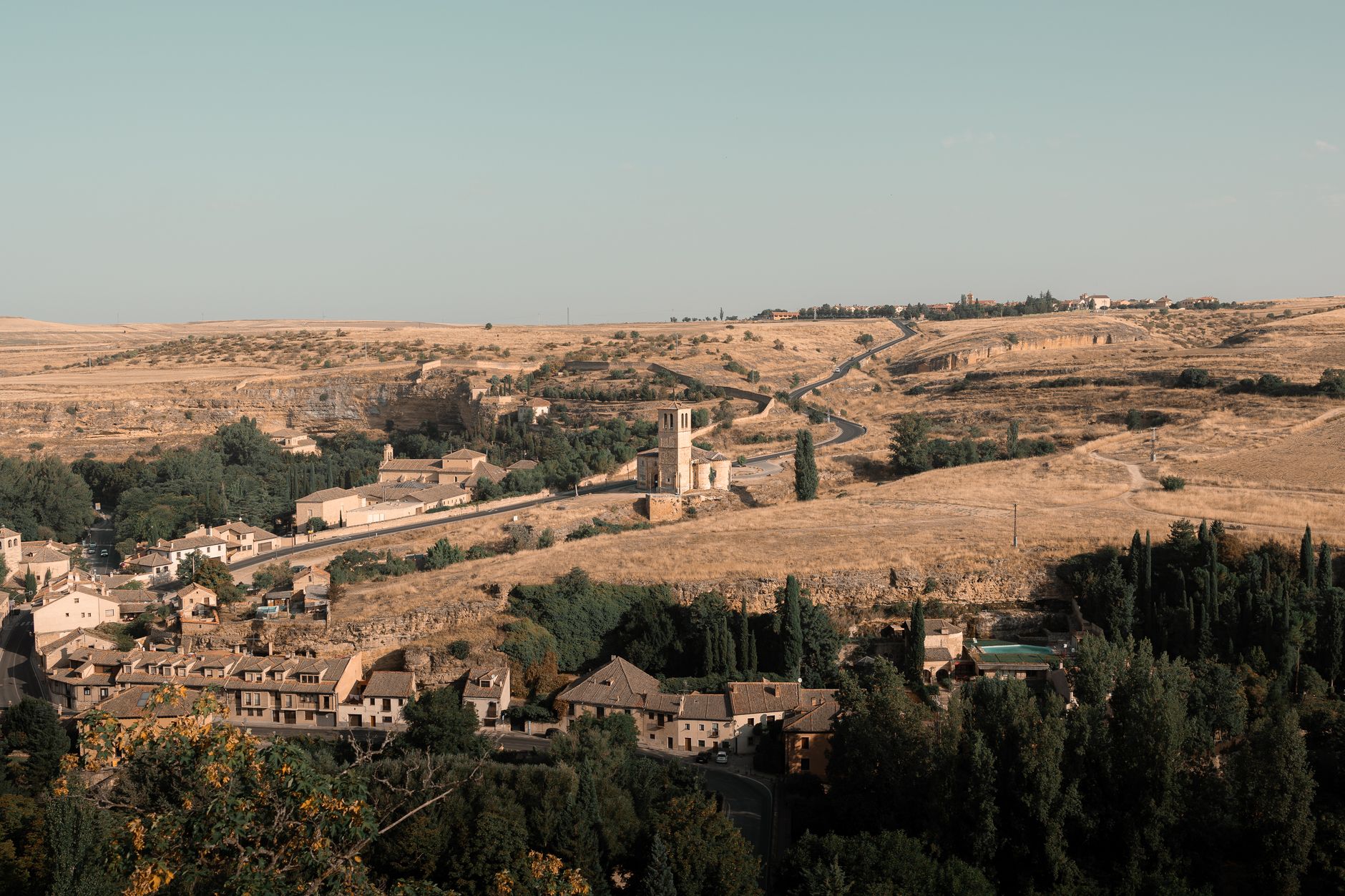 Sepulveda rooftops on their ridge above the Duraton river gorge
Doubles at €70-100 on a ridge 57 km north of Segovia, with the gorge, three Romanesque churches and the province's most serious lamb ovens inside a fifteen-minute walk.
Who should book here instead of Segovia
Sepúlveda is a small town of a couple of thousand people draped along a rocky spur, with the Duratón cutting a gorge below it and the plains of the Segovian north running away in every other direction. It is the correct base for anyone whose trip is built around the Hoces del Río Duratón Natural Park: the park's Casa del Parque, in the deconsecrated church of Santiago, is in the town itself, and the trailheads and the road to the Ermita de San Frutos start from your doorstep rather than after an hour of driving.
It also suits people who want a real working town rather than a preserved film set — there is a proper bakery, a butcher, two or three bars where locals outnumber visitors on a Tuesday, and a Wednesday rhythm that has nothing to do with tourism. It does not suit anyone doing a Segovia city break: 57 km each way is a bad daily commute for the Aqueduct. It also punishes anyone with mobility difficulties, because the town is built on a slope and its best corners are down flights of stone steps.
What a night costs
Doubles in the small hotels and guesthouses in and just below the historic core generally run €70-100 including breakfast, and drop to €60-80 midweek out of season. That is a clear €15-30 below the equivalent room inside Segovia's walls in high season and a long way below Pedraza, 25 km south-east, where the same standard of room costs €110-190 at weekends. For groups, whole casas rurales sleeping six to eight sit at €160-260 a night at weekends, usually with a two-night minimum.
Rates climb for three predictable things: the town's summer fiestas, the long weekends in spring, and October Saturdays when the gorge fills with walkers and the asadores run at capacity. The cheapest strategy is a Sunday-to-Thursday stay in late September, when the light is best on the gorge and half the province is back at work. I would not chase the very cheapest bed here — the €55 rooms tend to sit on the through road with lorry noise from six in the morning, and the €15 upgrade to the ridge is money well spent.
Upper town or Los Barrios: pick before you book
The upper town, around the Plaza de España with the Romanesque church of El Salvador standing above it, is where you want to be if you value walking out to dinner and waking to the sound of nothing. Its drawback is parking: the streets are narrow, the marked spaces fill by lunchtime on Saturdays, and you will often leave the car in a car park below and climb. Los Barrios, the older river-level quarter, is quieter still, prettier at dusk and around ten minutes of steep climbing from the restaurants.
That climb is the decision. If you are fit and travelling light, Los Barrios gives you a stone house by the water at the lower end of the price band and a genuinely beautiful walk home. If you are carrying luggage, travelling with children, or expect to come back after a lamb lunch and most of a bottle of Ribera, take the upper town and pay the extra €10-15. Ask any host directly how many steps sit between the car and the room; the honest ones will tell you, and the number is often thirty or more.
The gorge: what you can actually do from the door
Three things, and they are different from one another. The walking route down to the river and along the base of the cliffs starts within the town and can be done in a morning. The Ermita de San Frutos, a ruined priory on a rock spur inside a meander, is about 25 km away by road via Villaseca, with a car park and a short level walk to the viewpoint — it is the postcard, and it is worth the drive at sunset. And there is canoeing on the reservoir stretch below the cliffs, launched from Villaseca.
The complication is griffon vultures, which nest on these cliffs in one of the largest colonies in Europe. Access to certain footpaths and the navigable stretch is regulated around the nesting calendar, generally closed in the first part of the year and open in the second, and canoe access requires a permit applied for in advance. Rules and dates are set by the Junta de Castilla y León and administered through the Casa del Parque in town, so check with them directly before you book a kayak or plan a specific route. Do not rely on tour operators' summaries.
The walking radius in town
Fifteen minutes end to end, and dense. The Iglesia de El Salvador above the plaza is the oldest dated Romanesque church in the province, consecrated in the late eleventh century, and its arcaded gallery is the reason art historians come here at all. The Virgen de la Peña sanctuary, five minutes further, sits right on the lip of the gorge with a mirador where vultures pass at eye level in the afternoon thermals — the best free view in northern Segovia and better at 7pm than at midday.
Add the Casa del Parque for maps and permits, the surviving town gates and stretches of wall, and the Plaza de España where the whole town drinks its vermouth before Sunday lunch. Groceries, a pharmacy and a cash machine are all inside the same circle, which is more than Pedraza, Coca or Ayllón can offer. That self-sufficiency is a real argument for basing three nights here and day-tripping outwards rather than moving hotels every night.
Lamb, and the two o’clock rule
Sepúlveda is a lamb town in the way Segovia city is a suckling-pig town, and it takes it seriously: cordero lechal roasted in wood-fired clay ovens, with a handful of restaurants around the Plaza de España that have been doing it for generations and are known across Castilla y León. A quarter lamb feeds two and a full lunch with wine runs €45-60 a head; the plainer menú del día in the bars is €14-18 and perfectly good. Reserve for Sunday lunch several days out, and order the lamb when you reserve.
Timing rules the day. Kitchens serve from about 2pm to 4pm and the ovens are loaded hours before, so a 1pm walk-in gets nothing and a 4.30pm arrival gets less. Evening service is thinner than visitors expect, especially Monday to Wednesday out of season, when you may find two bars serving raciones and nothing more. Plan the big meal at lunch, walk the gorge in the late afternoon, and keep dinner light — which happens to be exactly how the town itself eats.
Getting there and when to come
From Segovia it is roughly 57 km and 50 minutes, north on the N-110 and then the local roads through Cantalejo or via Sotosalbos. From Madrid, take the A-1 to the Boceguillas exit and cut west about 15 km, around an hour and a half in total, which makes this an easy stop on a drive north to Burgos. Coaches do link Sepúlveda with Segovia and Madrid, but the frequency is low and weekend service thinner still, so confirm the current timetable with the operator before planning a car-free trip.
The best months are late April to June, when the gorge is green and the vultures are busy, and mid-September to early November for the light, the mushrooms and the €60-80 midweek rooms. July and August bring 34 °C afternoons on exposed rock — walk early or after six — and the accommodation fills at weekends. Winter is cold, clear and cheap, with frost on the plaza and fires in the ovens, but check what is open first: several restaurants and a couple of guesthouses close for part of January and February.
Before you book
The questions people ask about Segovia, answered with this month’s numbers.
Considerably. The Casa del Parque, permits and trailheads are in the town, and the Ermita de San Frutos road is 25 km away rather than 80. Staying in Segovia adds close to two hours of driving a day for a park you want to visit at dawn or dusk.
Yes for the navigable reservoir stretch, and access is regulated around the griffon vulture nesting season, so parts of the year are closed. Apply in advance and confirm the current dates and conditions with the Casa del Parque in Sepúlveda or the Junta de Castilla y León before booking anything.
Steep enough to matter. The upper town around the Plaza de España and the river-level Los Barrios quarter are separated by roughly ten minutes of climbing and several flights of stone steps. Ask your host how many steps lie between parking and the room before booking, especially with heavy luggage.
With difficulty. Coaches connect Sepúlveda with Segovia and Madrid but at low frequency, with reduced weekend service, and nothing serves the gorge trailheads or San Frutos. Verify timetables with the operator, and budget for taxis if you want to reach the Ermita de San Frutos.