A winter weekend in Segovia: a two-day itinerary for January and February
 Frost on the granite arcades of Segovia Plaza Mayor on a clear winter morning
Two deep-winter days built around short daylight, long lunches and empty monuments, with daytime highs of 7 to 9 degrees, hotel rates about a third below summer, and one village festival worth timing the trip around.
What January and February actually feel like here
Segovia sits at 1,005 metres on an exposed plateau with the sierra funnelling cold air down onto it, so winter is genuinely cold rather than mild-Spanish: daytime highs of around 7 to 9 degrees, overnight lows often below zero, hard frost on the Plaza Mayor arcades at 09:00 and a wind off the mountains that finds the gap between scarf and collar. Snow falls a few times most winters in the city and much more often above 1,200 metres. Daylight is short; the floodlights come on around 18:00 and the aqueduct looks better for it.
The trade is a city you can actually see. Coach traffic collapses after the Epiphany holiday on 6 January, the cathedral and the Alcazar are walkable rather than shufflable, and restaurants that need booking a week ahead in October will seat you at 14:00 on a Saturday. Room rates inside the walls fall to roughly €65 to €110 for a double midweek, against €110 to €170 in high season, and the four-star palace conversions discount hardest. Pack a proper coat, gloves and shoes with grip for frosty granite setts and you have the best-value weekend of the year.
Saturday 09:30: the aqueduct and the cathedral before the light goes
Start under the aqueduct while the frost is still on the north faces of the piers. Winter light is low all day at this latitude and altitude, which flatters the arcade from the eastern side of the Plaza del Azoguejo between 10:00 and 11:30. Climb the stairs to the Postigo, then walk the Calle Real spine up to the Plaza Mayor, stopping in the Plaza de San Martin. Move at a decent pace; standing still in a granite square at 3 degrees is how a good weekend turns into a cold you take home with you.
Be inside the cathedral by 11:00. It costs around €4, and in winter you can stand alone in the ambulatory in a way that is simply not possible in August. The building is unheated and colder than the street, so keep the coat on and give it 40 minutes rather than 90. Come out into the Plaza Mayor and take the first coffee of the day under the north arcades, where the terraces run gas heaters and blankets from November through March. The cathedral tower climb is a separate booked slot and is often reduced in winter, so check on the day.
Saturday 13:30: the long lunch is the point
Winter is roast season and there is no reason to fight it. Book a table for 14:00 at one of the old houses near the aqueduct or off Calle Cronista Lecea and order cochinillo asado, whole suckling pig from a wood-fired oven, at €28 to €35 for a quarter with the crackling carved at the table. Start with sopa castellana, the garlic and paprika bread soup with a poached egg, which is a winter dish that makes no sense in July. Two and a half hours at table with a bottle of Ribera is the correct use of a January afternoon.
The alternative, and my pick if you have a car, is to drive 10 km northeast on the N-110 to Torrecaballeros, where the asadores occupy old barns with open fires and the lamb comes from the same tradition. Expect €35 to €45 a head with wine and a fireplace worth the drive; book ahead even in winter, because Madrid weekenders fill these rooms on Saturdays. Either way, do not schedule a monument for 16:00. Schedule a walk instead, because you will need one.
Saturday 16:30: the Alcazar hour and the blue light
The Alcazar closes earlier in winter than in summer, so check its hours before lunch and, if the last entry works, take it at 16:30 when the tour groups have gone. Combined palace and museum entry runs around €10 and the Torre de Juan II is a separate ticket and 152 steps. On a clear winter day the Guadarrama is snow-covered on the horizon from the windows, which is the single best reason to visit in February rather than June. Allow an hour and come out at closing.
Then walk the north rim as the light goes. The Paseo de Santo Domingo de Guzman and the Canaleja viewpoints look over the Eresma valley to the Vera Cruz church and the monastery of El Parral, and the sky at 18:15 in January goes a hard cold blue behind the floodlit Alcazar. Descending to the Pradera de San Marcos in the dark is not advisable in frost; the paths are steep and unlit. Instead loop back to the Plaza Mayor for a vermouth and let dinner be small: tapas on Calle Infanta Isabel, €15 to €20 a head.
Sunday morning: La Granja in the cold, or a village festival
The default Sunday is La Granja de San Ildefonso, 11 km up the CL-601 at 1,190 metres, where winter regularly brings snow onto the clipped hedges and the great fountains stand drained and silent. The displays run in the warmer months only, so do not go for those; go for the palace interiors, the tapestry collection and the near-empty gardens. Add the Real Fabrica de Cristales glass museum and lunch on judiones de La Granja, the local white beans, at €12 to €16. Check the palace winter hours with Patrimonio Nacional before setting off.
The better Sunday, if the dates fall right, is Zamarramala, 3 km northwest of the city, for the Santa Agueda festival, when the women of the village take symbolic charge of the town for the day in embroidered dress. It is held around 5 February and is recognised as a festival of national tourist interest; confirm the exact date and programme with the local council, because it is tied to a weekend rather than a fixed calendar day. Go early, park on the approach road and walk in, and stay for the procession rather than just the photographs.
The snow option, and when to leave it alone
If you want actual snow underfoot, two choices. The CL-601 up to the Puerto de Navacerrada at 1,858 metres is 23 km from the city and gives you snowline scenery within 40 minutes, but winter tyres or chains may be required and the road can be closed or filtered in heavy weather. For a full ski day, the La Pinilla area in the north of the province near Riaza is roughly 70 km and an hour and a quarter on the N-110, small by Alpine standards and dependent on the season, so check the lift and snow report before committing a day to it.
Leave both alone if there is a warning out. Segovian winter storms bring blowing snow and freezing rain onto exposed roads and the province suspends services quickly; the plateau roads towards Pedraza and Sepulveda in particular ice overnight and are not gritted early. On those weekends, stay in the city, where everything you need is within a 2 km walk, and use the museums: the Museo de Segovia in the Casa del Sol, the contemporary collection at the Esteban Vicente, and the Casa-Museo of Antonio Machado, who taught here in the 1920s.
Where to sleep, and what winter rooms need
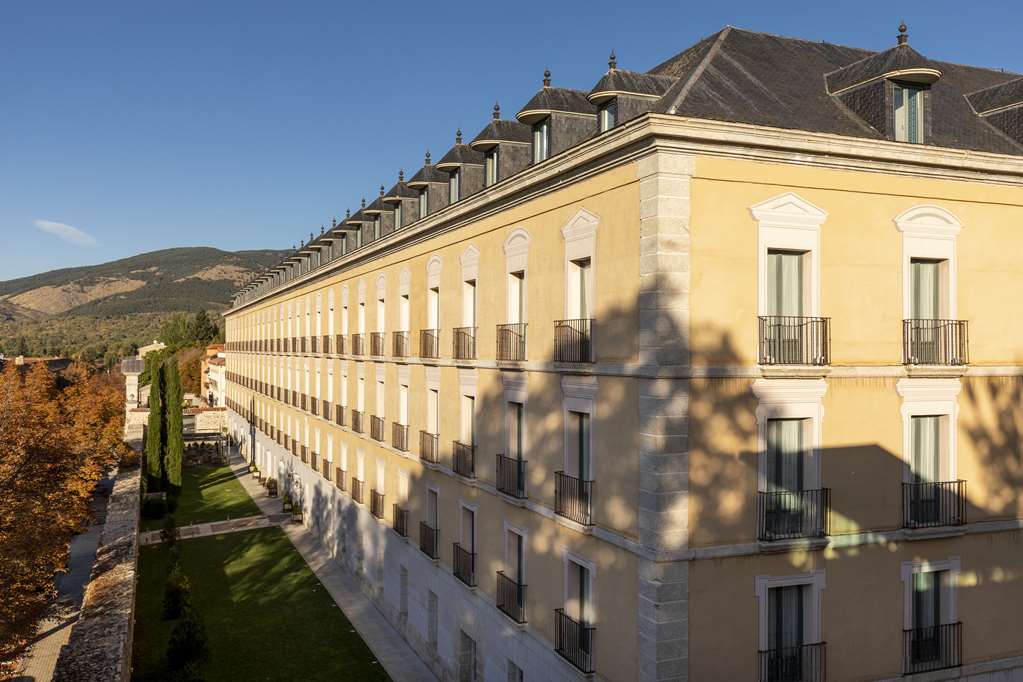
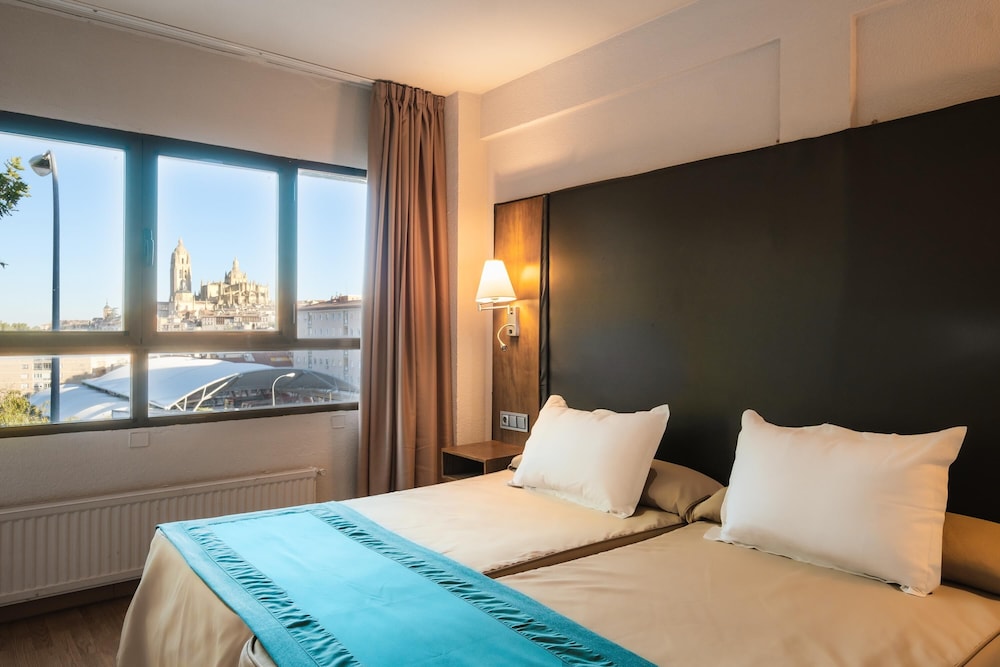
Book inside the walls. The old-town guesthouses and small hotels in the streets off Calle Real run roughly €65 to €110 midweek in January and February, and the palace conversions with vaulted bars and heavy stone walls sit around €110 to €160 after discounting. What matters in winter is heating you can control and double glazing on a street where stone radiates cold all night, so ask directly rather than assuming, and ask for a room off the internal patio if the building has one. A bath is worth more here in February than a view.
The alternative is the hotel on the ridge north of the river, where the whole city profile lines up across the valley and the winter sunsets are the reason people book. Outside the walls, modern hotels along Paseo Ezequiel Gonzalez and towards Nueva Segovia run €55 to €85 with garages, which matters if you have a car and there is snow forecast, since street parking on a slope in ice is a bad Sunday morning. My pick for a two-night winter weekend is a heated room inside the walls plus a car left in an underground car park.
Before you book
The questions people ask about Segovia, answered with this month’s numbers.
Usually a few times each winter, with settling snow more common in January and February and far more frequent above 1,200 metres in the sierra. Falls in the city are typically light and short-lived, but frost on granite setts is near-daily, so bring shoes with grip rather than smooth soles.
Not for the fountains themselves, which run only on scheduled display days in the warmer months. Go in winter for the palace interiors, the glass factory museum and gardens you may have almost to yourself under frost or snow. Check winter opening hours with Patrimonio Nacional before you drive up.
Roughly a third below high season. Old-town doubles that ask €110 to €170 in spring and autumn commonly sit at €65 to €110 midweek in deep winter, and the four-star conversions discount hardest. The exception is any weekend carrying a local festival, when the small stock inside the walls sells out early.
Not for the city, which is walkable end to end in 30 minutes, and buses reach La Granja through the day. A car earns its keep only if you want the Torrecaballeros asadores, the mountain passes or the northern villages. If there is a snow warning, leave it in a garage and stay inside the walls.