Segovia tourist traps: what's overrated and what to do instead
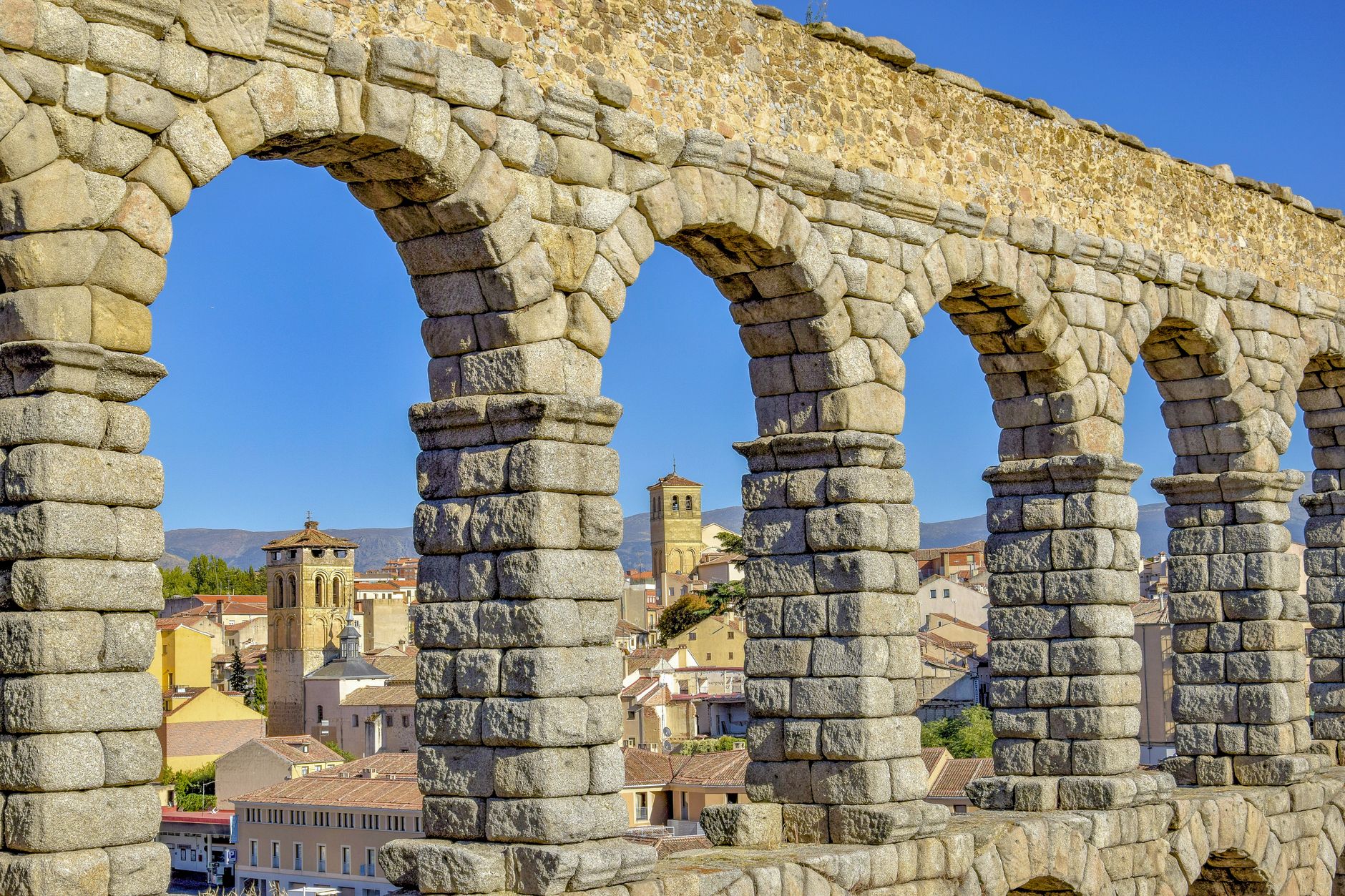 Tourist menu boards outside restaurants on the Plaza del Azoguejo below the aqueduct
Six things eat a disproportionate share of a visitor's money and time here, and swapping them out saves a couple of €30 or more a day without cutting anything worth seeing.
The set menus on the aqueduct square
The restaurants ringing the Plaza del Azoguejo, with laminated photo menus in four languages and a doorman waving you in, exist for coach groups on a 90-minute stop. Expect to pay €30 to €40 for a set menu whose cochinillo has been portioned, held and reheated, and whose house wine is forgettable. The location is the product, not the food. If you want the aqueduct with a drink in your hand, have a caña and some crisps on a terrace there for €3, take your photographs, and eat somewhere else.
The alternative costs less and tastes better: the asadores and neighbourhood restaurants in San Millán and San Lorenzo, and out along the road to Torrecaballeros, where the same suckling pig comes out of the oven for you rather than for the schedule. Reckon on €24 to €32 for a proper portion, or €100 to €140 for a whole animal shared between four to six. Book, and if you want a whole cochinillo say so 24 hours ahead, because it needs the oven time.
The plate-cutting ceremony
The theatrical carving of the suckling pig with the edge of a plate, followed by the plate being smashed on the floor, is a genuine local tradition and a completely reasonable thing to enjoy once. What is overrated is choosing a restaurant because it performs the ritual. Several places do it on a loop for whichever table has booked the show, and the pig that arrives after the applause is not automatically the best pig in Castile. The skin should be glassy and shatter, the meat underneath should be moist, and neither of those is determined by how the plate met the crackling.
If the ceremony matters to you, ask when you book whether they do it and at what hour, rather than paying a premium at a place trading on the reputation alone. If it does not, spend the difference on a bottle of Ribera del Duero at €20 to €28 instead of house wine at €12, which will change your lunch far more than the carving does. And order judiones de La Granja as a starter, the big buttery beans from the palace village, at around €14 to €18 for a shared bowl.
The Alcázar tower, on the wrong day
The Alcázar itself is worth every cent, but the separate ticket for the Tower of Juan II is oversold for what it is: a tight spiral of more than 150 steps to a view you can get, differently and free, from several points around the city. On a July afternoon the stairwell is a queue in a chimney. If you have limited energy or limited time, buy the palace-only ticket, spend the saved time in the Sala de Reyes and the armoury, and walk out to a viewpoint afterwards.
The free substitutes are better than most paid ones. The Pradera de San Marcos in the valley gives you the fortress from below, prow-on, and is the photograph everyone recognises. The plateau at Zamarramala, 30 to 40 minutes on foot across the Eresma, gives you the side profile with the Vera Cruz church in the frame. And the Postigo del Consuelo steps beside the aqueduct put you level with the top arches without a ticket. Save the tower for a cool morning in May or October when there is no queue.
Souvenir food bought at the aqueduct
Ponche segoviano, the marzipan-topped sponge cake, is a real local speciality and the boxed version sold in the souvenir shops nearest the aqueduct is the least good and most expensive way to buy it. The same cake from a proper pastelería on or around Calle Isabel la Católica costs less, tastes of almond rather than sugar, and can be bought by the slice for about €3 so you find out whether you like it before committing to a €15 box. The same logic applies to the vacuum-packed chorizo and the tins of judiones.
For food to take home, the Thursday market and the small food shops in the streets behind the Plaza Mayor are where residents buy. Judiones by weight, local chorizo, sheep's cheese from the province: all cheaper and better than the gift-wrapped version. If you want one edible souvenir, make it a bag of judiones at a few euros; they survive a suitcase, they cook in an hour after soaking, and they taste of the trip in a way a fridge magnet does not.
La Granja on the wrong day
The gardens at La Granja are magnificent regardless, but people travel there specifically for the fountains and arrive to find dry stonework. The great fountain displays run only on a small number of scheduled days across the warmer months, they depend on water levels, and they can be cancelled at short notice for drought or wind. The palace and the gardens are worth the 20-minute bus ride on any day; the fountains are worth planning a specific day around. Check the official Patrimonio Nacional calendar before you fix the date, and do not trust a secondhand listing.
If the fountains are not running when you are here, go anyway on a weekday morning, take the walk up through the upper gardens and the woods behind, and have judiones and lamb in one of the village restaurants for around €25 to €35 a head. The village is 1,200 metres up, which makes it five or six degrees cooler than the city on an August afternoon, and that alone justifies the trip in high summer.
Sangría, guided walks and the tourist train
Sangría at €18 a jug on a tourist terrace is the drink Spaniards do not order. A caña of beer is €1.80 to €2.50, a decent glass of Ribera is €2.50 to €4, and vermut on a Sunday before lunch is the genuinely local move at around €3. The saving over four days pays for a full asador lunch. Order what the table of retired Segovians next to you is drinking and you will spend half as much.
Guided walking tours vary wildly. A good two-hour walk covering the aqueduct's engineering, the Judería and the cathedral is worth €15 to €25 a head; a free tour where the guide's income is entirely tips can be excellent or a rush to the tip pitch. The road-train sightseeing service that operates from the Azoguejo in season is genuinely useful if you have mobility limits and pointless if you do not, since the old town is barely a kilometre end to end. Verify operating seasons before planning around it.
What is genuinely worth the money
The Alcázar palace ticket, the cathedral, and a proper lunch in a real asador are the three things I would not cut. Add the Vera Cruz church across the valley, a small twelfth-century twelve-sided building that most day-trippers skip entirely, and the Casa de la Moneda, the old royal mint by the river, which explains why the city mattered economically for centuries. All four cost modest single-figure sums.
The aqueduct is free and always will be, and the single best hour of a Segovia trip costs nothing: the walled city between 08:30 and 09:30 before the coaches, up Calle Real to the Plaza Mayor, coffee and a tostada with tomato for €3, and the cathedral facade with no one else in the square. Everything expensive in this city has a free version standing nearby; the trick is knowing which is which before you sit down.
Before you book
The questions people ask about Segovia, answered with this month’s numbers.
Yes, but not on the aqueduct square. Book an asador in San Millán, San Lorenzo or out towards Torrecaballeros, expect €24 to €32 for a portion or €100 to €140 for a whole animal for four to six, and order 24 hours ahead if you want the whole pig.
No. Full displays happen on a limited number of scheduled days in the warmer months and can be cancelled for low water or wind. Check the official Patrimonio Nacional calendar before fixing your date. The gardens and palace are worth the 20-minute bus ride regardless of the water.
Only on a quiet morning outside high summer. It is more than 150 steps up a narrow spiral, and the view is available free from the Pradera de San Marcos, the Zamarramala plateau and the steps beside the aqueduct. Buy the palace-only ticket if you are short on time or energy.
From a pastelería in the shopping streets around Calle Isabel la Católica rather than a souvenir shop by the aqueduct. Buy a single slice for about €3 first to check you like the marzipan-and-sponge combination before committing to a boxed cake at around €15.