Coca area guide: sleep there, or day-trip from Segovia?
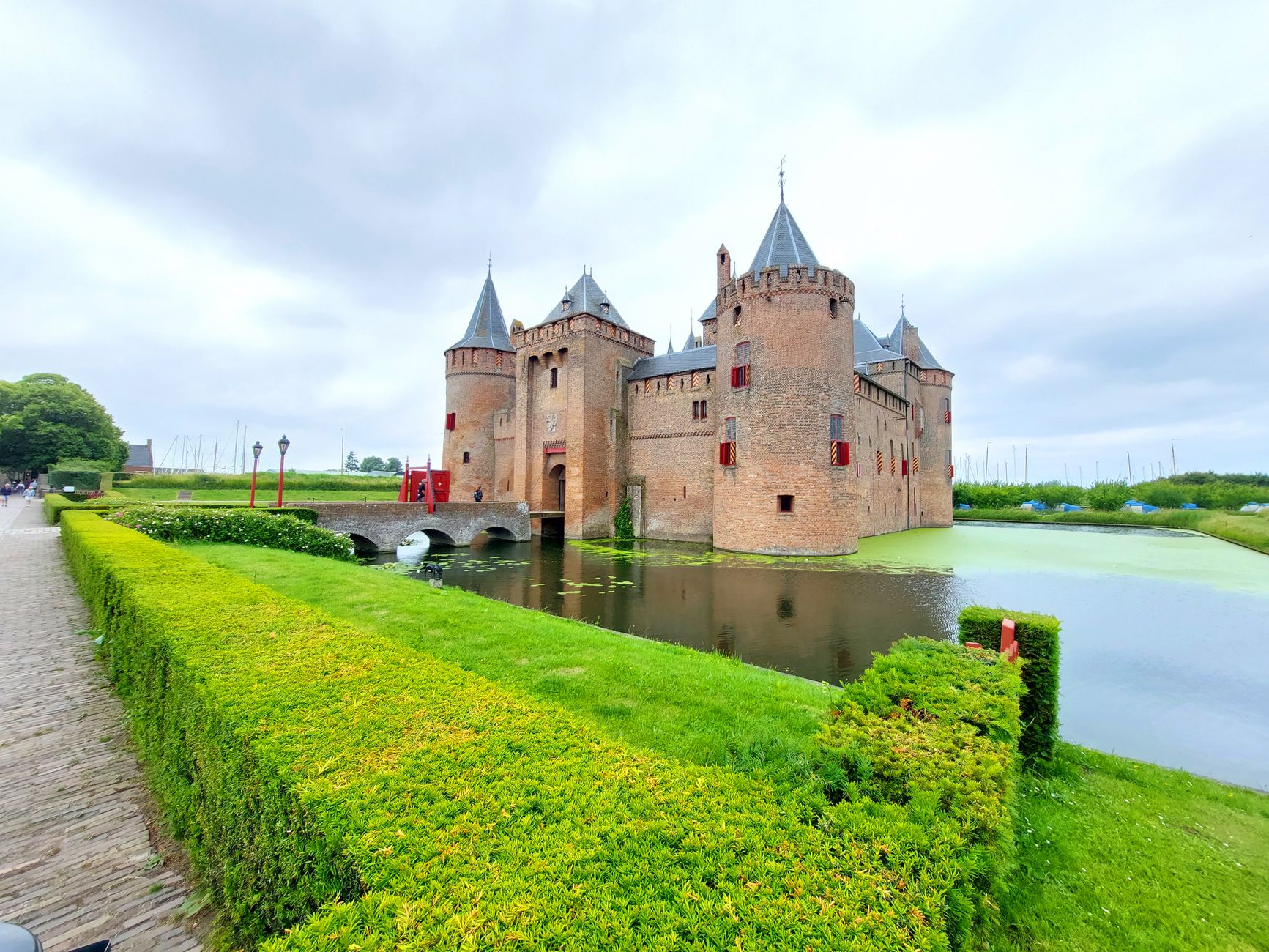 The Mudejar brick castle of Coca seen across its deep dry moat
A village of about 1,800 people with one of Europe's finest brick castles, a handful of beds at €55-80, and a 52 km drive that most visitors should do in a day.
The honest recommendation first
Most people should visit Coca as a day trip and sleep elsewhere. The village has roughly 1,800 residents and a genuinely small pool of rooms — a few casas rurales, a small hostal or two, and self-catering houses — which means availability is thin at weekends and non-existent during local fiestas. The castle, the Torre de San Nicolás, the church and the Roman remains take a comfortable half day. Segovia is 52 km away, Cuéllar 25 km, Arévalo 30 km: all three have more beds, more restaurants and later kitchens.
Stay overnight for three reasons only. You are walking or cycling the Tierra de Pinares and want to start at first light. You want the castle photographed at sunrise or dusk with nobody else in the frame, which is the one thing a day-tripper cannot buy. Or you have booked a whole house for a group at €120-180 a night and the price per head has beaten anything in Segovia. Outside those cases, the drive back is 45 minutes and you will eat better at the other end.
What a bed costs, when there is one
Doubles in the village and its immediate surroundings run about €55-80 with breakfast rarely included, and self-catering houses for six to eight sit at €120-180 a night, usually with a two-night minimum at weekends. That is cheaper than Segovia's Casco Antiguo by €25-45 a night and comparable to Cuéllar, though with far fewer options to compare. Book directly and early: with so few properties, a single wedding or a family celebration in the village can absorb the entire supply on a given Saturday.
There is no premium tier here — no spa hotel, no boutique conversion charging Pedraza prices — and that is part of the appeal if you resent paying for atmosphere. Ask two questions before booking: whether the property has off-street parking, which almost all do and which makes life easy, and whether anywhere serves dinner on your night. In a village this size, a closed kitchen on a Tuesday in November means driving 25 km to Cuéllar for a plate of food.
The castle is the reason, and it deserves the trip
The Castillo de Coca was built in the fifteenth century for the Fonseca family and is the great set piece of Mudéjar military brickwork: no stone facing, just brick worked into turrets, blind arcading and decorative bands, dropped inside a dry moat so deep it makes visitors instinctively step back. It is arguably the finest brick castle in Europe and it looks unreal in low sun. Visits are guided and timed, hours vary by season, and there are days it does not open, so check before you drive.
Give it an hour and a half with the tour, then walk the perimeter of the moat, which most visitors skip and which is where the photographs are. The Torre de San Nicolás, a Mudéjar tower that is all that survives of its church, stands a few minutes away in the village, and the church of Santa María la Mayor holds the Fonseca tombs. Combined with a coffee in the plaza, that is your morning done by half past one, which is exactly when the roasting ovens are ready.
Roman Cauca, under the pines
Before the brick castle there was Cauca, a Vaccaean and then Roman town, sacked by Lucullus in 151 BC in one of the uglier episodes of the Roman conquest of Iberia, and, by long tradition, the birthplace of the emperor Theodosius I in the mid-fourth century AD. Sections of earthwork defences, a stretch of Roman wall and excavated remains survive around the edges of the village, and the local archaeological displays put the finds in context. It is modest compared with the castle, and it is what makes the site more than a single monument.
Ask at the tourist information point about which areas are open and whether the archaeological visit is combined with the castle ticket, as arrangements change. Allow an extra hour if you are interested. If you are travelling with teenagers who are already castled out, this is the part to skip — walk them instead down to the confluence of the Eresma and the Voltoya below the village, where the sandy riverbanks and pines make a decent picnic spot in June.
What is within walking distance
Everything, and that is the point. From any bed in the village you can reach the castle, the Mudéjar tower, the parish church, the surviving gate and two or three bars within ten to twelve minutes on flat ground. There is a small supermarket, a bakery and a pharmacy; do not count on a cash machine being available at all hours, and bring cash for bar rounds. Village bars serve a menú del día around €13-16 and tapas with a drink, and the pace is unhurried to the point of horizontal.
Beyond the houses, sandy forest tracks run into the pinewoods in every direction, flat and easy, good for a two-hour walk or a bike ride and pleasantly shaded in July when the plain is at 35 °C. In autumn these are mushroom woods and picking is regulated, so check the local rules before collecting. What you will not find on foot: a restaurant open at eleven at night, live music, or a second museum for a rainy afternoon. Bring a book.
Eating, and where to plan lunch
Coca eats the way Tierra de Pinares eats: roast lamb and suckling pig from wood ovens, bean stews, pine nuts in the pastries, and river-plain vegetables in summer. A full roast lunch with wine runs around €35-45 a head in the village and the surrounding pine towns, and the weekday menú is €13-16. Reserve Sunday lunch a few days out — this is a place local families drive to — and expect service to run from two to four with a firm close after it.
For dinner, be realistic. Options are few and some kitchens do lunch only, particularly midweek out of season. Confirm with your host when you book. The best plan for an overnight stay is a big lunch in the village, a long afternoon in the pines, and a light dinner of whatever the bar has, or supplies bought in Cuéllar on the way through. If food is your priority rather than architecture, base yourself in Cuéllar at €50-95 and drive the 25 km over to Coca for the castle.
Getting here, and how it fits a route
From Segovia it is roughly 52 km north-west, about 45 minutes through Santa María la Real de Nieva and Nava de la Asunción. From Valladolid it is around 60 km, from Ávila about 70 km, and Olmedo, with its own Mudéjar heritage, is 20 km north. That geography makes Coca a natural stop on a Mudéjar brick route — Coca, Olmedo, Arévalo, Cuéllar — rather than a destination in itself, and it is best slotted in as a mid-morning stop on a driving day between Segovia and Valladolid.
A low-frequency regional railway crosses this part of the province, but services are sparse and this is not a line to plan a trip around; check directly with Renfe rather than assuming a useful train exists. Coach links to Segovia and Valladolid run through the comarca with limited weekend service, so verify times with the operator. Practically speaking, come by car. Best months are May, June, late September and October; in July and August do the castle tour before noon, because the moat is a suntrap.
Before you book
The questions people ask about Coca, answered with this month’s numbers.
Only for photographers wanting the castle at dawn or dusk, walkers using the pinewoods, or groups taking a whole house at €120-180 a night. Otherwise day-trip it: the sights take half a day and Segovia, 52 km away, has far more beds and restaurants.
Doubles run about €55-80 against €85-120 for a mid-range Casco Antiguo room in high season, so you save €25-45 a night. The catch is supply: only a handful of properties exist, and a single village event can fill them all on a Saturday.
No. Access is by guided, timed visit, with hours that vary through the year and days when it does not open. Confirm times before you drive out, and ask whether the ticket combines with the Roman archaeological areas, as those arrangements change.
Not reliably. A low-frequency regional rail line crosses the area and coaches serve the comarca with limited weekend running, but neither makes a comfortable day trip. Verify anything you find with Renfe or the coach operator, and plan on driving the 45 minutes from Segovia.