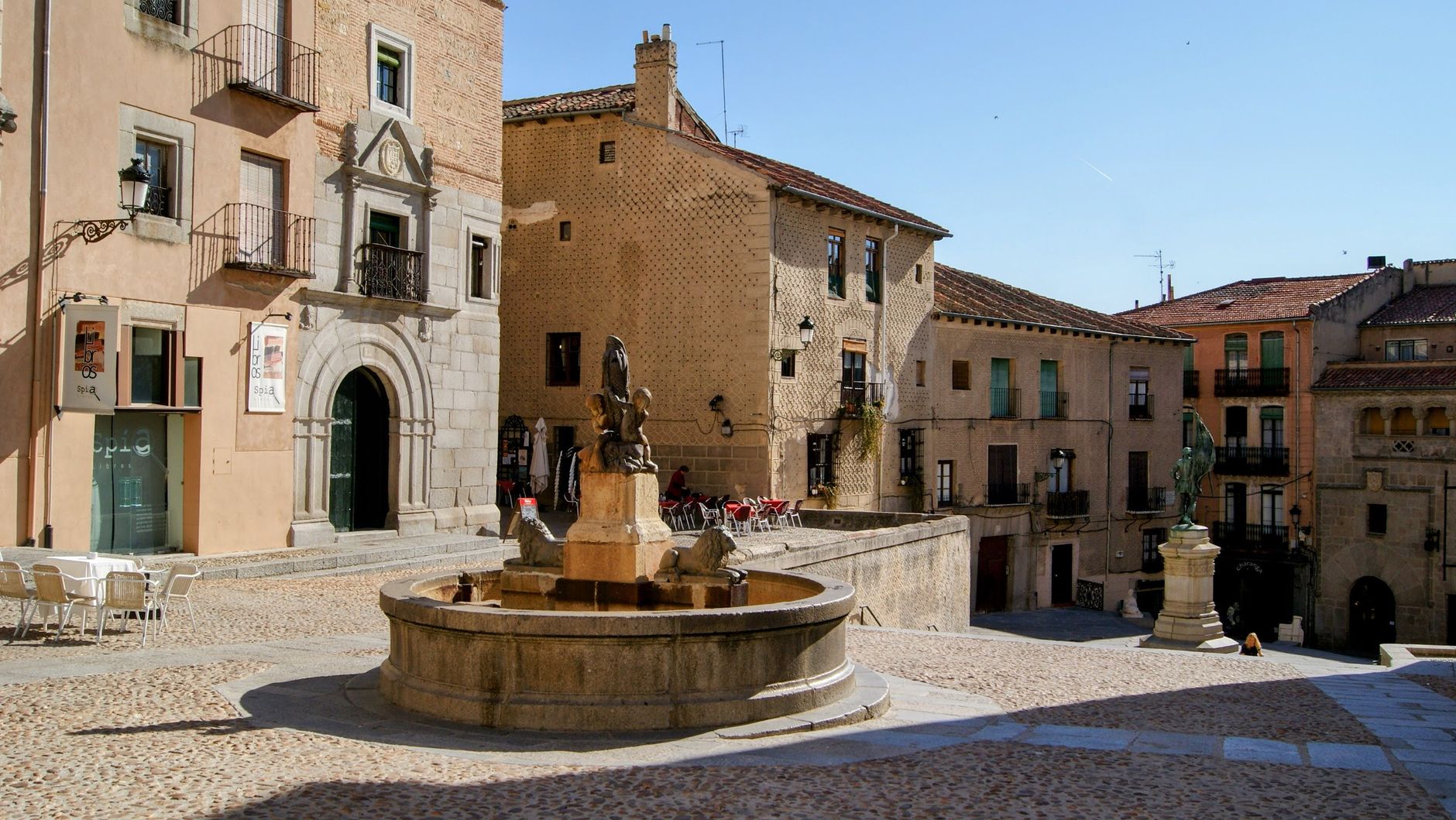
Ayllón
Handsome medieval town eighty kilometres northeast of Segovia, on the border with Soria province, known for its arcaded plaza and Renaissance palaces.
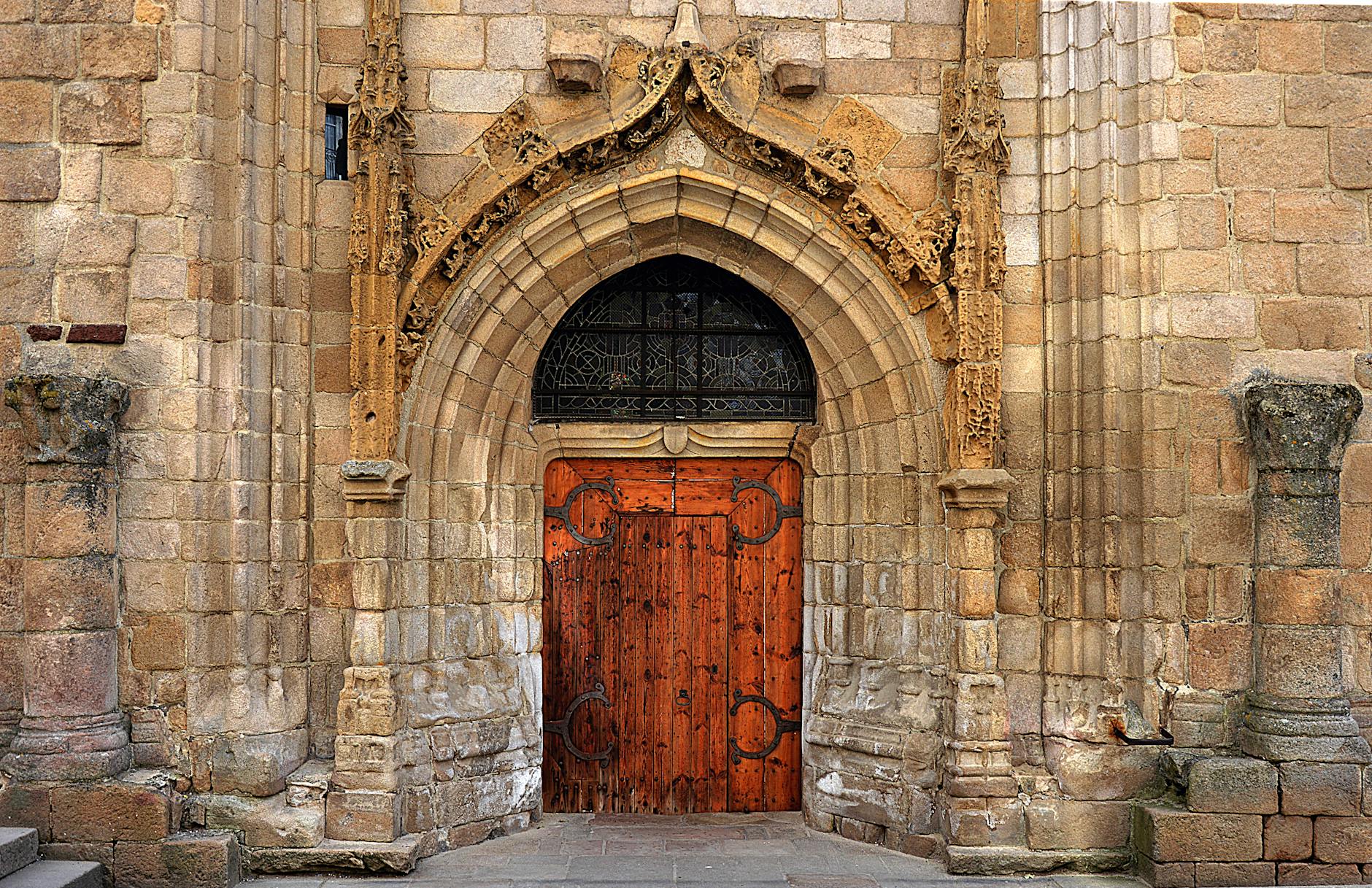 Stone arcades and medieval gates in Ayllón old town
Why people stay in Ayllón
Ayllón sits at the northeastern edge of Segovia province, hard against the Soria border, a medieval wool town that prospered in the sixteenth century and has been slowly decaying since. The old quarter is beautiful: a long arcaded Plaza Mayor lined with stone houses, a Romanesque church with a worn portal, and narrow streets climbing to the ruined castle on the hill above. Population barely a thousand, hotel capacity perhaps fifty beds, and midweek the town feels half asleep. Shutters stay closed until noon, the restaurants open only for weekend lunch, and the handful of shops sell dusty souvenirs to visitors who have not yet arrived.
The architecture is the attraction. Walk the plaza under the stone arcades, climb the cobbled streets to the castle ruins—just walls and rubble now, but free to explore and the views are excellent—and visit the Iglesia de San Miguel, a thirteenth-century church with a brick tower and a carved stone doorway. The Palacio de los Contreras, a Renaissance mansion on the plaza, houses a small ethnographic museum, open weekends only, €2 entry, worth thirty minutes if you catch it open. The whole town is compact enough to cover in an hour, though the steep streets and cobbles make it slower going than you expect.
Ayllón is quieter and less touristy than Pedraza, prettier and more intact than Sepúlveda, and more isolated than both. The drive from Segovia crosses eighty kilometres of rolling farmland and oak forest, and the town feels genuinely remote despite being an hour from the city. There are no major sights nearby, no kayaking or vultures or gorges—just a handsome old town in good condition, a couple of decent restaurants, and silence. It is a place for slow wandering, for sitting in the plaza with a book, for escaping the world for a day or two.
Skip it if you want activities or services. The town has no supermarket, no pharmacy, no cash machine, and no petrol station. Come for the architecture, the quiet, and the sense of being somewhere the modern world has not yet caught up with.
Hotels cluster on and around Plaza Mayor. Expect €60 to €90 a night midweek, €85 to €120 weekends, with breakfast. Most are small places in converted stone houses: beamed ceilings, antique furniture, decent beds. Posada Real Villa de Ayllón is the best, a restored mansion with a courtyard and good bathrooms, €90 to €140 a night. Avoid the cheap hostal on the edge of town; it is rundown and the walk to the centre is uphill and unlit. Book ahead for weekends; midweek you can walk in and negotiate a lower rate.
Things to do in Ayllón
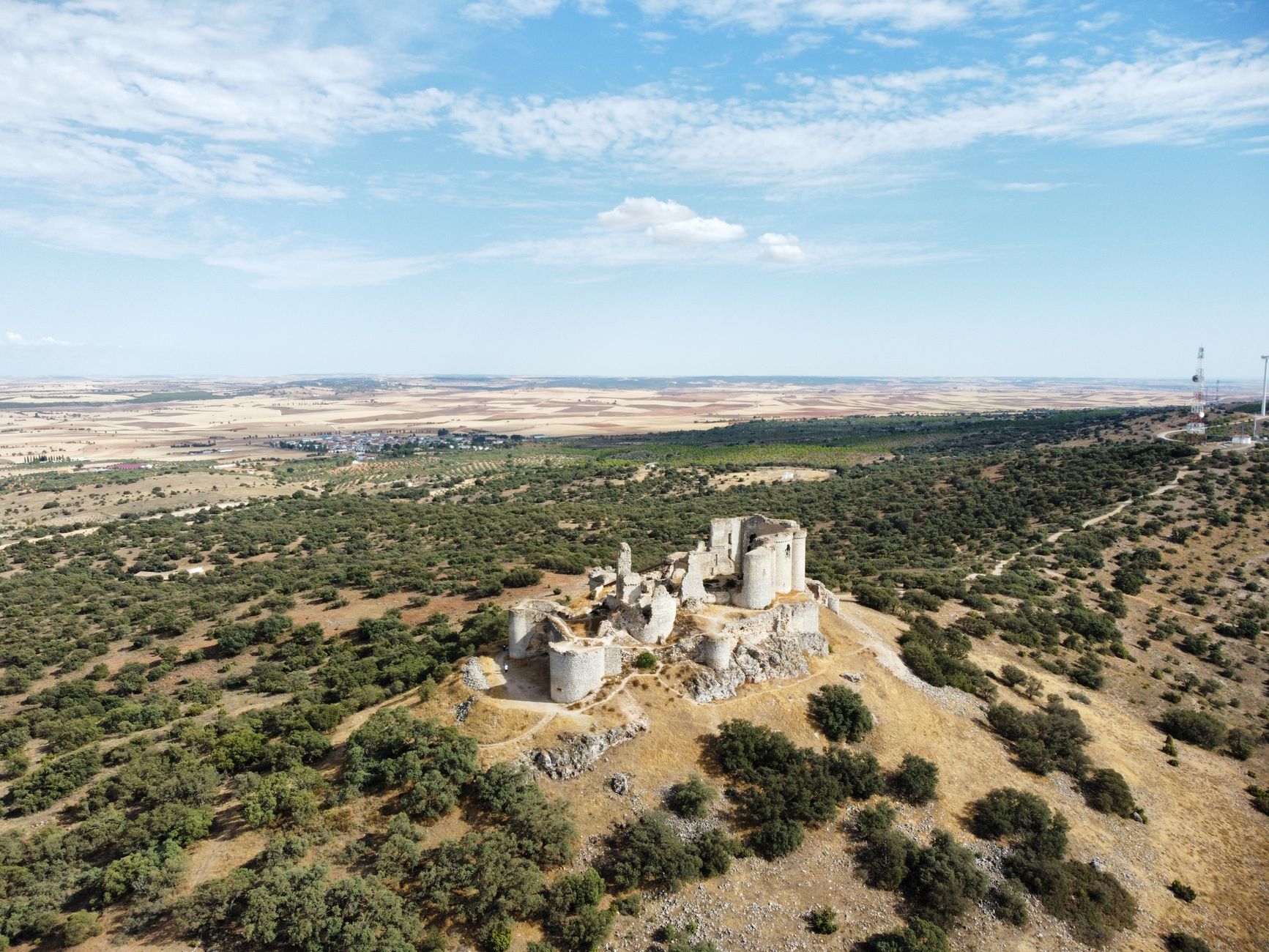
A steep cobbled lane climbs from the plaza to the castle, a ten-minute uphill slog. The castle is a ruined shell, just walls and a single tower, no roof or interior. Access is free and unrestricted; scramble around at your own risk. The views over the town and the valley below are excellent, especially in late afternoon when the light is warm. Wear sturdy shoes; the ground is uneven and littered with rubble.

A small ethnographic museum in a Renaissance palace on Plaza Mayor, displaying rural tools, traditional costumes, and old photographs of the town. Open Saturday and Sunday 11am to 2pm and 4pm to 7pm, closed weekdays, €2 entry. The building itself—carved stone doorway, wooden balconies—is more interesting than the collection, but the visit fills half an hour if you are curious.

The best restaurant in town, just off the plaza on Calle de la Cuesta. Roast lamb, grilled chops, seasonal game, and local vegetables, €25 to €35 a head. The dining room is stone-walled and cosy, and the cooking is solid. Open Friday evening, Saturday and Sunday lunch and dinner; closed midweek. Reservations essential for Sunday lunch.

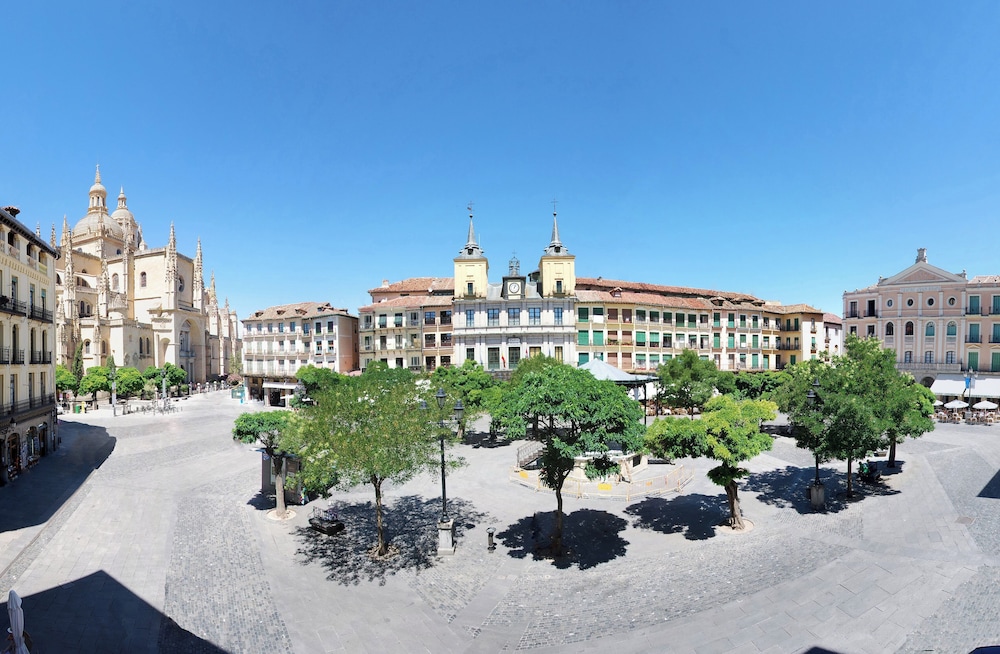
The long rectangular plaza is lined on three sides with stone arcades supported by wooden posts, creating a covered walkway. The fourth side is open to the church. The plaza is the social heart of the town, and weekend mornings it fills with locals buying bread and chatting. No entry fee, no opening hours—it is a public square. Best photographed early morning or late afternoon when the light rakes the arcades.

The parish church stands at the edge of the plaza, a thirteenth-century building with a brick bell tower and a carved stone portal. The interior is plain but the proportions are beautiful. It opens for Sunday 11am mass and occasional weekday mornings; outside those times you see only the exterior. The carved capitals on the doorway are worn but still legible.

The town of Riaza, fifteen kilometres northeast in the Sierra de Ayllón, is another medieval wool town with an arcaded plaza. The drive is scenic, climbing through oak and pine forest with views over the mountains. Riaza has more restaurants and services than Ayllón but less architectural charm. The round trip makes a pleasant half-day excursion if you want a change of scene.
What to see
Hotels near Ayllón
No hotels are listed in Ayllón yet. The nearest ones are on the region page.

Getting around Ayllón
Ayllón has no train station and no regular bus service. From Madrid-Barajas airport rent a car and drive north via the A-1 and SG-V-1111, two hours total. From Segovia city take the N-110 northeast for eighty kilometres; the drive takes seventy-five minutes through rolling farmland and oak forest. There is free parking on Plaza Mayor and throughout the town. A car is essential; there is no practical alternative. Within Ayllón everything is walkable in ten minutes, though the steep streets make it slower.
Questions about Ayllón
If you appreciate medieval architecture and want a quiet, undeveloped town, yes. If you want activities or major sights, no. Combine it with Sepúlveda or Pedraza to make a full-day loop, or stay overnight and commit to the slow pace.
Very few. Most places open Friday evening through Sunday only. Midweek your options are limited to one or two bars serving basic bocadillos and raciones. If you visit Monday to Thursday, bring food or plan to eat in a nearby larger town.
The ruins are freely accessible—no gate, no fee, no hours. Climb at your own risk; there are no railings and the walls are unstable in places. The walk up from the plaza is steep but short.
Very little. The town is for looking at, not doing things in. If that does not appeal, skip it and base yourself somewhere with more infrastructure.