Where to stay in La Albuera, Segovia: prices, parking and the walk to the Aqueduct
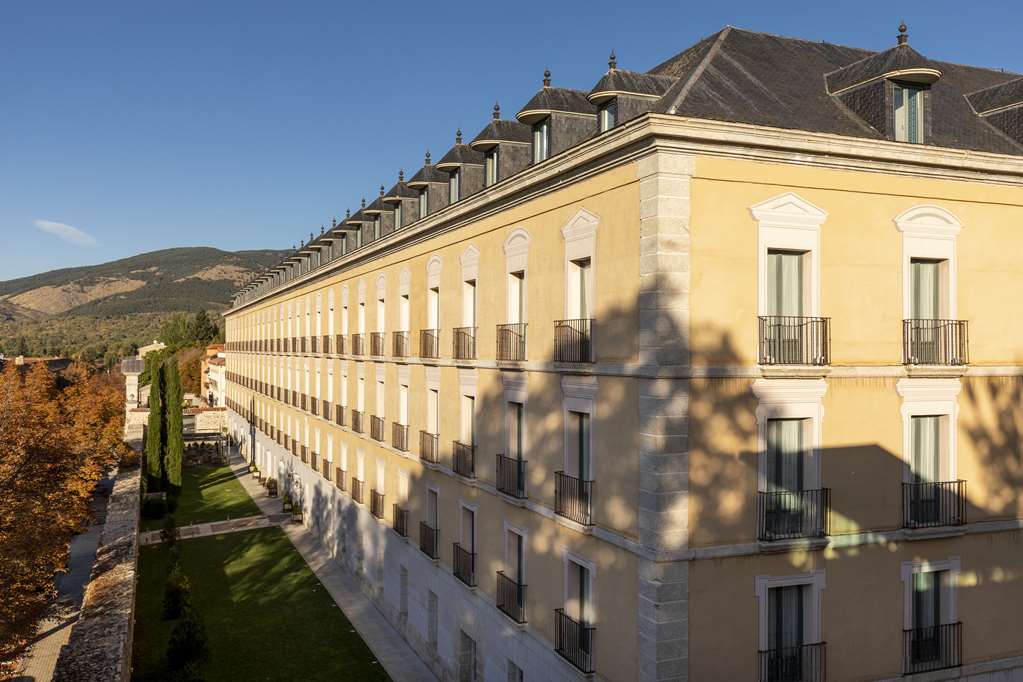
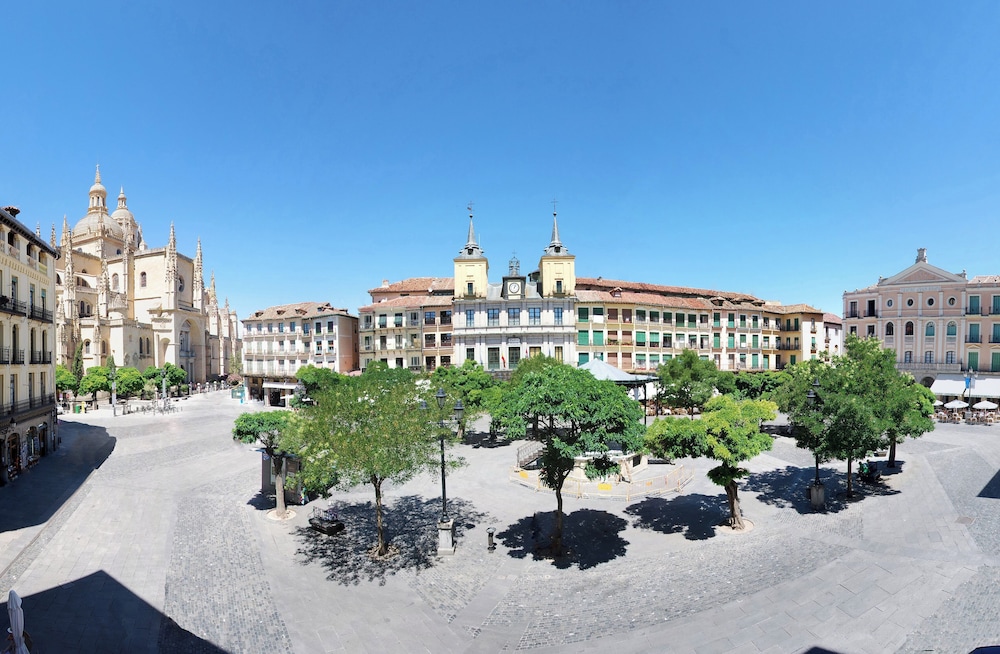
 Apartment blocks and a tree-lined avenue in the La Albuera district of Segovia, with the old town rising behind
La Albuera puts you roughly 15 minutes on foot from the Aqueduct for about €25-40 a night less than a room inside the walls — here is exactly who that trade suits.
Who La Albuera suits, and who should book elsewhere
La Albuera is the lived-in Segovia: a mid-twentieth-century grid of apartment blocks south-west of the Plaza del Azoguejo, built as the city spilled downhill from the walls. It has the football ground, Estadio La Albuera, home of the Gimnástica Segoviana; it has bakeries that open at seven, three supermarkets within a few blocks and bars where the television is on and nobody is holding a map. If you are driving, travelling with children, staying three nights or more, or simply refuse to pay old-town prices for a room the size of a wardrobe, this is the sensible address.
It suits you badly if the point of the trip is to step out of the door into a fourteenth-century street. There is no cathedral in the window here, no golden stone, no evening bell. Anyone with mobility limits should also think twice: the walk back involves a rise into the old town and, in reverse, a long flat stretch of pavement that feels longer with luggage. Book the Casco Antiguo or the Judería if you have one night, want atmosphere at breakfast, and do not care what the room costs.
What a night actually costs here
Expect around €55-80 for a midweek double in a small hotel or guesthouse, rising to roughly €70-95 on Fridays and Saturdays and during the late-June city fiestas. A two-bedroom apartment sleeping four typically runs €75-110, and often includes a washing machine, which matters on a longer Castilian loop. Inside the walls the same standard of double sits at about €85-140, and the landmark heritage properties clear €150-220 in high season. The gap is not enormous per night, but it compounds fast for a family or a five-night stay.
Add the parking arithmetic. An old-town car park will take roughly €12-18 a day; here you can often park free on residential streets or pay €10-14 for a private space in an apartment block. Over three nights that is another €30-50 saved. My honest cut-off: for one or two nights focused entirely on the Aqueduct, cathedral and Alcázar, pay up and sleep inside the walls. For three nights or more, or any trip with a car and a child, book La Albuera and spend the difference on a proper cochinillo lunch.
The walk in: 15 minutes to the Aqueduct, 25 to the Plaza Mayor
From most of the district you head north-east along Vía Roma and Avenida Fernández Ladreda, and the Aqueduct appears at the end of the street in a way that never stops being ridiculous. Depending on which block you sleep in, that is 1.2 to 1.7 km, flat to gently rising, on wide, well-lit pavements with shops most of the way. Allow 15-20 minutes. From the Azoguejo, the climb up Calle Cervantes and Juan Bravo to the Plaza Mayor adds another 10-12 minutes and about 40 metres of ascent.
The return leg is the easy direction: downhill out of the old town, then flat. That matters after dinner, because Segovia eats late and the walk home at half past eleven is a pleasant one rather than a slog. If you arrive by long-distance coach, the bus station on Paseo Ezequiel González sits on the district's northern edge, so most La Albuera addresses are a 5-12 minute walk with a wheeled case. Arriving by car, come off the Villacastín approach and you never touch the old-town one-way system at all.
Parking: the real reason people book down here
Segovia's walled centre is a maze of restricted access, resident-only bays and short-stay meters, and the underground car parks near the Azoguejo fill on summer weekends by mid-morning. La Albuera is where that problem stops. Streets away from the regulated central zone still offer free kerbside space, though it thins out around 8pm when residents come home and again on match days at the stadium. Arrive before 7pm and you will find something within two blocks; arrive at 10pm on a Saturday and you may circle for ten minutes.
If you want certainty, filter your search for a property with its own garage and confirm the height limit before booking — many blocks here were built for small cars and ramps under 1.90 metres are common, which rules out roof boxes and tall vans. Check current signage and any resident-permit hours on the street itself, since municipal parking rules change and the only reliable source is the sign and the city council. Do not leave anything visible in the car overnight; that is standard Spanish city practice, not a comment on the neighbourhood.
Eating where Segovians eat
The menú del día is the whole argument for sleeping here. In the bars along and around Vía Roma and Fernández Ladreda you will pay roughly €13-16 for three courses, bread, wine and coffee at lunchtime, against €18-22 for the equivalent in the streets around the Plaza Mayor. The food is honest Castilian: judiones in a thick broth, sopa castellana, roast lamb chops over vine cuttings, torreznos with a beer. Tapas here still arrive free or near-free with the drink in several places, which is increasingly rare inside the walls.
What you cannot get down here is the full theatre of the suckling-pig asadores, which cluster around the Azoguejo and the Plaza Mayor. Book those for one lunch, walk up, and treat it as an event rather than a default. For everything else, stay local: buy ponche segoviano from a neighbourhood bakery rather than a tourist counter, do your breakfast at a bar with a metal counter, and stock the apartment fridge from the supermarket. Sunday evenings are quiet here, so plan that meal or buy ahead.
Buses, coaches and the AVE station
The bus station on Paseo Ezequiel González is the district's greatest practical asset. Coaches to Madrid run frequently through the day, taking a little over an hour to the capital, and the same station serves La Granja de San Ildefonso, Pedraza, Turégano and the villages north of the city. If your Segovia trip is a hub-and-spoke affair with day trips, sleeping ten minutes from that concourse beats sleeping ten minutes from the cathedral. Timetables shift seasonally, so confirm departures with the operator before you build a day around one.
For the high-speed line, Segovia-Guiomar station sits several kilometres south of the centre, not in the city itself. Urban buses connect it to the centre and are broadly timed to train arrivals; a taxi is roughly €12-16 depending on the hour and your luggage. From La Albuera you are marginally closer to Guiomar than the old town is, and you avoid the awkward business of dragging cases over cobbles at seven in the morning. Check the current urban bus route and frequency with Urbanos de Segovia rather than trusting an old blog.
Booking notes: which streets, which season
Not all of La Albuera is equal. The northern blocks, closest to the Azoguejo and the bus station, cut five minutes off every walk and are worth a small premium. The southern and western edges bleed into arterial roads, and rooms facing the Villacastín approach get engine noise from six in the morning; ask for a habitación interior giving onto the courtyard, which in these blocks is genuinely quiet. Fourth-floor walk-ups exist in older buildings, so confirm there is a lift if that matters.
Season shapes price more than street does. Late June, when the city celebrates its patron saints, and the long weekends around public holidays push everything up and can sell the district out. August afternoons hit the low thirties, but Segovia sits above 1,000 metres and nights drop to around 15 °C, so a room with cross-ventilation beats one with a struggling air-conditioning unit. Winter nights fall below freezing; check heating is included rather than metered. Book six to eight weeks ahead for June and October weekends, two weeks is fine in February.
Before you book
The questions people ask about Segovia, answered with this month’s numbers.
Yes, if your case has decent wheels. It is 1.2-1.7 km of flat, paved street to the Aqueduct, then a 10-minute climb to the Plaza Mayor. From the bus station on Paseo Ezequiel González most addresses are under 12 minutes. Cobbles only start inside the walls.
On a three-night trip with a car, typically €75-150 once you count roughly €25-40 a night on the room and €12-18 a day on old-town parking. For a single night built entirely around monuments, the saving is too small to bother with.
Not in the monument sense. It is a working residential district with the Gimnástica Segoviana football ground, everyday bars and good bakeries. The reward is cheaper lunches, easy parking and a normal-priced supermarket, not sightseeing. All the set pieces are a 15-minute walk uphill.
No, but it helps. The old town, the bus station and the shopping streets are all walkable. A car only becomes necessary for La Granja, Pedraza or Riofrío, and those are also reachable by coach from Paseo Ezequiel González on published timetables worth checking with the operator.