Wheelchair-accessible hotels in Segovia, ranked
 A step-free hotel entrance with a ramp on a flat street outside Segovia's old walls
Eight realistic options for step-free stays in a city built on a rock, ranked by how much of Segovia you can actually reach from the door — and the specific questions to ask before you pay a deposit.
The problem is the city, not just the rooms
Segovia's old town sits on a limestone spur between two river valleys, and every route into it climbs. From Plaza del Azoguejo under the Aqueduct up Calle Real to Plaza Mayor is roughly 800 m with sustained gradients that hit around 10 percent in places, all of it laid in granite setts and river cobbles. Those cobbles are the real obstacle: they are historic, they are staying, and they make a manual chair hard work and a rollator genuinely unpleasant. Any assessment of an "accessible hotel" here has to start with what is outside its front door, not the width of its bathroom.
That leads to a counterintuitive ranking. The hotels with the best rooms for wheelchair users are almost all outside the walls, in buildings from the 1970s onwards with lifts, ramps and level car parks — which means a drive or an adapted taxi into the centre. The hotels inside the walls have the location and, in the palacio conversions, three floors, a 90 cm original doorway and a lift retrofitted into a stairwell that may not take a powered chair. Decide which compromise you are making before you shortlist.
1. The purpose-built hotels north of the river
The hilltop hotels on the far side of the Eresma valley, reached from the Carretera de Valladolid, are the best bet in the city. The Parador de Segovia is the clearest example: a low-rise 1970s building on a single large plot, with a flat car park at the door, lifts throughout, wide corridors that were designed for luggage trolleys rather than sedan chairs, and adapted rooms in its inventory. Rates run about €120-200. The other reason to rank it first is the terrace — you get the full panorama of the walled city, cathedral and Alcázar without going anywhere near a cobble.
The catch is complete dependence on transport. It is 2.5 km to the Aqueduct and the road down is not a pleasant push. Budget for taxis both ways and book adapted vehicles in advance rather than hailing — the fleet of ramped taxis in a city of 50,000 is small, and on a Saturday night you may wait. Confirm before booking whether the accessible room has a roll-in shower or a bath with a seat, whether the pool has a hoist, and the exact door width; specifications vary between rooms sold under the same name.
2. Modern hotels on the boulevards outside the walls
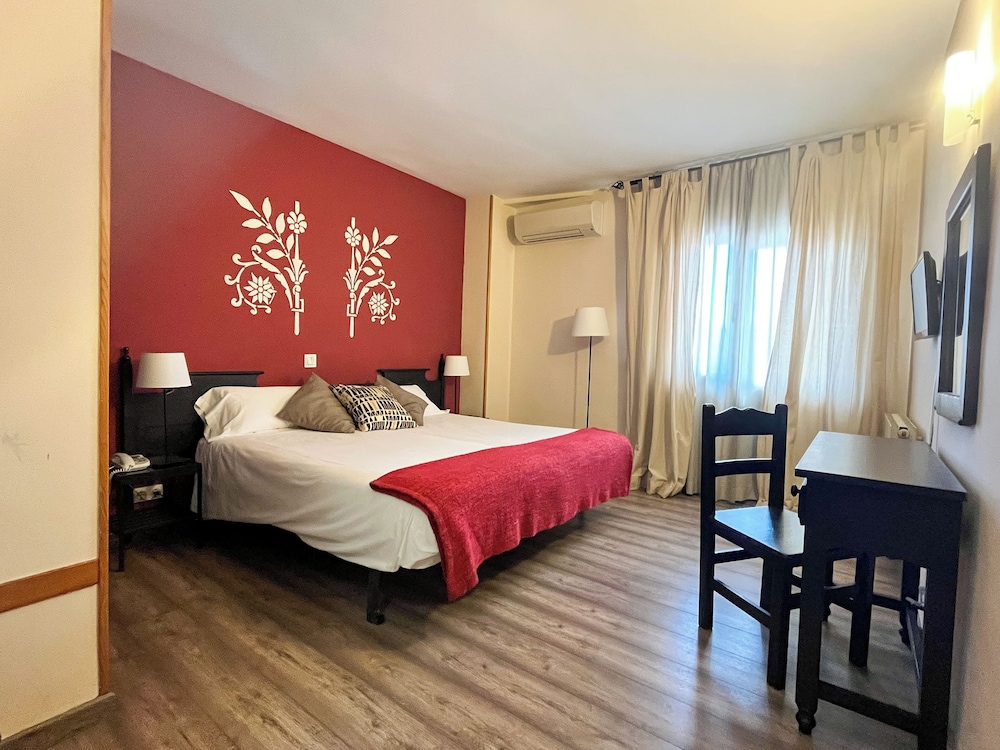
The band of hotels along Paseo Ezequiel González and the streets on the San José and Nueva Segovia side is the most underrated accessible base in the city. These are flat streets with wide modern pavements and dropped kerbs, ordinary shops, pharmacies and cafés, and the walk to the Aqueduct is 800 m to 1.2 km on a gentle slope rather than a climb. Rooms run roughly €65-115. The buildings date from the 1980s onwards, so lifts are standard and at least one adapted room is usually in the inventory.
This is the base I would choose for anyone with limited mobility who still wants to get out independently. From here you can reach the Aqueduct, the tourist office at the Azoguejo, the shops on the Avenida Fernández Ladreda and several good restaurants without a vehicle. The upper old town — Plaza Mayor, the cathedral, the Alcázar — still requires a taxi up and a taxi back, but the daily basics do not. Confirm the adapted room is on the lift's line and not up two steps at the end of the corridor, which happens in retrofitted buildings.
3. Inside the walls: what is actually possible
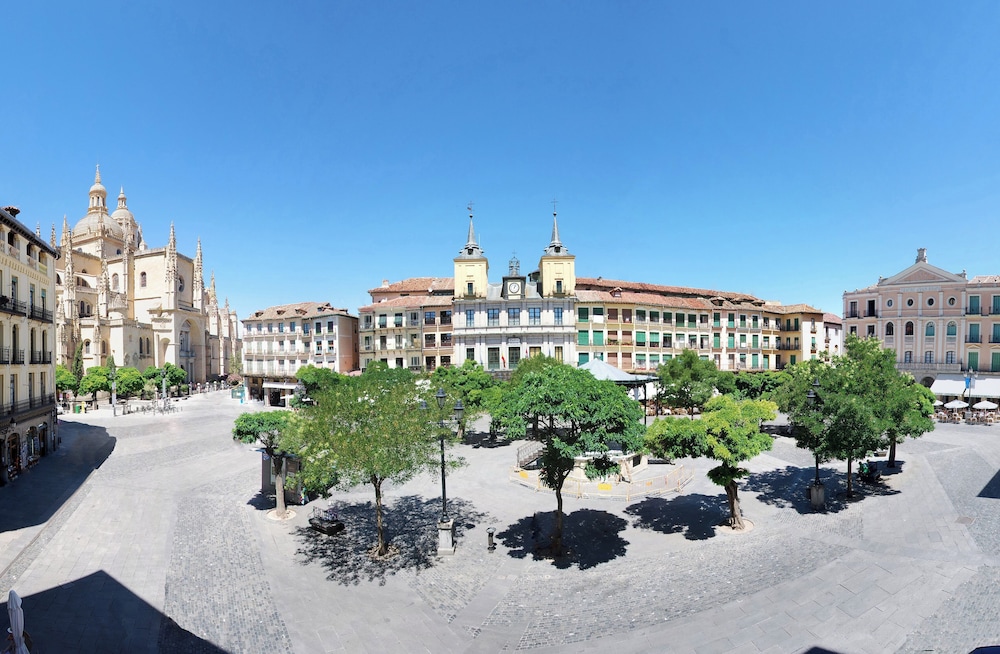
A small number of hotels within the old town have lifts that reach every floor and at least one room designed for a wheelchair, usually the conversions built or heavily rebuilt in the last twenty-five years rather than the intact 16th-century palacios. Expect €110-180. The prize is being able to reach Plaza Mayor and the cathedral on the flat, since the top of the spur — the run between Plaza Mayor, Calle Daoíz and the Alcázar — is comparatively level, if still cobbled. That is a real gain: the hard part of Segovia is getting up, not moving around once you are up.
Ask three questions in writing. What is the clear width of the room door and the bathroom door, in centimetres? Is the entrance from the street step-free, or is there a threshold and a portable ramp that has to be fetched? And what is the lift's internal dimension — many retrofits are 90 by 120 cm, which takes a manual chair and defeats a large powered one. Photographs on booking sites are systematically misleading about thresholds. A hotel that answers precisely is telling you something about how often it hosts guests with access needs.
4. La Granja de San Ildefonso — the flat alternative
If the goal is a Segovia trip rather than the city specifically, La Granja is worth serious thought. The town, 11 km up the CL-601, is laid out on the flat grid of an 18th-century royal site, with broad streets and a palace whose gardens include long level gravel avenues that are usable, if effortful, in a chair. Small hotels here charge €85-150 and several have ground-floor rooms and car parks at the door — much easier than anything inside Segovia's walls. Confirm access arrangements for the palace and gardens with the site directly before travelling.
The compromises are real: gravel rather than tarmac in much of the garden, a mountain climate that turns paths icy from December to February at 1,190 m, and a limited evening bus service down to Segovia, which means taxis for a city dinner. But for a two-night stay built around the palace, the Real Fábrica de Cristales and the pine forests of Valsaín, La Granja delivers more accessible experience per euro than a hotel inside the walls whose lift stops one floor short.
5. What to skip
Skip the rural stone-house hotels in Pedraza, Sepúlveda and Ayllón unless you have specifically confirmed a ground-floor room and a level entrance. These are three-storey conversions with narrow winding staircases, and the villages themselves are steep and cobbled: Sepúlveda's main slope runs at around 12 percent, and Pedraza excludes vehicles from its centre at busy times, so the drop-off point may be 200 m from the door over uneven stone. They are wonderful places and honest owners will tell you when they cannot accommodate you.
Also treat the accessibility icon on booking platforms as a starting point, not a fact. In Spain it is frequently ticked for a lift and a wide corridor, with no adapted bathroom anywhere in the building. And be wary of hotels advertising a "panoramic terrace" reached by a spiral stair from the top floor — a recurring feature of old-town conversions where the best part of the hotel is the part you cannot get to. Ask whether the breakfast room is on the lift line; several are in vaulted cellars down eight steps.
6. Getting around once you have chosen
Segovia's urban buses are run by the municipal operator and much of the fleet is low-floor with a ramp, including the line linking the centre with the Segovia-Guiomar AVE station about 6 km out; confirm vehicle type and frequencies with the operator before relying on a specific service. The tourist land train that circles the old town is not an accessible substitute. For the Alcázar, the cathedral and the main museums, contact each site in advance — several have step-free entrances that are not the main visitor door, and staff will open them if warned.
Book adapted taxis at least a day ahead through the city's radio-taxi service, and ask for a return pick-up time when you are dropped off rather than trying to arrange it later from a cobbled street with no rank. For arrivals, the Avant and AVE services into Guiomar are the smoothest route from Madrid at roughly 27-30 minutes, with assistance available if requested through the operator's accessibility service in advance. That combination — train to Guiomar, adapted taxi, flat hotel outside the walls — is the most reliable Segovia itinerary there is.
Before you book
The questions people ask about Segovia, answered with this month’s numbers.
The flat boulevards outside the walls — Paseo Ezequiel González and the San José and Nueva Segovia side — where pavements are wide, kerbs dropped and hotels are modern with lifts. You still need a taxi up to Plaza Mayor and the Alcázar, but daily shops, cafés and the Aqueduct are reachable on foot or by chair.
Once you are on top of the spur, yes with effort: the area between Plaza Mayor, the cathedral, Calle Daoíz and the Alcázar is relatively level, though laid in granite setts throughout. The climb up from the Aqueduct along Calle Real is the barrier — take a taxi up and enjoy the flat section at the top.
Four things in writing: clear door widths in centimetres for the bedroom and bathroom, whether the shower is roll-in or a bath, whether the street entrance is step-free or ramped on request, and the internal size of the lift. Also ask whether breakfast is served on the lift line — many are in cellars.
Largely not. Both are hill villages with steep cobbled streets, and their hotels are three-storey stone conversions with narrow stairs and often no lift. Pedraza also restricts vehicles from the centre at busy times, adding a stony walk from the drop-off. Ask the hotel directly; good ones will say no rather than disappoint you.