The Segovia Aqueduct: How to Read Its Stones and Shadows
 The Segovia Aqueduct: How to Read Its Stones and Shadows
Segovia's aqueduct is best understood at street level, in raking morning light, and by walking its full length from the Plaza del Azoguejo to the old town walls.
The Aqueduct at Street Level: Azoguejo and the First Slope
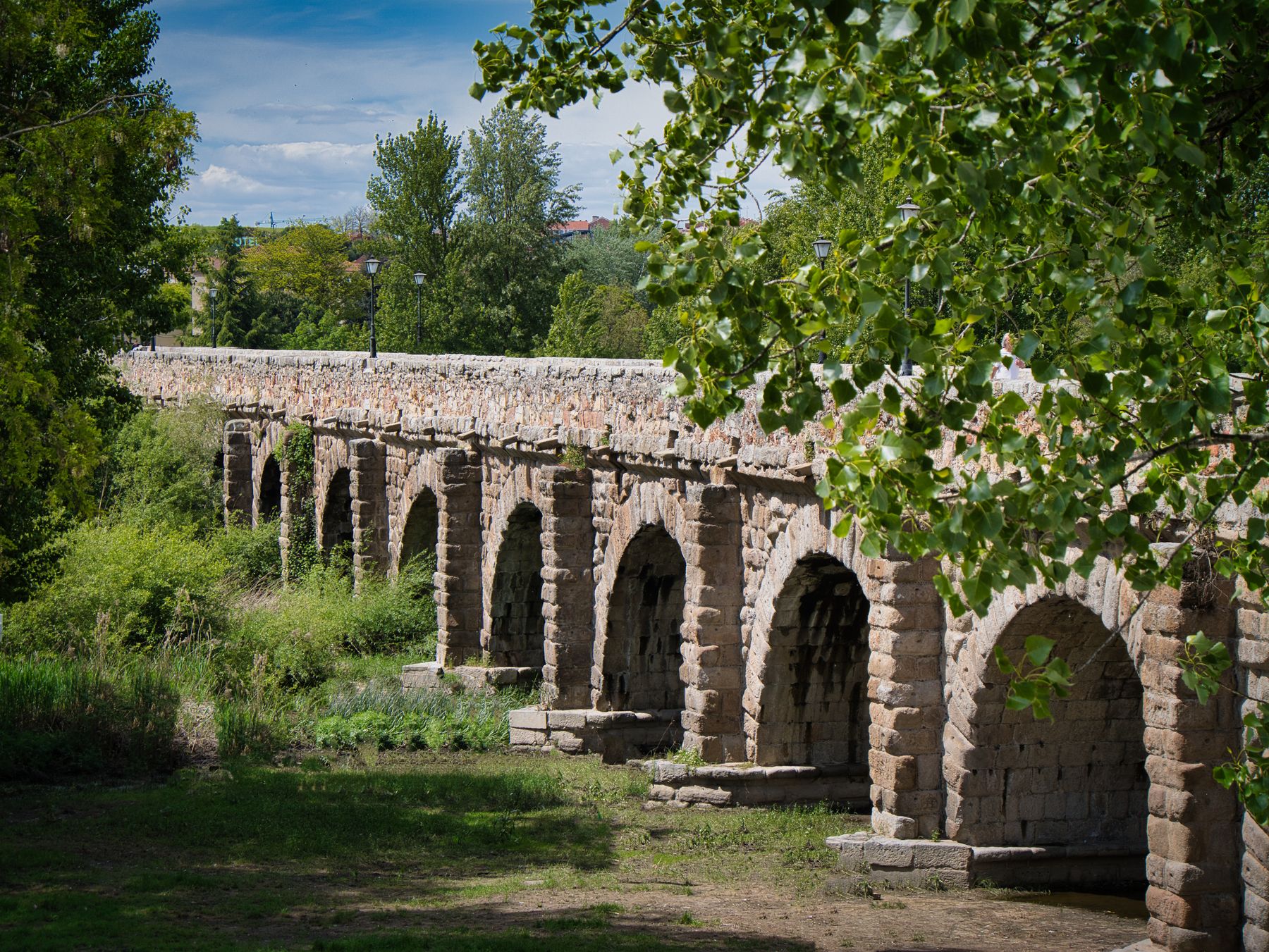
Stand in the Plaza del Azoguejo and the aqueduct's tallest section rises roughly 28 metres above you. Look at the two tiers of arches, the granite blocks, the absence of mortar. This stretch is the most photographed and the most crowded, particularly between 11am and 2pm when tour groups move through. Come at 8am in May or September, when the light comes in low from the east and the shadow of the upper arcade falls across the lower arches, and you can see the double-arch structure clearly for the first time.
From Azoguejo the structure climbs east along Calle Cervantes and then Calle Real, and the arches shrink as the ground rises. The single-arch section near Plaza de Díaz Sanz sits within the old town walls, which is where the building logic becomes obvious: the aqueduct was not a monument but a channel, running at a constant, gentle gradient to the Alcázar end of the city. Walking the 900-odd metres from Azoguejo to Plaza de la Artillería takes about 15 minutes without stops.
Light, Shadow and the Best Hours to Look
The aqueduct faces roughly west-southwest on its most famous section, so afternoon and evening light flatters the granite and shows the mortar joints and the brick patching that centuries of repairs left behind. Around sunset in June and July the western light rakes across the arches and throws a repeating grid of shadows onto the plaza pavement. That is the moment worth planning your day around, and it costs nothing. In winter, the low sun does the same thing much earlier, around 4.30pm to 5pm, and the Plaza del Azoguejo empties quickly.
Consider the floodlighting after dark as a separate experience, not a substitute. It is on most evenings until around midnight, and it makes the granite look warm and uniform, which hides the very detail you came for. If you have two nights in Segovia, spend one on the lit plaza and one walking the shadow side at street level in the morning. Both are free, and both reward a slow pace over rushing to the next sight.
Where to Stay to Read the Stones Properly
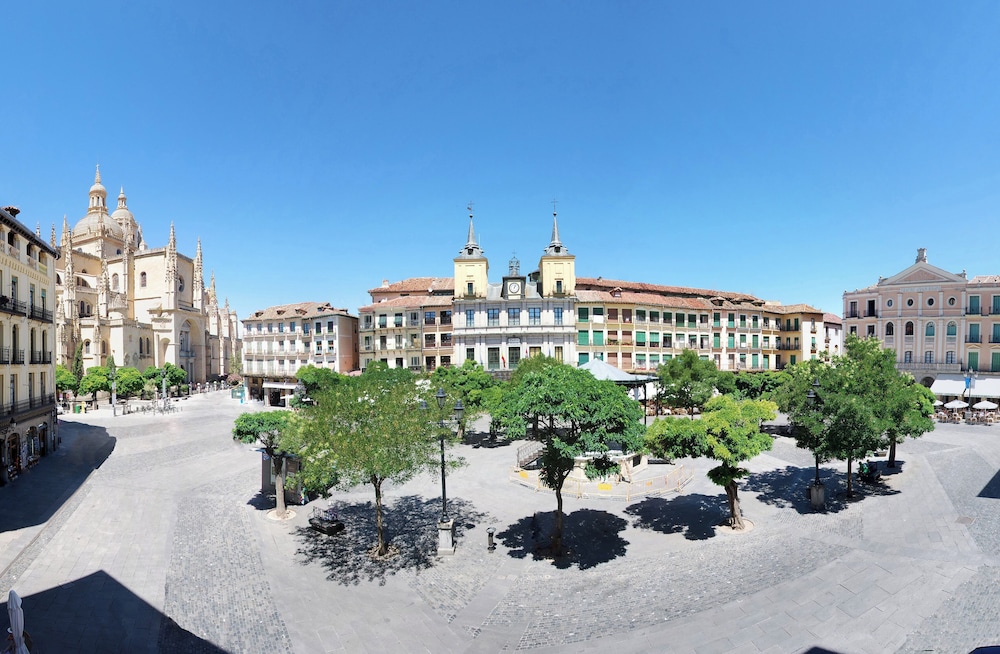
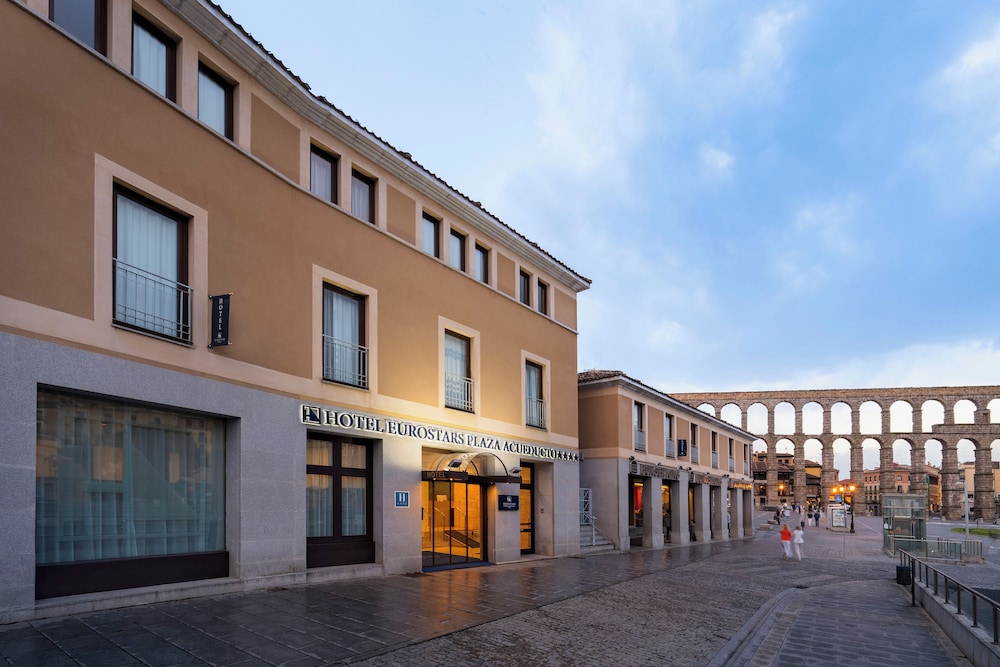
The two practical bases are the old town inside the walls and the streets around Plaza del Azoguejo and the bus station. Old-town hotels, roughly in the Plaza Mayor to Calle Daoíz area, put the cathedral, the Plaza Mayor and the Alcázar within a short walk, but the streets are steep and cobbled and parking is either impossible or costly. Azoguejo-side hotels are flatter, closer to the bus and train connections, and put the aqueduct outside your door. Expect hotel rates to be noticeably lower Sunday to Thursday and in January, February and November than in summer weekends.
For most travellers booking this trip, I would take a hotel within a short walk of Azoguejo rather than deep in the old town. You get the aqueduct at both sunrise and sunset, you avoid hauling luggage up Calle Real, and you keep the old town as a walk rather than a climb. If you are arriving by train, remember the station is outside the city at Segovia-Guiomar, with bus connections in; if you come by AVE from Madrid, check that you are not on the 11pm train without a plan for the last section.
Nearby Stones: Alcázar, Walls and the View Back
The Alcázar sits at the far end of the old town, and its tower is the best single point from which to look back at the aqueduct's route through the city. Admission and opening times vary by season, so check the official listing before you go rather than relying on a guidebook. Below, the Jewish quarter around Calle Judería Vieja holds twelfth- and thirteenth-century houses and the Centre Didáctico de la Judería; it takes two hours at an unhurried pace and is where the city feels oldest.
Some travellers also use Segovia as a base for the Palace of La Granja de San Ildefonso at San Ildefonso, about 11km southeast, a short taxi or irregular bus ride away, and worth half a day if the fountains are running in summer. With two nights, I would keep the second day entirely in Segovia: morning on the aqueduct, late morning at the Alcázar, a long lunch of cochinillo or judiones in the Plaza Mayor area, and the shadow walk at dusk.
Before you book
The questions people ask about Segovia, answered with this month’s numbers.
From the Plaza del Azoguejo to Plaza de la Artillería is about 900 metres and takes 15 minutes without stops. Allow 45 minutes if you stop to look at the masonry, read the information panels and photograph the single-arch section where the structure enters the old town.
In the morning, the east light throws the upper arcade's shadow across the lower arches. In the late afternoon and around sunset, the grid of shadows repeats across the pavement of Plaza del Azoguejo. Both are free. The floodlighting after dark flattens the details.
April, May, late September and October give comfortable temperatures and manageable crowds. Weekends in May and September are busy around 11am to 2pm. January, February and November are quiet and hotels are cheaper, though some restaurants reduce their hours.
The station lies outside the city, several kilometres from the centre. Regular buses connect it to the old town and to Azoguejo, and taxis are available at the rank. Allow 20 to 30 minutes for the full connection, and keep enough margin for the last bus.
No. The aqueduct is a public structure running through the city streets and can be walked at any hour. Be careful of traffic on Calle Cervantes and Calle Real, and remember that the plaza is a working urban space with buses and deliveries.
Choose a hotel within a short walk of Plaza del Azoguejo. You get flat streets, taxis, bus connections and the aqueduct outside your door, and you can reach the Plaza Mayor and Alcázar on foot in 10 to 15 minutes.
The stone channel has been patched over centuries, and it is generally described as no longer carrying water to the city. Treat it as a walkable monument to the Roman engineering that supplied Segovia. Informational panels along the route explain the masonry.
An overnight stay is worth it. Day-trippers usually see the aqueduct, cathedral and Alcázar in a rushed afternoon and miss the sunset light at Azoguejo. One night lets you walk the whole route slowly and see the aqueduct illuminated after dark.