Segovia with teenagers: a two-day plan that isn’t a church crawl
 Teenagers climbing the spiral tower stairs inside the Alcazar of Segovia
Two days built around three tower climbs, a gorge full of vultures, a maze and one enormous roast — roughly 14 km of walking and not a single audioguide that lasts an hour.
The principle: verticality, water and food
Teenagers do not object to Segovia, they object to being walked slowly past retables. The fix is to build the two days around things that go up, things that move and things you eat: the 152 steps of the Alcázar's Juan II tower, the cathedral belfry climb, the aqueduct stairs, the Eresma river path, the Duratón gorge with its 300-odd griffon vulture pairs, and a cochinillo carved with the edge of a plate. Interiors get 40 minutes maximum. Everything else happens outdoors, where a fourteen-year-old with a phone can find their own angle on it.
The practical shape: day one in the city, structured as a descent-and-climb rather than a monument list; day two out to the Hoces del Duratón and Sepúlveda by car, or to La Granja by bus if you have none. Two nights in the same bed. Budget around €70–90 per person per day including entries and food if you eat one big roast and otherwise do menús and bocadillos. Segovia is small enough that a sulk never costs more than fifteen minutes of walking to fix.
Day one, 09:30: aqueduct from below, then from above
Start at Plaza del Azoguejo, under the tallest span of the aqueduct, where the point to make is that the whole thing — 167 arches, 28 m at its highest, first century AD — is dry-laid granite with no mortar. Then take the stairs up the side to the Postigo and walk the upper level, where you look along the channel and the scale finally registers. Fifteen minutes, free, and it works on everyone. From there go up Calle Real, but detour into the Mercado for something to eat rather than sitting anyone down in a museum before eleven.
11:00, the cathedral. Buy the tower climb, not just the nave: the guided ascent takes you past the bell-ringer's old flat to the roof-level walkway with the Alcázar, the sierra and the tile rooftops laid out under you. It runs on fixed slots with limited group sizes and sells out on summer weekends, so book online in advance and confirm the day's times. If the climb is full, skip the cathedral interior entirely and spend the hour on the Casa de los Picos courtyard and the Judería lanes instead. Nobody in your party will notice the loss.
Day one, 13:00: the Alcázar, and the descent nobody does
The Alcázar is the easy win: a real ship-prow castle on an 80 m crag, with armouries, a throne room and the Juan II tower's 152 spiral steps up to the parapet. Buy the combined palace-and-tower ticket; the tower is the bit teenagers remember. Total time inside, 75 minutes. Then, instead of walking back the way you came, leave by the Puerta de Santiago and drop down the stepped path into the Eresma valley — five minutes and you are on a river path below the walls with the castle towering over you, which is a completely different photograph.
Follow the river to the Real Casa de Moneda, Philip II's water-powered mint of 1583 and the oldest industrial building of its kind in Europe. Working models of the rolling mills that struck imperial silver, a small water wheel, forty minutes, single-figure euros. Come back up through the Pradera de San Marcos, or take the twelve-sided Vera Cruz church across the valley if legs allow. Late lunch at 15:00 in the old town: judiones, sopa castellana and torreznos are the crowd-pleasers, around €16–20 a head on a weekday menú.
Day one, evening: what to do between 19:00 and midnight
Segovia's evening is genuinely good for teenagers because it is safe, compact and full of people their age doing the paseo. Do a lap of Calle Real and Plaza Mayor at 20:00, then eat late — locals sit down at 21:30 — in the tapas bars on Calle Infanta Isabel, nicknamed Calle de los Bares, where a caña and a tapa is around €3 and a plate of jamón or croquetas €8–12. Finish at the aqueduct after 22:00, when it is floodlit and the Azoguejo is full without being drunk.
If you are here in May, Titirimundi turns the city into an international puppet and street-theatre festival with free outdoor shows in the squares, and it is the one event that reliably converts a bored fifteen-year-old. In July, the Folk Segovia concerts do a similar job. In deep winter, swap the evening walk for a pre-booked ghost-and-legends walking tour of the Judería — these run in Spanish more often than English, so check the language when you book. Then bed: nobody who has climbed three towers argues about bedtime.
Day two with a car: the Hoces del Duratón
Leave at 09:00 for Sepúlveda, 60 km northeast on the N-110 and SG-232, about 50 minutes. Start at the Casa del Parque interpretation centre in the old Los Picos church, which explains the gorge and the griffon vulture colony and handles permits. Then drive the 12 km of dirt track to the Ermita de San Frutos, an 11th-century hermitage on a spur with the Duratón looping 100 m below on three sides and vultures riding the thermals at eye level. It is a 30-minute walk from the car park and it is the best single view in the province.
Kayaking on the Duratón reservoir out of Burgomillodo is the other big-ticket option, run by local activity companies, with seasonal restrictions tied to the vultures' breeding period and a permit requirement — book directly with an operator and confirm what is allowed on your dates. Back in Sepúlveda, eat cordero asado at 14:30 for €35–45 a head, or a shared menú for less. Home by 18:00 for a swim if your hotel has a pool, or the municipal open-air pools, which open roughly from mid-June to early September.
Day two without a car: La Granja, the maze and the forest
Buses to La Granja de San Ildefonso leave Segovia's bus station through the day and take 20–25 minutes. The palace apartments are a 45-minute visit at most with teenagers; the gardens are where the day is. There are 1,500 hectares of them, 26 monumental fountains fed entirely by gravity from the Sierra, and a genuine hedge maze — El Laberinto — which is the one garden feature no teenager walks past. Fountain-running days and hours are limited and seasonal; check the Patrimonio Nacional schedule before you commit the date, because the dry version is much less impressive.
Add the Real Fábrica de Cristales, the 18th-century royal glassworks in the village, where glassblowing demonstrations happen in a vast surviving factory hall — hot, loud and much more interesting than it sounds. Lunch on judiones on Calle Valenciana. If there is appetite for more, take the bus another few minutes to Valsaín and walk in the pine forest towards the Boca del Asno on the Eresma, a flat riverside path with picnic spots at 1,200 m where the temperature is 5 °C below the city in August.
Where to sleep, and the rooming problem
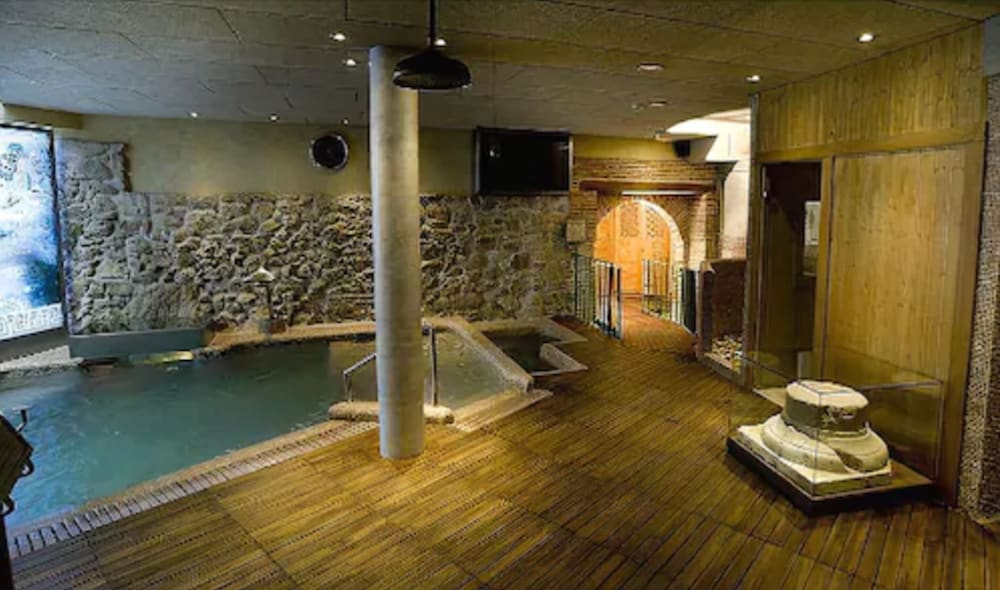
The recurring headache with teenagers is that Spanish hotel rooms are built for two. Segovia's old-town hotels mostly top out at triples, so a family of four is buying two rooms — realistically €180–260 a night in the mid-range near Plaza Mayor, or €140–190 at the simpler hostales around San Millán and the aqueduct. The cheaper and usually better answer is an apartment inside the walls: two bedrooms, a kitchen and a washing machine for roughly €110–170 a night, which also solves the 09:00 breakfast problem for someone who wants toast, not a jamón counter.
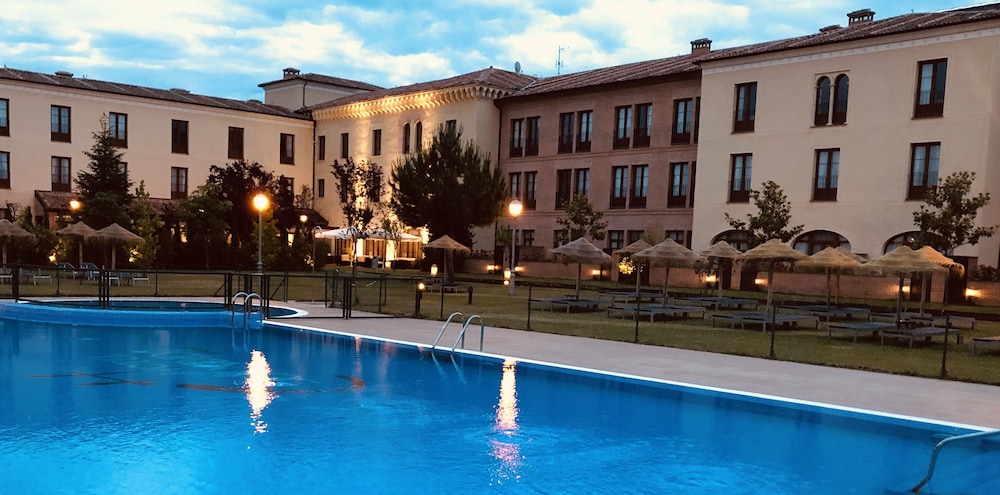
If you want a pool in July and August, you are looking at the hotels outside the walls — the properties on the Zamarramala and Valladolid roads, and the larger places in Nueva Segovia — where doubles run €100–160 and parking is free or cheap. That costs you the walk home from the illuminated aqueduct, which is a real loss on a two-night trip. My call: stay inside the walls in an apartment for two nights, accept no pool, and buy the swim at the municipal pools or a river picnic in Valsaín instead.
Before you book
The questions people ask about Segovia, answered with this month’s numbers.
It is 152 narrow spiral steps with no lift and two-way traffic on some sections, so it rules out anyone with mobility or claustrophobia issues, but teenagers manage it easily. The palace rooms are accessible; the tower is a separate ticket, so one adult can skip it and wait in the courtyard.
The Alcázar plus the descent through the Puerta de Santiago into the Eresma valley, finishing at the Royal Mint. It is about three hours, mixes a castle, a river path and working 16th-century machinery, and involves almost no standing still in front of glass cases.
No. Access is regulated to protect the griffon vulture colony and there are seasonal closures and a permit system administered through the natural park. Book with an established local operator and let them confirm what is possible on your dates rather than assuming availability.
Some will, some will refuse the skin and the presentation. Order one suckling pig portion to share, around €28–32 a head at the classic asadores, and back it up with judiones, croquetas and torreznos so nobody goes hungry on principle. Weekday menús del día at €14–18 are the low-drama alternative.