When does Segovia actually open? Meal times, the afternoon lull and Monday closures
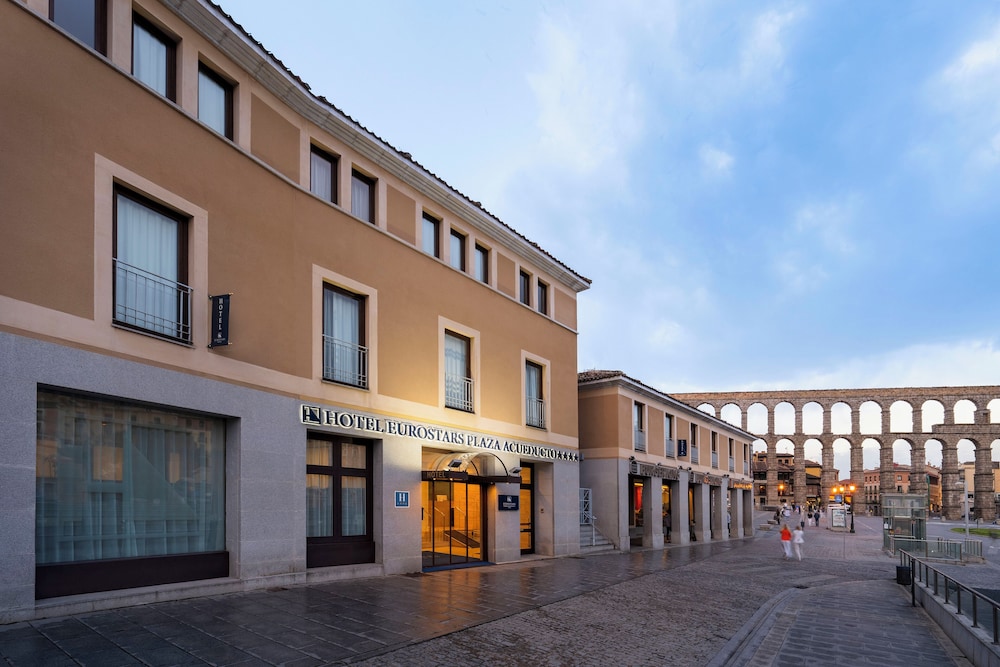
 Shuttered shopfronts on a quiet Segovia street during the afternoon lull
Segovia runs on a Castilian clock: lunch from about 14:00, dinner from 20:30, shops shut for roughly three hours in between, and enough Monday closures to sink a badly planned two-day visit.
The daily rhythm in one paragraph
Bars open early, around 07:30 or 08:00, for coffee and toast. Shops trade from about 10:00 to 14:00, close, and reopen from roughly 17:00 to 20:30. Restaurant kitchens serve lunch from 13:30 or 14:00 until 15:30 or 16:00, then close completely; dinner service starts at 20:30 and last orders in the old town often fall between 22:30 and 23:00 on weeknights. Monuments generally stay open through the middle of the day, which is the mercy that makes the schedule workable for visitors.
The practical consequence is that a visitor who eats lunch at 12:30 and dinner at 18:30 will spend the trip in whichever places cater to that, which are the ones facing the Aqueduct with laminated menus. Shift your day two hours later and the same money buys a different city. This is not a rule the town is trying to teach you; it is simply when the people who live here eat, and the good kitchens fire up accordingly.
Mornings: the best-value hours in Segovia
Between 08:00 and 10:00 the old town belongs to residents. Bars along Calle Infanta Isabel and out towards Calle José Zorrilla serve café con leche and tostada with olive oil or crushed tomato for a low single-figure euro total, standing at the bar, with the radio on. This is when to see the Aqueduct without a coach party in the frame and when the light on the cathedral's east end is at its best. Monuments open later — typically from around 10:00, though the cathedral and Alcázar set their own hours and seasonal variations, so check each site's own calendar.
Use the gap deliberately. Walk the ramparts and the Eresma valley from 08:30, take the first Alcázar tickets when they open, and be through the headline sights before the day-trippers from Madrid arrive on the mid-morning trains and coaches. By 11:30 Plaza del Azoguejo is a different place. The trade-off is that shops and pastry counters are only just stirring, so if buying ponche segoviano or a market lunch is on your list, that belongs to the second half of the morning.
Lunch is the main meal — and the roast needs booking
Lunch is when Segovia performs. The menú del día, served on weekday lunchtimes, gives you a starter, a main, bread, a drink and dessert or coffee for roughly €14-18 in a neighbourhood restaurant, and it is the single best-value meal in the province. Sit down between 14:00 and 14:30 and you will be eating alongside office workers rather than tour groups. Ask for it by name — some places do not advertise it in English, or at all, on the door.
If the plan is cochinillo asado, book. The roasting houses cook to a schedule and the big dining rooms near the Aqueduct fill days ahead on weekends and holiday bridges. Whole roasts in particular are sometimes ordered by phone in advance. Expect a ration to land somewhere in the €25-32 band per person in the city, with tasting menus higher; the asadores out in Torrecaballeros on the N-110, or in Sepúlveda for lamb rather than pig, often deliver a better plate for the same money if you have transport. Either way, the reservation is the difference between eating well and eating what is left.
The 16:30 to 20:00 dead zone, and how to use it
Between the end of lunch service and the start of dinner, the old town closes ranks. Shutters come down on the shops on Calle Juan Bravo, kitchens go dark, and the streets briefly belong to visitors wandering with nowhere to go. Bars and cafés stay open throughout for coffee, beer, vermouth and ice cream, so you will not go thirsty, but a hot plate of food is genuinely hard to find between roughly 16:30 and 20:00 outside a handful of places catering to tourists.
The fix is to plan this window as the sightseeing block. Museums and monuments largely trade through it, so the cathedral, the Alcázar, the Casa de la Moneda mint site by the Eresma and the smaller church interiors are all sensible afternoon choices. So is the walk down to the river meadow, or a bus out to La Granja to see the gardens in low light. Treat the lull as a feature, not an inconvenience: it is the only stretch of the day when the popular sights thin out again before closing.
Dinner, and how late is genuinely late
Dinner in Segovia starts at 20:30 and peaks around 21:30. Tapas bars fill from 20:00 with people drinking a caña and eating standing up, which for many locals substitutes for a sit-down dinner entirely. Kitchens are not as nocturnal as Madrid's — midweek in winter, several old-town kitchens take last orders around 22:30 and the streets are quiet by midnight. Friday and Saturday stretch later, and fiesta weeks change everything.
Two consequences. First, if you arrive on a late train, do not assume you can eat at 23:00 on a Tuesday in November; ask your accommodation which kitchens are serving that night. Second, if you want to eat at 19:30 because of children or an early start, aim for the tapas bars around Calle Infanta Isabel and Plaza Mayor, where a sequence of raciones works at any hour, rather than a restaurant that will simply say no. Eating early in a proper dining room is possible, but the room will be empty and the kitchen half-awake.
Mondays, Sundays and the weekly market
Monday is the closure day. A meaningful share of restaurants take Sunday evening and all Monday off, and public museums in Castilla y León commonly close on Mondays too. The major monuments generally open daily, so a Monday visit still gets the Aqueduct, the cathedral and the Alcázar, but the dining choice narrows sharply and some of the smaller collections will be shut. Verify each site's day off on its own website before building a Monday itinerary around it.
Sunday runs the other way: shops are mostly closed, the old town is busy with Spanish visitors, the roast restaurants are full at 14:30 with extended families, and the atmosphere is excellent. Bakeries and pastry shops usually open Sunday mornings. Segovia's weekly open-air street market is a long-standing Thursday-morning fixture, though its site has moved over the years, so ask your hotel where it is being held before setting off with a shopping bag.
Fiestas and the August wobble
Two dates reshape the city calendar. The main city fiestas around San Juan and San Pedro fall in the last week of June, filling the streets with bands, bulls in the province and a very different Segovia; and San Frutos, the patron saint's day, falls on 25 October. Around both, opening hours shift, some businesses close on the holiday itself, and accommodation prices rise. Semana Santa brings processions and full restaurants. Check the municipal programme for exact dates and events rather than assuming last season's schedule repeats.
August has its own quirk: family-run bars and restaurants often take their annual holiday for two or three weeks, and it is not always the same weeks each year. A place recommended to you in June may have a handwritten sign on the shutter in mid-August. This matters most if you are chasing one specific address; it matters not at all if you are happy to walk into whichever busy bar has locals standing three deep. In the villages — Pedraza, Sepúlveda, Turégano — the effect is stronger, and midweek in low season you may find one restaurant open in the whole square.
A timetable worth copying
08:00 coffee and toast at the bar. 08:30 to 10:00 the Aqueduct, the walls and the Eresma valley before the crowds. 10:00 to 13:30 the Alcázar and the cathedral, tickets bought at opening. 14:15 lunch, booked the day before, either a menú del día or the roast. 16:30 to 19:00 the quieter interiors, the Judería lanes, or a bus to La Granja. 20:30 tapas along Calle Infanta Isabel. That sequence uses every open hour and avoids every closed one.
The version to avoid: arriving at 11:00 on a Monday, joining the queue at the Alcázar at 12:30, hunting for lunch at 16:45, finding only the terraces on the busiest square, then discovering at 19:00 that the shop selling the thing you wanted shut at 14:00 and does not reopen until 17:00 — by which time you were at the far end of town. Segovia is small enough that a single mistimed hour is recoverable, and organised enough that four of them are not.
Before you book
The questions people ask about Segovia, answered with this month’s numbers.
Kitchens open around 13:30 to 14:00 and stop taking orders between 15:30 and 16:00. Arriving at 14:15 is normal and gets you a full room. Anything before 13:00 means eating in places that cater to visitors on a foreign schedule, usually at higher prices and lower quality.
Bars and cafés stay open right through, and most monuments trade continuously, so the cathedral, the Alcázar and the smaller sites all work between 16:30 and 20:00. What closes is retail and, crucially, restaurant kitchens. Do your sightseeing then and your shopping between 17:00 and 20:30.
Yes for weekends, holiday bridges and any of the well-known roasting houses. Roasts are cooked to a schedule and the popular dining rooms sell out days ahead. A phone call from your hotel the day before is enough midweek; for a Saturday lunch in high season, book when you book the room.
It is the weakest day. Public museums in the region commonly close, and a good number of restaurants take Sunday night and Monday off. The Aqueduct, cathedral and Alcázar generally still open, so a Monday works as a monuments day — check each site's own calendar and book somewhere for lunch first.