Is it cheaper to visit Segovia midweek? Weekend vs weekday, honestly
 Day-trippers crowding the steps beside the aqueduct at midday, with an empty street beyond
The same three-star room swings roughly €40 a night between a Tuesday and a Saturday, but midweek costs you closed museums and half the rural restaurants — here is the trade in full.
The day-tripper wave, hour by hour
Segovia's crowding is a clock problem before it is a calendar problem. The first Avant trains out of Madrid-Chamartín reach Segovia-Guiomar from around 08:30, the Avanza coaches from Moncloa take about 1h15, and the coach parks below the aqueduct fill from ten. By 11:30 the Plaza del Azoguejo, Calle Real and the Plaza Mayor terraces are shoulder to shoulder; by 17:30 the same streets have visibly drained as everyone walks back down for the return train.
This happens seven days a week from March to October, but on Saturdays it roughly doubles and holds until eight in the evening. The practical consequence for anyone sleeping here is that your two best windows are identical on every day of the week — before 10:30 and after 18:00 — and that a midweek visit does not buy you an empty Alcázar at noon. It buys you an emptier one, a cheaper bed, and a much easier restaurant booking.
What Saturday actually costs
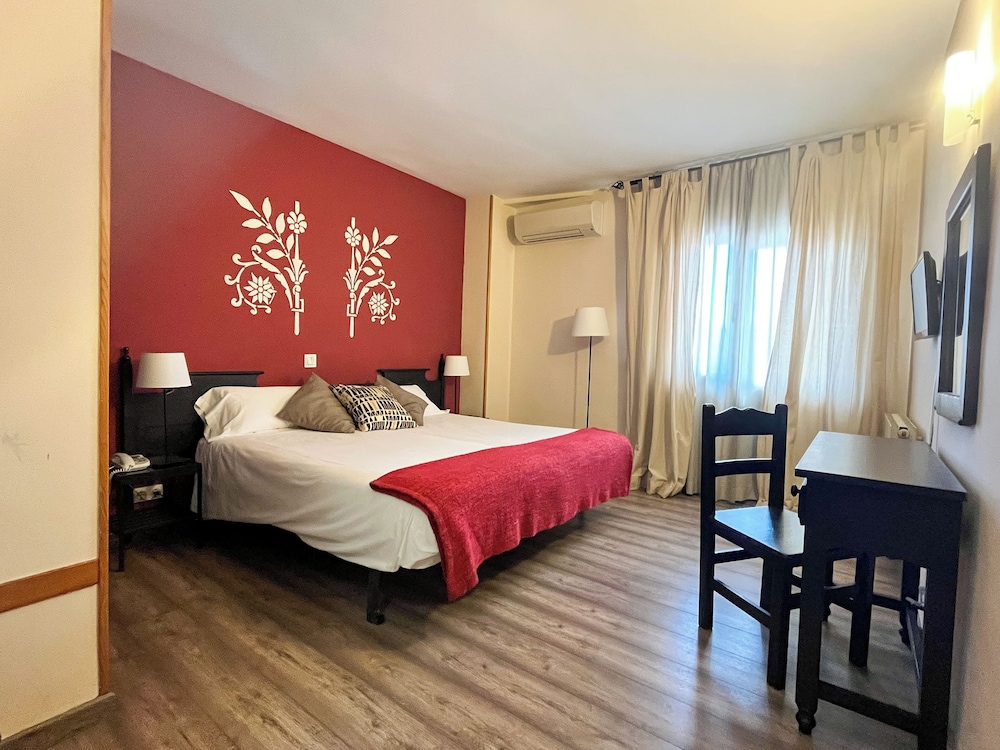
Take a mid-range three-star inside the walls in shoulder season. Tuesday: €80-95. Friday: €105-125. Saturday: €120-145, rising to €160-190 if a bridge holiday or Semana Santa is attached. Sunday night is the anomaly and the bargain — the day-trippers have gone home, the Madrid weekenders have checked out, and the same room often lists at €70-85, the lowest of any night that is not a January Tuesday.
Guesthouses compress the swing to about €20 a night, boutiques widen it to €70 or more. Parking follows the same curve: the pay car parks around the edge of the old town are usually easy on a Wednesday morning and full by noon on Saturday, and the regulated on-street zone is enforced on weekday mornings and afternoons but generally free on Sunday — confirm the current hours on the signage or with the ayuntamiento, since these rules change. If your budget is fixed, moving one night from Saturday to Sunday is the single biggest lever you have.
Monday: the closure trap
The classic mistake is a Sunday-night arrival with all of Monday to sightsee. The Alcázar and the Cathedral open daily, which saves the day, but most of the smaller museums — the regional Museo de Segovia, the Casa-Museo de Antonio Machado, several of the church-run sites — follow the Spanish norm of closing Mondays, and the Templar church of Vera Cruz down in the valley has traditionally closed Mondays too. Always check current opening days with each site before you plan around them.
Restaurants pile on. In Segovia the standard closing day is Sunday evening plus all Monday, and in the villages it is Monday and Tuesday. So a Monday visitor gets the two headline monuments, empty streets, cheap rooms — and a genuine struggle to eat well at 21:30. If Monday is unavoidable, make it your walking day: the Eresma valley circuit past the Monasterio de El Parral and up to Zamarramala needs nothing to be open, and book your good dinner for the Tuesday.
Sunday in Segovia is a local event, not a quiet day
Sunday lunch is the big meal of the Segovian week, and the cochinillo houses around the aqueduct and Plaza Mayor — Mesón de Cándido and Restaurante José María among them — run at capacity from 14:00 to 16:30 with three generations at every table. If you want roast suckling pig at its best, this is when the ovens are working hardest, and it is also when you most need a reservation, ideally a week out in shoulder season.
Then at about 17:00 the switch flips. Sunday evening is the deadest slot of the week: half the kitchens shut, the shops on Calle Juan Bravo pull the shutters down, and you can stand alone at the Mirador del Alcázar at sunset. Plan for it rather than being caught by it — eat a long lunch, walk the ramparts at dusk, and settle for tapas and a plate of torreznos in one of the bars that stays open around the Plaza Mayor.
What midweek genuinely takes away
Three things. First, the villages: Pedraza, Sepúlveda, Turégano and Ayllón run largely on weekend trade outside July and August, and on a Wednesday in February you may find one bar open and the castle keeping short hours. Second, the fountains at La Granja de San Ildefonso, which run on a limited seasonal schedule usually concentrated on weekend afternoons and holidays — check the current calendar with Patrimonio Nacional before making the trip. Third, evening atmosphere: Segovia's tapas circuit is thin on a Tuesday night in November.
Against that, midweek gives you the Alcázar at opening with maybe twenty people in it, a table anywhere at 21:00, and the run of the Cathedral cloister. My rule: if the trip is about monuments, food and photographs, go midweek. If it is about fiestas, fountains, village markets and life in the plazas, pay the Saturday premium and accept the queues — you cannot get the second experience on a Wednesday at any price.
Seasonal twist: the weekday gap widens and narrows
The midweek discount is not constant. In January, February and November it is at its widest in percentage terms — a €95 Saturday against a €62 Tuesday — because there is almost no midweek demand at all. In July and August it narrows, because Spanish family holidays fill Tuesdays and Wednesdays too, and the gap can shrink to €15-20. During Semana Santa week in 2027 (22-28 March) it disappears entirely: Wednesday is a peak night, not a bargain.
The bridges invert it completely. When 12 October 2026 falls on a Monday, that Monday is the most expensive night of the month and the following Tuesday to Thursday is the cheapest stretch of the autumn. The same happens after the 5-8 December bridge. Learn to read the Spanish holiday calendar alongside the day of the week and you will beat the average visitor by about €35 a night without changing anything else about your trip.
The pattern I would book
Two nights, Sunday to Tuesday, in late September or the first half of October. You arrive as the day-trippers leave, get the cheapest bed of the week, have Sunday evening on the ramparts to yourself, do the monuments on an uncrowded Monday morning where they are open, walk the valley when they are not, and eat properly on Monday night at whatever reopened for Tuesday. Budget roughly €160-200 for two nights in a good three-star inside the walls.
If you can only travel Friday-Sunday, do the reverse of what everyone else does: monuments at 09:00 on Saturday before the trains land, the Judería and the valley path at midday when the centre is worst, and a late Saturday dinner at 22:00 when the day-trippers are back in Madrid. Book the restaurant before you book the hotel — in Segovia on a Saturday, tables at the good roast houses run out earlier than rooms do.
Before you book
The questions people ask about Segovia, answered with this month’s numbers.
Typically €30-45 a night for a three-star inside the walls in shoulder season — around €80-95 on a Tuesday against €120-145 on a Saturday. Sunday night is often cheaper than Tuesday. The gap narrows to €15-20 in August and vanishes altogether during Semana Santa and bridge weekends.
For museums, yes: most smaller sites close, as does the Vera Cruz church traditionally, and many restaurants shut Sunday evening through Monday. The Alcázar and the Cathedral open daily, so a Monday works if you pair them with the Eresma valley walk. Verify each site's current opening days before you go.
Before 10:30 and after 18:00, every day of the week. The Madrid trains and coaches concentrate arrivals between 11:00 and 13:00, and the crowd holds until about 17:30. Staying overnight is the only way to get the aqueduct and Plaza Mayor with fewer than a hundred people in them.