Hotels with air conditioning in Segovia, ranked
 Shuttered hotel window in Segovia with sunlight on thick stone walls
Ten options for a July stay at 1,005 metres, ranked by whether they actually cool the room, plus the one listings word that fools visitors every summer.
Does Segovia need air conditioning at all?
Honest answer: for two months, sometimes. The city sits at roughly 1,005 metres on the Castilian meseta, which produces a big daily swing. July and August afternoons commonly reach 32 to 35°C, and heat spells push higher, but the same night typically falls to 15 to 18°C. That means a room with cross-ventilation, shutters closed from eleven in the morning and windows thrown open at ten at night is genuinely comfortable in an ordinary summer week. It is why so much of the old hotel stock never installed cooling.
The exceptions matter, though. Attic rooms under tile roofs store the day's heat and release it at midnight. Interior courtyard rooms that are blissfully quiet may have no through-draught at all. And a run of four consecutive days above 36°C, which the province does get, defeats ventilation entirely. If you are travelling with a baby, sleeping badly in heat, or arriving in the second half of July, pay for cooling. In May, June, September and October, do not: you will not switch it on.
The listings trap: climatizado is not air conditioning
Spanish hotel listings use climatización and climatizado loosely. In practice the words often mean the building has climate control of some sort, which in a Segovian house frequently means heating only, because heating is the year-round priority at this altitude. Calefacción is heating. Aire acondicionado is cooling. If a page says climatizado and nothing else, write and ask the direct question: does the room have refrigerated cooling, and is it controllable from inside the room?
The second question matters as much as the first. Plenty of small hotels here run a central system with a seasonal changeover, so a unit on the wall can be entirely inert in June because the building is still in heating mode. Others have split units in some rooms only, usually the newer or pricier categories, and the booking engine does not distinguish. A one-line email saves the trip. Also ask whether windows open, because a handful of refurbished rooms have sealed glazing, which is fine with working cooling and miserable without it.
1 to 3: modern hotels outside the walls
The reliable cooling in Segovia is in the buildings put up in the last forty years: the three and four-star hotels on the approaches to the city, in Nueva Segovia, El Salvador and out towards the Guiomar station and the industrial fringe. Ducted or split systems in every room, lifts, blackout curtains, free or cheap parking, doubles at €70 to €115. In an August heatwave these are objectively the most comfortable rooms in the province, and often the cheapest too, because they lack the old town premium.
The cost is that you are not in medieval Segovia. Expect a walk of 15 to 25 minutes into the Aqueduct, uphill on the way back, or a short drive plus €18 to €22 a day in the old town car parks. Rank one to three purely on the brief. If your reason for the trip is the Cathedral at dawn and dinner on a floodlit plaza, this is the wrong tier, and the honest advice is to accept a slightly warmer room closer in and use the cool nights.
4 and 5: old-town four-stars with retrofitted ducting
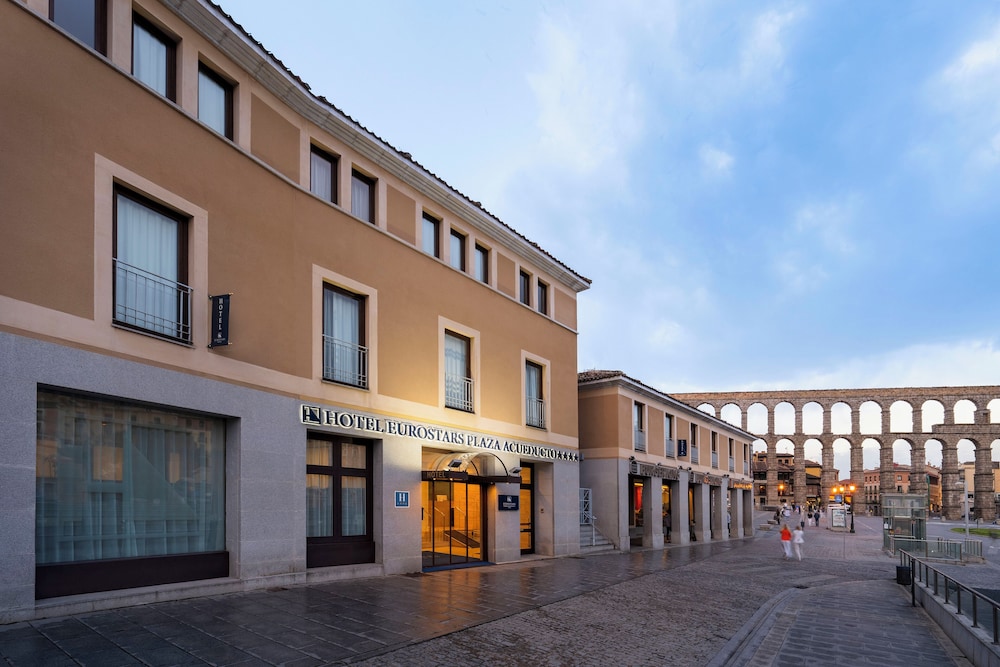
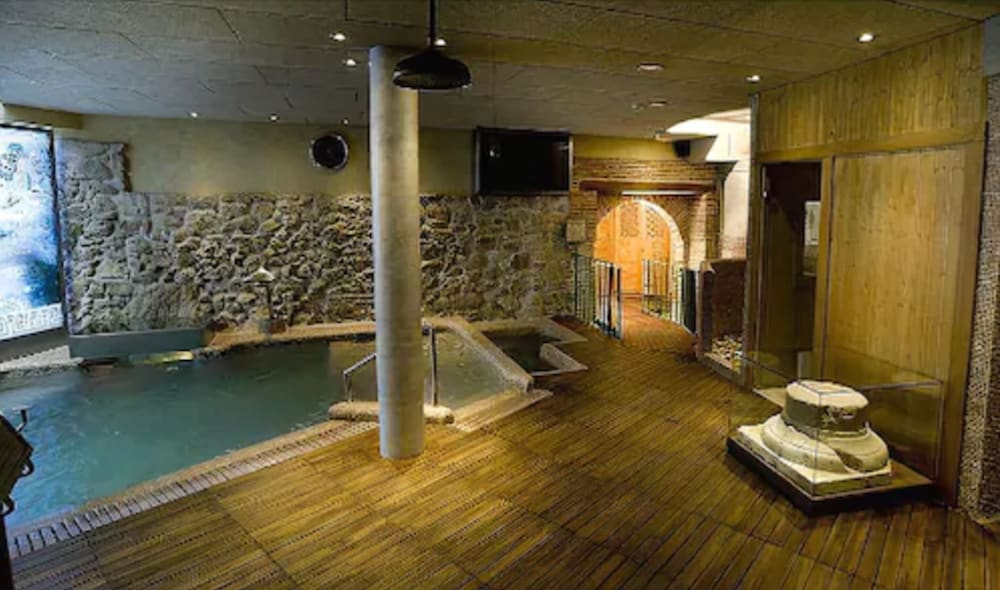
A handful of larger properties inside or immediately beside the walls have been refurbished thoroughly enough to carry real ducted cooling, threaded through dropped ceilings during works. These are the €130 to €200 rooms, and in the second half of July they earn the premium: you get 21°C at three in the afternoon and a five-minute walk to the Plaza Mayor. The Parador de Segovia, on the higher ground north of the city with its long view back at the old town, also belongs in this tier and has indoor and outdoor pools.
Two warnings. Retrofitted systems in protected buildings are frequently zoned, which means your room shares a thermostat with three others and you can influence but not control the temperature. And where planning rules restrict external condenser units, some rooms in the same hotel have cooling and some do not, so book the specific room category that lists aire acondicionado rather than trusting the hotel-level amenity list. Rank four and five: the best compromise between location and comfort, at a real price.
6 and 7: the attic rooms, and why they are the trap
Every small hotel in the Casco Antiguo and Judería has them: the top-floor room with sloping beams, a skylight and a rate €20 to €30 below the floor beneath. They are charming in April. In late July they are the hottest rooms in the city, because a Segovian tile roof over a lightly insulated void behaves like a storage heater and gives the heat back from ten at night onwards, exactly when you want to sleep. A skylight with no external blind makes it worse, not better.
Rank six and seven, with the caveat that they are perfectly good value from October to June. If you are offered one in summer, ask three questions: is there refrigerated cooling, does the skylight have an external shade or only an internal blind, and is there a ceiling fan. A ceiling fan plus night ventilation handles most Segovian summer nights fine. An internal blind alone does not. Where the answers are wrong, ask to move down a floor and pay the difference; it is usually €15 to €25.
8 to 10: village and rural hotels, where thick stone does the work
In Pedraza, Sepúlveda, Turégano, Zamarramala and the road villages, the stock is converted stone houses with walls 60 to 100 centimetres thick and small windows. Many have no cooling and do not need it: an interior temperature of 23 to 25°C on a 34°C afternoon is normal, and nights are cooler than in the city because there is no urban heat island. Doubles at €75 to €140. La Granja and Valsaín go further, sitting 185 metres higher than Segovia, which is worth a genuine degree or two after dark.
Rank eight to ten for summer comfort without machinery, and first for August value. What to check: whether the room is on the top floor under a roof, which reintroduces the attic problem; whether windows have insect screens, because open windows near the Eresma or the Duratón in July bring company; and whether there is any fan at all. If a rural hotel offers a fan, take it. Skip modern-built rural annexes with big picture windows facing west, which get all the afternoon sun and none of the stone.
Low-tech tactics and the booking I would make
Four things that work here and cost nothing. Close shutters and curtains by eleven in the morning and leave them closed until eight at night. Open opposite windows at ten in the evening for a cross-draught; the meseta cools fast after sunset. Ask reception for a fan, which most small hotels keep for exactly this. And plan the day around it: sightsee from eight to noon, eat a long lunch, disappear until six, then walk the walls and the Eresma path in the evening light like the locals do.
My booking: in the first half of July, September or any shoulder month, an old-town courtyard room without cooling at €95 to €140, using shutters and night air. In the last fortnight of July or in August, or with children who sleep badly, a modern hotel outside the walls at €75 to €110 with real ducted cooling and a car, or one of the properly refurbished four-stars if the budget stretches to €150 plus. Skip attic rooms in August entirely, whatever the discount says.
Before you book
The questions people ask about Segovia, answered with this month’s numbers.
Typical July and August afternoons reach 32 to 35°C, with hotter spells above that, and nights usually fall to 15 to 18°C thanks to the 1,005-metre altitude. That swing is why ventilation works most of the time and fails during multi-day heatwaves. Check the forecast a week out and book cooling only if a hot spell is coming.
Ask three things by email: does this specific room category have refrigerated cooling, is it controllable from the room or centrally zoned, and do the windows open. Add a fourth if you are offered a top floor: does the skylight have an external shade. Vague amenity lists say climatizado, which often means heating only.
Rarely. June afternoons average in the high twenties with cool evenings, and September drops steadily, with nights often needing a blanket by the end of the month. Both months are better value than August across the province, with room rates typically 15 to 25 per cent below peak in the old town.