Hotels with kitchenettes and apartments in Segovia for long stays, ranked
 A small apartment kitchen with a window looking onto a Segovian street of tiled roofs
Nine self-catering options for a week or a month in Segovia, from old-town apartments at €90 a night to apart-hotel studios that drop below €40 a night on a 30-day rate — with the laundry, heating and shopping details nobody lists.
Why a kitchen changes the maths here
Segovia is a two-day city that people keep needing to stay in for two weeks: researchers at the IE campus buildings, contractors, families visiting the hospital, and anyone commuting to Madrid on the 27-minute Avant from Guiomar. Hotel rates that are perfectly reasonable for a weekend — €90-140 a night in the centre — become absurd over 20 nights, and eating out in a city famous for roast suckling pig gets both expensive and heavy fast. A kitchenette turns a €2,400 fortnight into something closer to €1,100 all in.
The distinction that matters is between a kettle-and-microwave "kitchenette" and a real kitchen with two induction rings, an oven or combi microwave, a full fridge and a washing machine. In Segovia's stock the second is common, because most of the self-catering supply is apartamentos turísticos in converted flats rather than purpose-built apart-hotels. Ask for a photograph of the actual kitchen in the actual unit, not the listing's stock image — buildings here are subdivided unevenly and two flats on the same landing can be very different.
1. Old-town apartments inside the walls
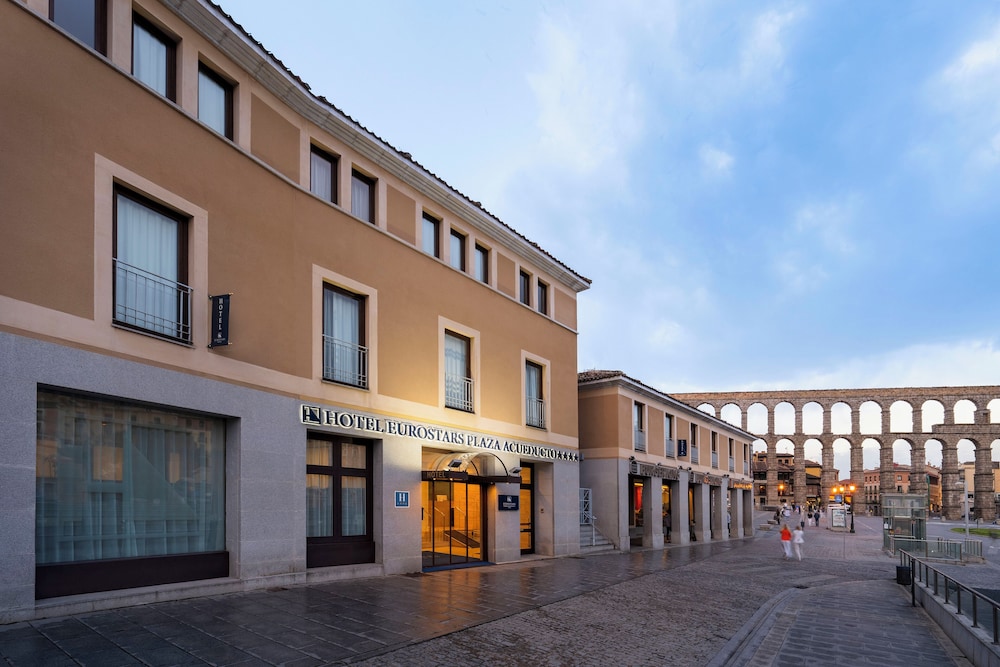
The largest pool of self-catering sits in the walled centre, in flats above the shops on and around Calle Real, in the Judería, and in the quieter streets near San Millán and towards San Andrés. Nightly rates run about €90-150 for a one-bedroom, dropping perhaps 25-35 percent on a weekly booking and further on a month. What you buy is the ability to walk out for bread and be at the cathedral in four minutes, plus the sound of the place: bells, swifts screaming round the towers in June, the Sunday morning silence.
Two honest catches. First, stairs — most of these buildings have three or four floors and no lift, and the flight is often steep with a turn. Second, heating and noise. Old Segovian buildings hold cold, and January nights drop below freezing, so ask specifically whether heating is central, electric radiators, or a single unit in the living room, and who pays for it on a monthly let. Streets near Plaza Mayor and Calle Infanta Isabel are loud at weekends; a courtyard-facing bedroom is worth more than a view.
2. Apart-hotel studios outside the walls
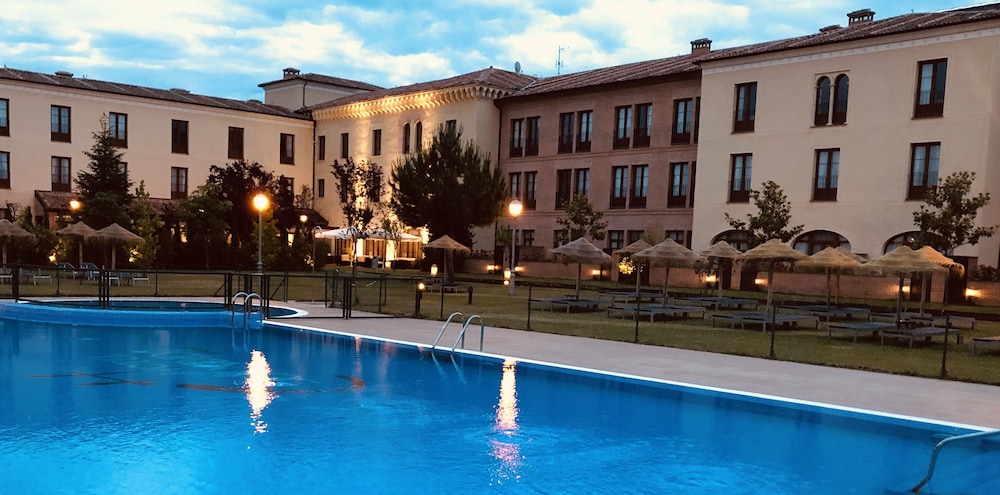
The purpose-built studio and one-bedroom stock on the flat side of the city — the boulevards around Paseo Ezequiel González, and the newer blocks in Nueva Segovia and San José — is where the long-stay value is. These come with a lift, a parking space at €10-18 a night or included on monthly deals, a proper induction hob, and a washing machine in the unit rather than a shared laundry. Nightly equivalents on a 30-day booking commonly land in the €38-60 range, which no old-town flat matches.
They are dull, and that is the trade. The compensations are practical: supermarkets within 300 m instead of a cobbled climb with bags, a pharmacy, a gym, and pavements you can wheel a suitcase along. The walk to the Aqueduct is 10-15 minutes downhill, back uphill. If your stay is about work rather than sightseeing, this is the correct answer, and I would take the extra €200 a month you save and spend it on Saturday lunches in the asadores. Confirm whether cleaning and linen changes are weekly or on request, as that varies wildly.
3. La Granja and Palazuelos de Eresma for a mountain month
For a summer stay, the smartest kitchen in the province is 11 km uphill. La Granja de San Ildefonso sits at about 1,190 m, so July nights are meaningfully cooler than in the city — the difference between sleeping and not, since much of Segovia's older stock has no air conditioning. Apartments and small aparthouses around the palace let for roughly €70-120 a night, less monthly, and the town has a supermarket, a market day and enough restaurants to not cook every evening. Neighbouring Palazuelos de Eresma offers newer flats with parking at lower rates.
In winter the same altitude works against you: heating bills rise, and the CL-601 up from Segovia can be slow after snow. If you are here December to February, check whether heating is included in a monthly rate or metered — an uninsulated stone flat at 1,190 m can burn through €150 a month in electricity alone. And check bus times down to Segovia before assuming you can live carless; the service exists but thins out in the evening, so confirm current timetables with the operator.
4. Casas rurales rented by the room, midweek
A less obvious option: the rural houses in Torrecaballeros, Zamarramala, Valsaín and the villages along the N-110 often rent individual rooms with shared kitchen access midweek, when nobody wants the whole house. Rates fall to €55-85 a night with kitchen use included, and you get a garden, a wood stove and space to work. This suits a stay of one to two weeks for someone with a car who does not need to be in the city daily. Zamarramala in particular is only 3 km from the Alcázar viewpoint side of the city.
The limits: shared kitchens mean shared timing, weekends are usually blocked for whole-house bookings, and you will need to move out or renegotiate around them. Wi-Fi in the villages is generally fibre now but verify the speed if you work on video calls. And factor the car properly — parking in Segovia's centre costs €15-22 a day in the underground car parks, which erodes the saving fast if you drive in every morning. This works best as a rural base with occasional city trips, not as a commute.
5. Where to shop, and what it costs to cook here
The supermarkets are outside the walls, on the flat, which is the single most important logistical fact for anyone self-catering in the old town: plan a weekly big shop by car or delivery, and use the small shops inside the walls for bread, fruit and the essentials. Segovia has a covered municipal market and a weekly open-air market at the fairground site — confirm the day and hours locally, as they shift with the calendar. Butchers here are excellent and cheap; a kilo of good chorizo, lentils and a bag of judiones de La Granja will feed two people twice for under €12.
Cook to the region and it gets better. Judiones — the enormous white beans grown around La Granja — with chorizo and a pig's ear is a two-hour Sunday project that costs a fraction of ordering it out. Ponche segoviano from a proper pastelería for dessert. Wine from the small Valtiendas denomination up near Sepúlveda, or Ribera and Rueda from an ordinary supermarket at €5-9 a bottle. Budget €45-70 a week per person for groceries and you will eat considerably better than the €18 menú del día.
6. Contracts, deposits and the 30-day line
Stays run as tourist accommodation up to a point; beyond roughly a month, some owners switch you to a seasonal rental agreement with different paperwork, a bigger deposit and utilities billed separately. That is not a scam — it reflects Spanish rental law — but it changes your costs, so establish before you commit whether the quoted monthly figure includes electricity, water, heating, Wi-Fi and cleaning. Deposits of one month are normal on longer lets; a €150-300 damage deposit is normal on shorter self-catering bookings.
Negotiate directly. Platform prices for 28 nights are almost always beatable by messaging the owner, particularly for November to March, which is Segovia's dead season outside the Christmas bridge. Ask for a monthly figure, all in, and ask what happens if you extend by a week. Get the heating arrangement in writing if you are arriving between November and March — it is the single most common source of disputes in a city where January mornings sit below zero and stone walls take three days to warm through.
The verdict
For a working month, book an apart-hotel studio on the flat outside the walls: lift, parking, washing machine, supermarket at the corner and a rate near €40-55 a night that no old-town flat will match. For two weeks with a partner where the point is the city, take a one-bedroom apartment in the quieter old-town streets towards San Millán or San Andrés rather than on Calle Real — a hundred metres off the main axis buys silence for the same money.
For July and August, go up to La Granja and accept the drive. The 200 m of extra altitude is worth more than any air-conditioning unit, the palace gardens are a ten-minute walk from your door, and the summer evening temperature difference is roughly the gap between sitting outside comfortably and not sitting outside at all. Skip anything that describes itself as having a kitchenette without listing a hob — in Segovia that phrase covers a kettle, a toaster and a fridge the size of a briefcase.
Before you book
The questions people ask about Segovia, answered with this month’s numbers.
Expect roughly €1,150-1,700 for a one-bedroom in the old town and €900-1,400 for a studio or one-bedroom outside the walls, before utilities. November to March is substantially cheaper than spring and autumn. Always confirm whether electricity and heating are included — winter heating in a stone building can add €120-180 a month.
Usually neither. Most are in three or four-storey buildings with steep original staircases and no lift, and cooling relies on thick walls and shutters. That works reasonably well because Segovia's nights are cool even in July, but for a summer month consider La Granja at 1,190 m or a modern block outside the walls.
Outside the walls, on the flat, where the full-size supermarkets are; there is no large supermarket inside the old town. Plan one car or delivery shop a week and use the small shops, bakeries and butchers inside the walls day to day. Local judiones, lentils and cured meat make cooking here cheap and genuinely good.