Getting from Segovia's AVE Station to La Granja Without a Car
 Getting from Segovia's AVE Station to La Granja Without a Car
The high-speed train drops you 15 km from the city and the palace sits another 11 km beyond that — here is how to bridge both gaps on buses, with honest timings and which option I would actually book.
First, the geography nobody explains at the booking stage
Segovia's AVE station, Segovia-Guiomar, is not in Segovia. It sits in the empty ground off the SG-20 ring road, roughly 6 km north-east of the Aqueduct and about 15 minutes by city bus from the old town. Line 11 runs the shuttle into the centre, and local buses 6 and 8 also serve the station area. If your train arrives after about 21:00, check the return times before committing; the last departures thin out and a taxi from Guiomar to the Aqueduct runs on the meter, typically in the region of 12 to 16 euros depending on traffic and luggage.
La Granja de San Ildefonso, the village everyone means by 'La Granja', lies on the northern slope of the Sierra de Guadarrama, around 11 km south-east of Segovia's walls and about 700 m higher. The Royal Palace, the Formal Gardens and the fountains are what you came for, but the road between the two climbs steadily through the pinewoods above the Eresma valley, and there is no train. Everything on this route is road-based, and almost everything is run by the same regional operator, so a single plan covers the whole day.
The bus from Segovia to La Granja, in practice
Buses to La Granja leave from Segovia's main bus station on Paseo Ezequiel González, a short walk from the Aqueduct and just outside the walls. The line is the 11 (some timetables show it as the Segovia–La Granja–Valsaín service). The trip takes about 25 to 30 minutes, and the bus drops you at the village centre, a 5 to 10 minute walk downhill to the palace gates. Regional buses on this corridor have historically cost a few euros one way; buy on board or at the counter, and bring coins rather than counting on card readers. Mid-morning departures are the busiest, when school groups and day-trippers converge.
The catch is frequency. Outside the summer months and weekends, you may find gaps of an hour or more between departures, and the evening service back to Segovia ends earlier than you might hope after a slow walk around the gardens. My advice: photograph the timetable at the bus station on arrival, and plan the return leg around a fixed departure rather than the other way round. If you miss the last convenient bus, a taxi back to Segovia is possible from the village taxi rank by the palace square, but do not count on it being free at short notice on a Sunday evening.
If you are staying in Segovia and visiting on a day trip
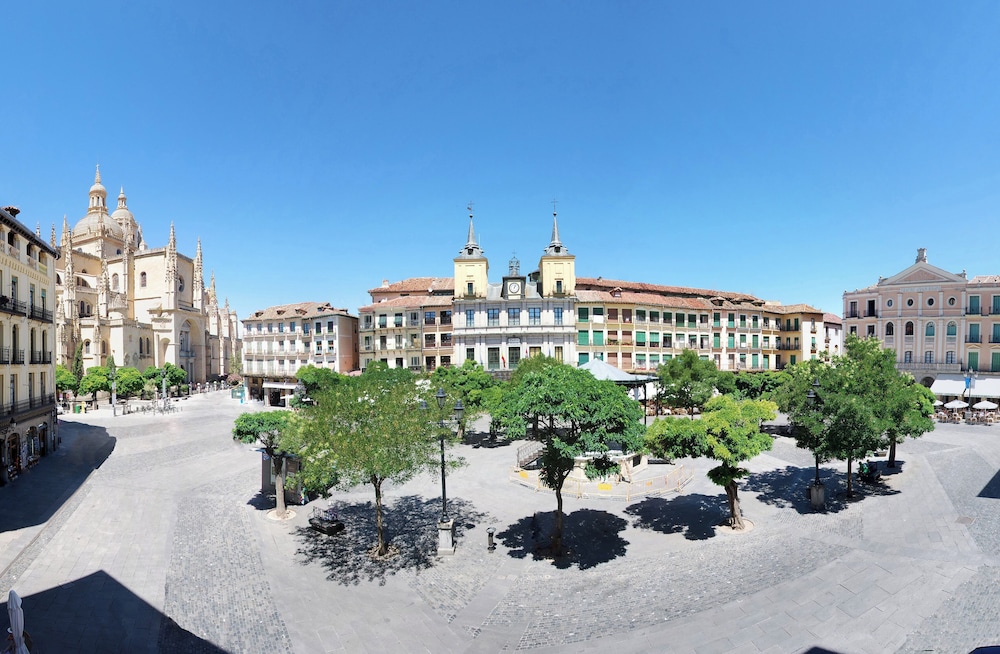
The simplest pattern is a hotel in Segovia's historic core, a morning bus out to La Granja, and an afternoon back. Base yourself within the old town near the Plaza Mayor or along Calle Real, where you can reach the bus station on foot in 10 to 15 minutes. Do not book a hotel next to Guiomar hoping to walk to the Aqueduct: you will be in a commercial estate with the ring road for company, and every meal and every sight will need a bus or taxi. Properties around the Plaza del Azoguejo put the Aqueduct, the Alcázar and the bus station all within easy reach.
Timing the day matters. The gardens are free to walk; the palace interior runs on timed entry and has historically cost around 9 euros for adults, with reduced rates for students and free entry on certain weekday afternoons for EU citizens — check the official Patrimonio Nacional page before you go, because the schedule shifts with the season. Fountain displays, when the water is switched on, are limited to selected dates in spring and summer; if that is your reason for going, plan around them and not the other way round.
Best months, what to skip, and the choice I would make
April to June and September to early October are the sweet spot. The climb to 1,190 m keeps La Granja noticeably cooler than Segovia, which makes high summer pleasant but means mornings in the pinewoods above Valsaín can be genuinely cold. November to February, the palace and gardens often sit under frost or snow, and some paths are slippery; if you go, use the midday bus and keep the visit short. Skip the temptation to combine La Granja and the Valsaín pinewoods in one afternoon on public transport — the onward buses are infrequent and the walk between them is longer than it looks on a map.
Given this region's sparser bookings and the fact that most travellers arrive by AVE and stay in the city, I would book two nights in Segovia's old town and treat La Granja as a half-day excursion, not a base. The bus from Paseo Ezequiel González to the village, a couple of hours among the gardens, and the same bus back is the least fragile plan. If you want the palace at opening time before the coaches arrive, the first morning departure is worth the early start; otherwise, skip the midday crush entirely and go after 15:00, when the gardens empty out and the light on the Sierra is at its best.
Before you book
The questions people ask about Segovia, answered with this month’s numbers.
Segovia-Guiomar sits about 6 km north-east of the Aqueduct on the SG-20 ring road. City bus 11 connects it to the centre in roughly 15 minutes, with buses 6 and 8 also serving the area. A taxi to the old town typically costs around 12 to 16 euros.
Yes. Buses leave from the main bus station on Paseo Ezequiel González and reach La Granja in about 25 to 30 minutes. Departures are frequent enough in summer and at weekends but can be hourly or worse in quieter months, so check the timetable on arrival.
It is possible but less forgiving. Buses still run, though with wider gaps, and the village sits 700 m above Segovia, so expect frost and occasional snow on the paths. Go on the midday service, keep the visit short, and confirm the last return bus before setting out.
Two to three hours covers the palace interior and a circuit of the Formal Gardens. Add an hour if you want to walk up to the fountains or the woods above the village. Palace entry has historically been around 9 euros for adults; check the official Patrimonio Nacional site for current times and rates.
The fountain displays are limited to selected dates, mostly in spring and summer, rather than running daily. They are the reason many people visit, so confirm the published dates on the Patrimonio Nacional website before you plan a day around them.
Stay in Segovia. The old town around the Plaza Mayor and Calle Real puts the Aqueduct, the Alcázar and the bus station within walking distance, and the hotel choice is far wider. La Granja works well as a half-day excursion rather than a base.
Late April to June and September into early October. The weather is reliable, the buses run their fuller summer and shoulder-season timetables, and the gardens are at their best. July and August are pleasant at altitude but busier with coach groups.
Skip trying to combine La Granja and the Valsaín pinewoods in one afternoon on public transport; the connecting services are thin and the distance deceives. Also skip hotels near Guiomar if you want to see the city on foot.