The 5 best castles in Segovia province, ranked
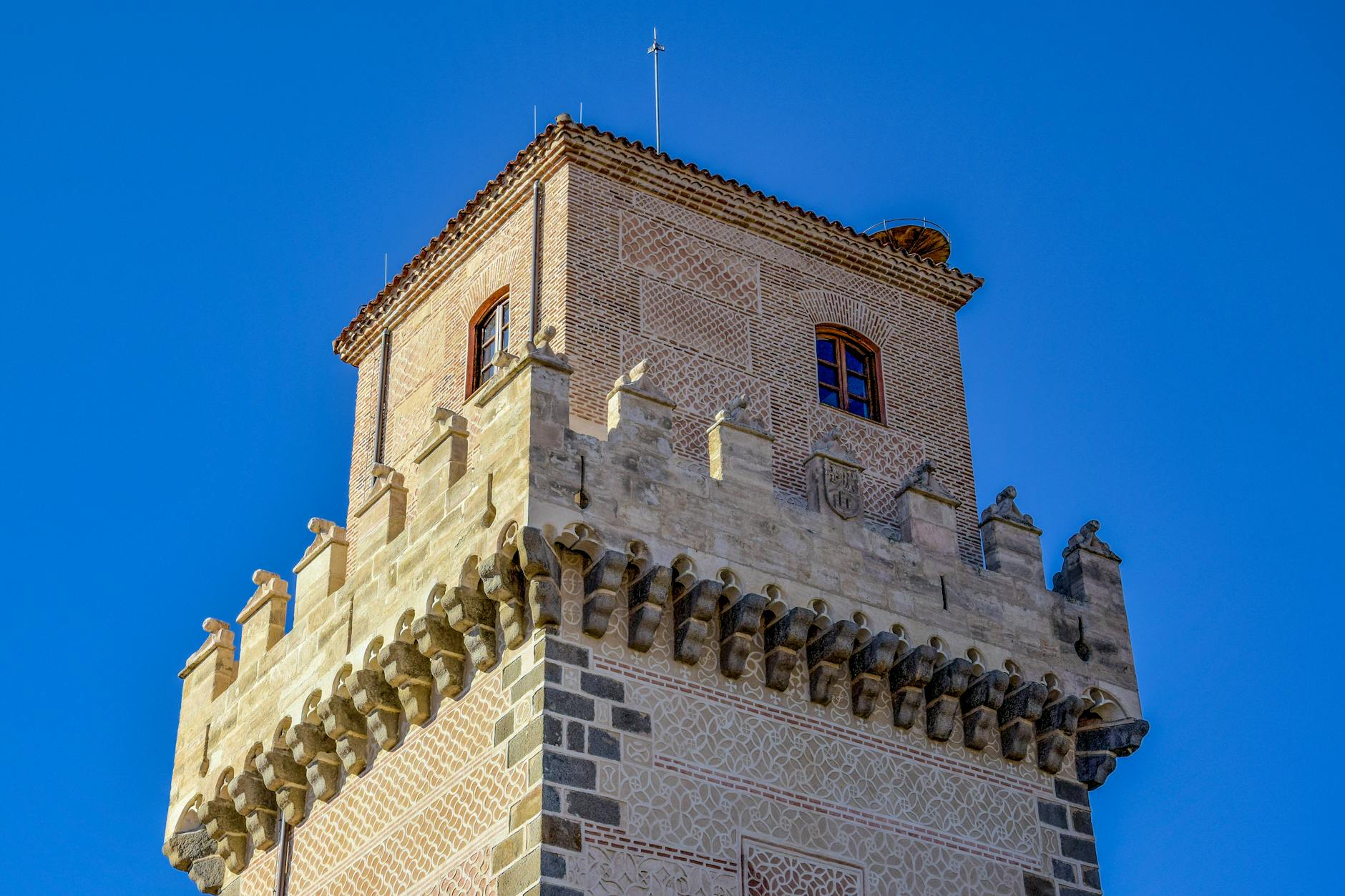 The brick Mudejar towers of Coca castle rising above its dry moat
Five fortresses within 60 km of the aqueduct, ranked by how much of each one you can actually walk into, with drive times and honest catches.
How this ranking works
Segovia province is one of the densest castle landscapes in Spain, a legacy of the frontier centuries when bishops, archbishops and dukes each fortified their own patch of the Duero plain. What separates a good visit from a photograph through a fence is access: some of these buildings are lived in, some are leased to institutions, some open for two hours on a Saturday. I have ranked them on how much interior you get, how intact the exterior is, and how much the surrounding village adds once you have finished. Distances here run from 34 km to 60 km from the aqueduct, so one castle a day is comfortable and two is a push.
The Alcazar is deliberately not in this list — it sits inside the city, everyone sees it, and it answers a different question. Two other exclusions: Castilnovo, near Condado de Castilnovo, is in private hands and opens erratically, and the fortress at Sepulveda has largely dissolved into the town's houses. Opening hours at every entry below shift with the season and with whoever holds the lease, so treat the times you find online as provisional and confirm with the town hall or local tourist office the week you travel. A wasted 100 km round trip is the single most common Segovia day-trip mistake.
1. Coca — the one worth the whole day
Nothing else in Castile looks like it. Built from the 1450s onward for the Fonseca family, with Alonso de Fonseca, archbishop of Seville, as its driving force, Coca is Mudejar brickwork on a monumental scale: polygonal towers, a barbican, arrow-slit patterns laid in relief, and a dry moat cut straight into the sandstone rather than filled with water. It reads as decoration and defence at once, which is exactly what a fifteenth-century prelate wanted. Late afternoon light turns the brick the colour of dried apricot, and because the castle sits at the edge of the village rather than the centre, you can walk the whole moat perimeter uninterrupted.
It is 52 km northwest of Segovia, about 50 minutes on the CL-605 through Santa Maria la Real de Nieva and then the local road via Nava de la Asuncion. Interior access is by guided tour only because a forestry training school occupies part of the complex, tickets are in the low single figures in euros, and tours run at set times rather than on demand — check before setting out. Stay after: Coca was the Roman Cauca, birthplace of the emperor Theodosius I, and stretches of Roman wall and the church of Santa Maria la Mayor sit ten minutes' walk away. Book this one if you only have one castle day.
2. Cuellar — the biggest town, the fullest visit
The castle of the Dukes of Alburquerque crowns Cuellar with a Gothic-Mudejar core and a Renaissance gallery added when the family wanted a palace rather than a keep. It is the most museum-like of the five: guided routes take in the courtyard, cellars and ducal rooms, and dramatised night tours run in the warmer months, which is a genuinely good use of a summer evening at 900 m altitude when the city is still at 30 degrees. The castle also gives you the best explanation of how a single family ran a Castilian town for four centuries, complete with tombs, patronage and rebuilt churches.
Cuellar is 60 km north on the CL-601, a fast 50 minutes, and it is the one destination here with a usable bus service — the Segovia–Valladolid coaches call in, though timetables thin out at weekends, so verify with the operator. Beyond the castle, Cuellar holds the province's largest concentration of Mudejar churches: San Martin, San Esteban and San Andres are all brick apses of the twelfth and thirteenth centuries within a fifteen-minute walk. If you come in the last week of August you get the encierros instead, documented since the thirteenth century and claimed as Spain's oldest bull-running.
3. Turegano — a church inside a fortress
Turegano is the oddity that pays off. What looks from the road like a standard bishops' castle turns out, once you are through the outer wall, to enclose the Romanesque church of San Miguel entirely — the belfry rises straight out of the fortified block, so you get a bell tower with battlements. It was the stronghold of the bishops of Segovia, remodelled heavily in the fifteenth century under Juan Arias Davila, and it later served as a prison, which explains the bleakness of some interior rooms. The walk up from the village takes ten minutes and the views north over the paramo are enormous.
At 34 km on the CL-603 it is the closest of the five, roughly 30 minutes by car, which makes it the easy half-day. The catch is that opening is limited and sometimes seasonal, and the interior is a shorter visit than Coca or Cuellar — budget 45 minutes inside. Compensate with the village: Turegano's huge porticoed Plaza Mayor is ringed with wood-fired asadores where roast lamb runs around €25 to €30 a head, and lunch here beats anything you will find at a castle café. Go on a Sunday and book the table before you leave Segovia.
4. Pedraza — the village outranks its castle
Pedraza's fortress stands at the far end of the walled village, bought in 1926 by the painter Ignacio Zuloaga, who used it as a studio; his descendants still hold it and run a small museum of his work inside the keep. The history is better than the architecture: the sons of Francis I of France were held here as hostages in the late 1520s after Pavia, in cells you can look into. It is fourth on this list because the visitable area is modest and the hours are short, not because the setting disappoints.
The village is the real reason to drive the 37 km — about 40 minutes via the N-110 and the SG-P-2322 — and it is the one place in this list where staying the night makes sense. Pedraza has a single medieval gate, a cobbled Plaza Mayor on wooden columns, and a cluster of small stone-built guesthouses charging roughly €90 to €150 a night, more on the two July Saturdays of the candle concerts, when the village blocks cars and sells out months ahead. Skip Pedraza on an August Sunday afternoon, when coach parties and the lamb-lunch crowd overwhelm 400 residents.
5. Fuentiduena — ruins with an international footnote
Fifth place goes to a place most visitors have never heard of. Fuentiduena, 68 km north near the Duraton, keeps a long spine of wall and the shell of its fortress above the village, with the Romanesque church of San Miguel inside the enclosure. There is little to enter and no ticket office, which is precisely the appeal: you climb, you have the hill to yourself, and you look out over the river plain that these walls were built to control. Allow an hour and wear proper shoes; the ground is loose stone and there are no handrails.
The footnote is worth the drive for anyone who has been to New York. The apse of Fuentiduena's church of San Martin was dismantled in the late 1950s and rebuilt inside The Cloisters in Manhattan, in an exchange that brought Spanish frescoes home from the United States. Pair the stop with Sacramenia, ten minutes away, whose Cistercian monastery lost its cloister to a Hearst shipment that ended up in Florida. If you would rather have a guaranteed interior, substitute Castilnovo — but only if you have phoned ahead and had someone confirm an opening.
Should you count the Alcazar?
Yes, but plan it as a city visit rather than a castle day. The Alcazar occupies the rock where the Eresma and Clamores meet, and the shape people photograph — the prow, the slate spires — owes as much to the nineteenth-century rebuild after the 1862 fire as to the medieval palace. Inside, the Mudejar ceilings of the Sala de Reyes and the Sala de las Pinas are the highlight; the Torre de Juan II is a separate ticket and a stiff spiral climb of over 150 steps to the best panorama in the province. Admission sits in the €8 to €12 range depending on what you include, and the official site is the only reliable source for current prices.
Timing beats everything here. Queues build from about 11:00 and peak with the Madrid day-trip trains between noon and 15:00; the first hour of opening or the last ninety minutes are quiet. If you climb the tower, do it first, because it closes earlier than the palace on some schedules. And do not skip the walk down into the Eresma valley afterwards — the view back up at the fortress from the road towards Zamarramala is the shot the postcards use, and it is free.
Doing it without a car, and which to book
Public transport is honest about its limits here. Cuellar is the only castle on this list with a workable bus link, on the Segovia–Valladolid corridor; Turegano and Pedraza have services aimed at residents, typically running into Segovia in the morning and back late afternoon, which inverts what a visitor needs. Coca is reachable by a combination of bus and patience but not comfortably in a day. Taxis from Segovia run roughly €50 to €70 each way to Pedraza or Turegano — worth splitting between four people, punitive alone. Verify every timetable with the operator, as summer and school-year schedules differ.
If you have one day and a car: Coca in the morning, lunch in Coca or Nava de la Asuncion, back by mid-afternoon. Two days: Turegano and Pedraza on the northern loop, with the roast-lamb lunch in whichever village you reach at 14:00; Coca and Cuellar on the western loop, both off the CL-601 and CL-605. Three castles in one day is possible on paper and miserable in practice — the driving is easy but the visits are all guided and slot-based, and one missed tour collapses the schedule.
Before you book
The questions people ask about Segovia, answered with this month’s numbers.
Cuellar. The guided routes are short, the cellars and courtyards give kids something to run through, and the dramatised evening tours in summer hold attention far better than an audio guide. Coca's moat is spectacular but the tour is talk-heavy, and Fuentiduena's loose stone ruins suit older children only.
No. Part of the complex houses a forestry training school, so interiors are seen on scheduled guided visits only, at a low single-figure price in euros. You can walk the exterior and the dry moat freely at any hour, which is where the best photographs are anyway. Confirm tour times before driving out.
About 25 km, roughly 25 minutes on the SG-341 and CL-602 across pine and sandy farmland. They combine into one comfortable day from Segovia, with lunch in Cuellar. Total driving from the city and back is around 120 km, so budget a full tank and an early start in summer heat.
Yes, if you want the village empty. Day visitors leave by about 19:00 and the walled centre goes silent, lit only by the plaza. Small stone guesthouses run roughly €90 to €150 a night, with sharp rises around the July candle concerts, when rooms are gone months in advance.