A Half-Day Art Walk Around Segovia Cathedral
 A Half-Day Art Walk Around Segovia Cathedral
A compact loop from the Plaza Mayor through the cathedral cloisters, the Episcopal Palace and the lanes below the Alcázar, timed for light and quiet.
Starting at the Plaza Mayor and the cathedral's south door
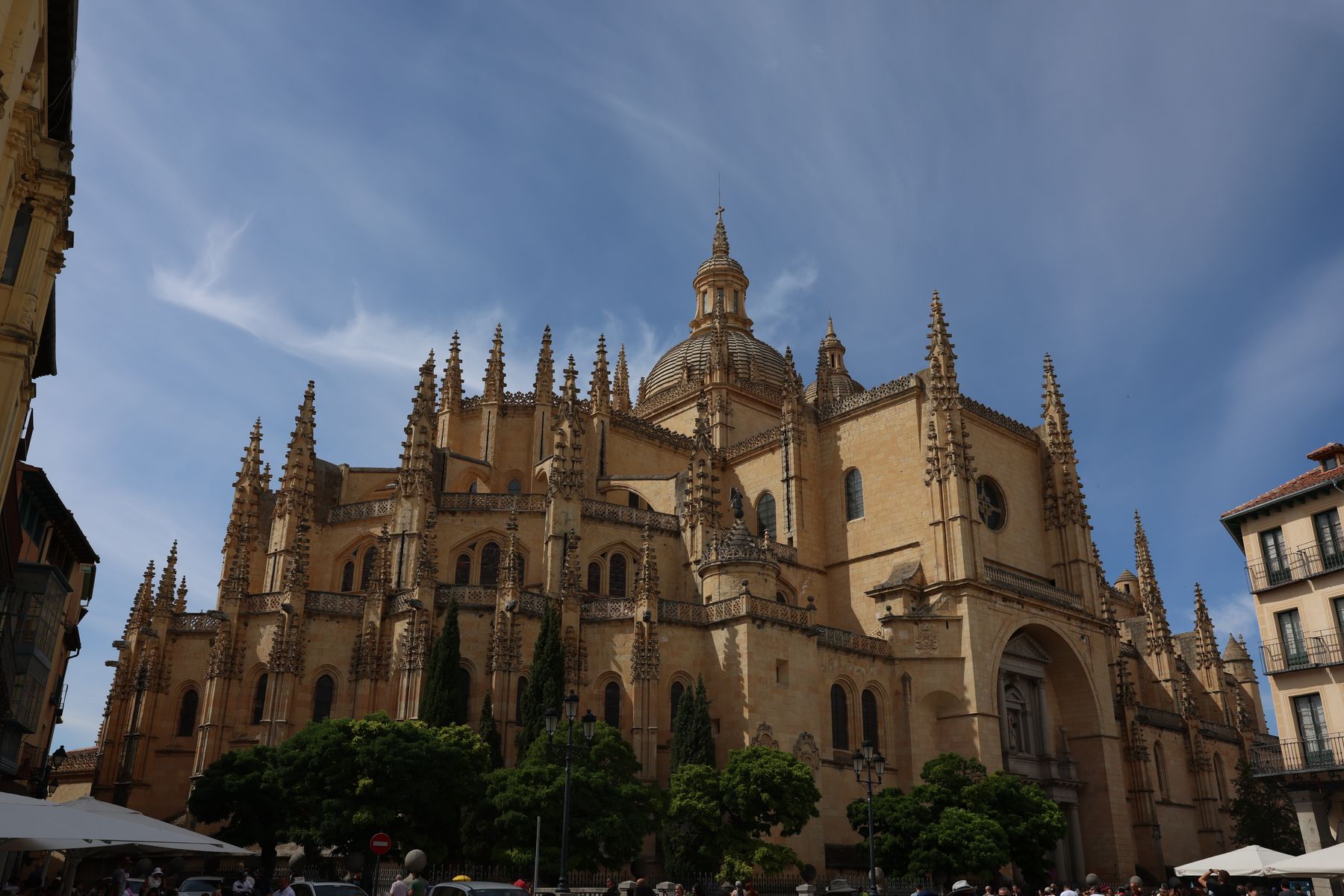
Begin at the Plaza Mayor, the arcaded square where Calle Real and Calle de Juan Bravo meet, and walk the two minutes to the cathedral's south entrance on Calle Marqués del Arco. The present building was begun in 1525 by Juan Gil de Hontañón after the old cathedral was damaged in the Comuneros revolt, and the late-Gothic shell with its Renaissance dome reads best in morning light from the square. Arrive at opening time, generally around 10:00 in summer and 09:30 in winter, to have the nave aisles close to empty.
Tickets sit in a modest band that most travellers will find reasonable, and the single combined entry covers the cathedral, the cloister and the chapter house tapestries. Inside, spend your time on the retablo by Francisco Sabatini's workshop circle, the wrought-iron reja screens and the Flemish tapestries in the chapter house, which are rotated to protect them from light. Photography without flash is generally allowed; tripods are not. Allow 60 to 75 minutes.
The cloister, the Diocesan Museum and Calle de Juan Bravo
Exit through the cloister, a serene four-sided yard rebuilt after the 1520 fire and later reworked, with a garden of box hedges and orange trees. Adjoining is the Museo Diocesano, housed in the old Episcopal Palace, where the highlight is the collection of medieval and Renaissance religious painting and silverwork. It is small enough to see properly in 45 minutes. If you have any interest in the cathedral's construction, the display on the building sequence is the most useful thing in the museum.
Come out onto Calle de Juan Bravo, Segovia's main commercial street, lined with noble houses carrying coats of arms and the Romanesque church of San Martín. This half-kilometre is the best free architecture walk in the city: look up at the carved eaves and the brickwork of the Torreón de los Guzmanes. Stop for coffee at one of the small cafés here rather than in the plaza, where the tables cost more. Then continue downhill toward the Alcázar.
Down to the Alcázar and the walls
From San Martín, follow Calle de la Judería or the stepped lane past the Casa-Museo de Antonio Machado, where the poet lodged in the 1920s, down to the Plaza de la Reina Victoria Eugenia. The Alcázar rises above the Eresma valley here, and the exterior is worth the walk even if you skip the interior. The view back up to the cathedral tower from the square in front of the Alcázar explains why painters have worked this city for centuries — the composition of tower, roofs and the Guadarrama ridge in the distance.
Walk out along the Paseo del Salón de Isabel II, the tree-lined promenade below the walls, to the Puerta de San Andrés, then climb back through the Judería. This is where the city's Sephardic past is concentrated, and the small interpretation centre near the Puerta de San Andrés gives it context in twenty minutes. Continue up to the Plaza Mayor. The entire loop, with two museum stops, is comfortably a half day; without interiors it is 90 minutes.
Timing, light and practical notes
Segovia sits at about 1,000 metres on the Meseta, so summers are hot at midday and winters genuinely cold. May, June, September and early October give the best balance: soft light on the cathedral's north side in late afternoon, and temperatures that make the climb from the Judería pleasant. July and August are fine if you start by 09:30 and finish before 14:00. In winter the cathedral closes earlier, so check opening hours the day before; Sundays and religious holidays restrict access to parts of the building.
Getting there from Madrid is straightforward: the high-speed Avant from Chamartín takes around 27 minutes to Segovia Guiomar, from where buses run to the centre in about 15 minutes; the slower regional train from Atocha to Segovia station takes around two hours and stops closer to town. If you are staying overnight, base yourself between the Plaza Mayor and the Aqueduct — anywhere within the old town walls puts this walk on your doorstep, and evenings after the day-trippers leave are the best hours in the city. Skip the little tourist train and the Alcázar's audio guide; the streets are the point. Book a hotel inside the old town rather than out by the Guiomar station, which sits in open country with nothing around it.
Before you book
The questions people ask about Segovia, answered with this month’s numbers.
The cathedral, cloister and Diocesan Museum take around two hours. Add 45 minutes for the walk down to the Alcázar and back through the Judería. Three hours in total is comfortable, and you can cut it to 90 minutes by skipping museum interiors.
First thing at opening, especially on weekday mornings in May, June and September. Day-trippers from Madrid arrive from late morning, so the nave fills between 11:00 and 14:00. Late afternoon after 16:00 is also calm, though winter closing comes early.
The Avant high-speed train from Chamartín takes about 27 minutes to Segovia Guiomar, then a bus to the centre takes roughly 15 minutes. The regional train from Atocha is slower at around two hours but arrives at the closer Segovia station, a short walk from the Aqueduct.
Yes, if you care about medieval and Renaissance art. It is compact, housed in the old Episcopal Palace beside the cloister, and its painting and silverwork collection takes under an hour. Skip it if you are short on time and prioritise the cathedral and the Alcázar exterior instead.
Anywhere between the Plaza Mayor and the Aqueduct, inside the old town walls. That puts the cathedral, Calle de Juan Bravo and the Judería within a five-to-ten-minute walk. Avoid hotels near Segovia Guiomar station, which is several kilometres out with nothing nearby.
Segovia is around 1,000 metres high, so mornings are cool even in summer. Wear layers and comfortable shoes for cobbles and steps. July and August are hot at midday, and December to February is cold enough for a proper coat; spring and autumn are the easiest months.
Generally yes, without flash, and the cloister garden is a popular subject. Tripods and selfie sticks are usually not permitted. Check current rules at the ticket desk, as they can change for conservation reasons or during services.
Only if you have a full day. The exterior and the valley views from the Plaza de la Reina Victoria Eugenia are the main draw for an art-focused walk. If castles and armoury collections interest you, book a separate slot and give it 90 minutes.