Where to Eat in Segovia: A Food Lover's Guide to Castilian Cuisine
From centuries-old mesones serving legendary cochinillo to modern tapas bars tucked in medieval lanes, discover the essential dining experiences that make Segovia a culinary pilgrimage.
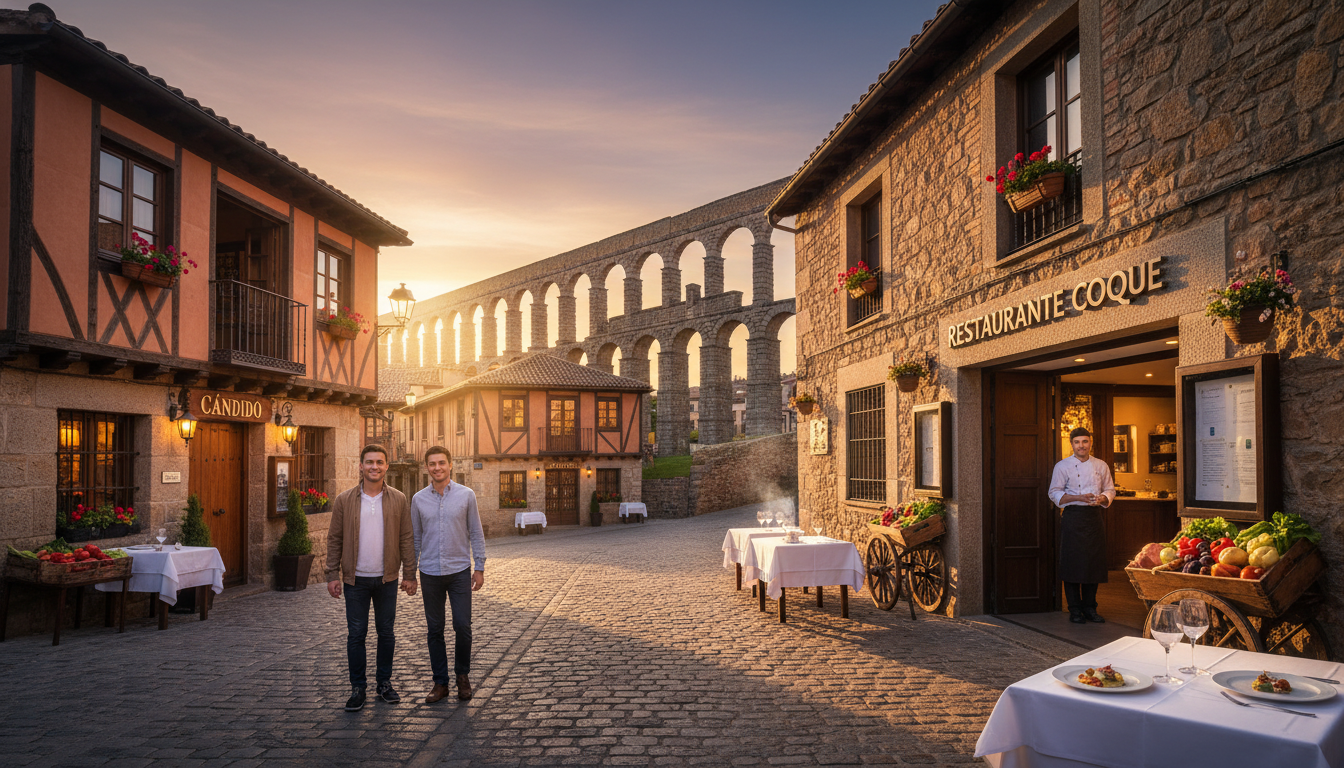
The Iconic Dish You Can't Miss: Cochinillo Asado
Segovia's most famous culinary treasure is cochinillo asado—roast suckling pig so tender it's traditionally cut with the edge of a plate rather than a knife. This Castilian speciality has been perfected in the city's historic mesones over centuries, with recipes passed down through generations. The piglets are slow-roasted in wood-fired brick ovens until the skin becomes impossibly crispy while the meat stays succulent. Restaurants like Mesón de Cándido, housed in a 15th-century building near the Roman aqueduct, and Casa Duque on Calle Cervantes have built their reputations on this single dish.
While cochinillo is available year-round, locals say the best time to enjoy it is during the cooler months from October through March, when the hearty dish feels especially satisfying after a day exploring Segovia's windswept plazas and fortress walls. Most traditional restaurants serve the dish as a set menu item, and it's substantial enough to be your main meal of the day. If you're staying overnight in Segovia—which gives you the luxury of a leisurely lunch followed by an evening stroll—you'll have time to work up an appetite again for dinner at one of the city's lighter, more contemporary eateries.
Traditional Mesones in the Old Town
The mesón is Segovia's defining dining format—a rustic, wood-beamed tavern built around a roaring oven—and the Old Town has three institutions worth knowing. Mesón de Cándido sits directly beneath the Roman Aqueduct in a 15th-century building and is the name every guidebook prints; the cochinillo is genuine, though the dining rooms move fast and you're paying a premium for the setting. Casa Duque on Calle Cervantes bills itself as the oldest mesón in the city, founded in 1895, and serves its suckling pig alongside judiones de La Granja, the fat local butter beans stewed with chorizo. Reserve either for a weekend lunch and expect to pay roughly $40–$50 for the pig as a set course.
Locals, though, tend to send visitors to José María on Calle Cronista Lecea, a short walk off Plaza Mayor. Its kitchen helped standardise the modern cochinillo and consistently turns out the best version in town—ask for the lower dining room, start with a half-portion of judiones, and pair it with a Ribera del Duero from the list under $40. Reservations are essential on weekends and during fiestas; a walk-in at 2:30pm on a Saturday is how people end up eating badly on their one day in Segovia.
Beyond the Pig: Judiones, Lamb and Ponche Segoviano
Cochinillo dominates the menus, but Segovia's table runs deeper. Judiones de La Granja—creamy butter beans grown in the royal town up the hill—are the classic starter, stewed slowly with pork. Cordero asado, wood-roasted lamb, shares equal billing with the pig if you'd rather skip the suckling. Save room for ponche segoviano, the marzipan-topped sponge cake soaked in syrup that every pastelería in town sells by the slice. For something lighter, skip the set menu altogether and crawl the tapas bars around Plaza Mayor and Calle Infanta Isabel, where a caña still comes with a free tapa in many spots—a cheap, mobile alternative to a two-hour mesón lunch.
When and How to Eat Like a Local
Spanish mealtimes run late: lunch, the main event, lands between 2 and 3:30pm, and dinner rarely starts before 9pm. Many family-run restaurants close on Sunday evenings and take a full annual holiday in the back half of August, so check ahead if you're travelling in late summer. A traditional cochinillo lunch is substantial—plan it as your main meal and go lighter in the evening. Staying overnight in Segovia gives you room to do exactly that: a long, unhurried lunch, an afternoon walk to burn it off, and tapas or a modern small-plates dinner once the day-trippers have caught their trains back to Madrid.
Hotels for this trip
Plan your days here
Where to stay: old town, Juderia, or beyond the walls
The old town between Plaza Mayor and the Alcazar is where most first-time visitors should sleep. You wake up two minutes from the cathedral, five from the aqueduct, and you can eat cochinillo at Meson de Candido without worrying about the last bus. Hotels here run from small three-stars on Calle Escuderos to the Parador-adjacent boutique places near Plaza San Martin. Expect noise on weekends when the tapas crawl along Calle Infanta Isabel gets going.
The Juderia, along Calle de la Juderia Vieja and toward the Puerta de San Andres viewpoint, is quieter and cheaper by roughly 15-25%. Families and drivers often prefer Nueva Segovia, south of the aqueduct — flatter, easier parking, and a 10-minute walk into the old town. For a rural stay, La Granja de San Ildefonso puts you next to the royal palace gardens and 20 minutes by bus (line 11 of La Sepulvedana) from central Segovia.
What a room in Segovia actually costs
In the old town, a comfortable three-star double runs 75-110 EUR most of the year, climbing to 130-160 EUR in July, August, Semana Santa and Titirimundi week in mid-May. Four-stars near Plaza Mayor — think Hotel San Antonio el Real or the Parador de Segovia looking back at the city — sit at 120-180 EUR off-peak and 200-260 EUR at the top. The Parador is a 15-minute walk out but has the postcard view of the Alcazar.
Budget travellers do well in Nueva Segovia and along the Carretera de Villacastín, where clean two-stars and hostales start at 45-60 EUR in February and November. La Granja and Pedraza have small rural hotels from 70-95 EUR midweek; both jump on weekends when Madrileños drive up. Note that cochinillo dinner for two at a proper asador costs 55-70 EUR — factor that in, because you are going to eat it at least once.