Segovia in July: summer events, festivals and what to expect in 2026
Hot afternoons, cool stone-walled evenings, La Granja’s fountains at full blast on the 25th, and a city that empties as August nears — here’s how July actually plays out.
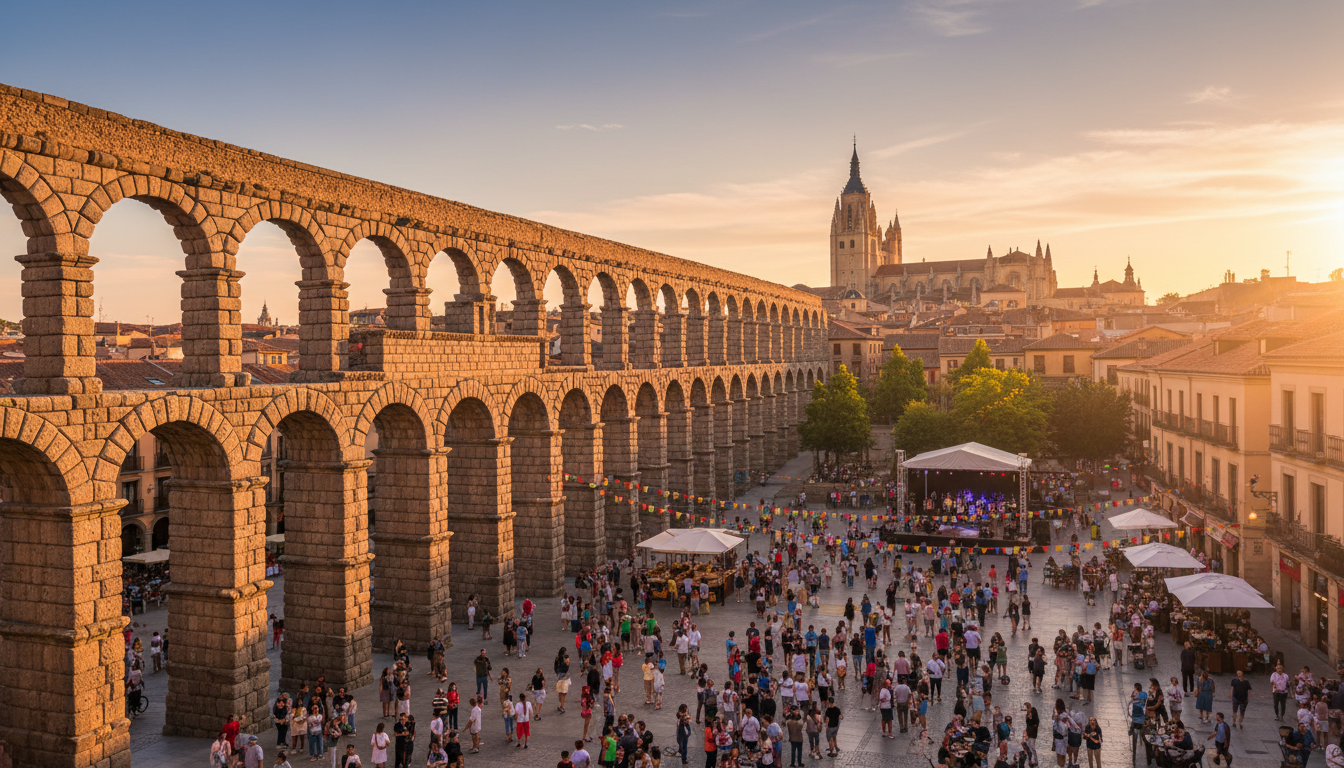
What’s on this July
The single event worth building a day around is the Día de Santiago fountain display at La Granja de San Ildefonso on July 25 — the only date besides May 30 and August 25 when all the palace’s Baroque fountains run together, not just the usual Wednesday/Saturday/Sunday rotation. Go early, parking fills by 11am, garden entry is around $10 and the display runs late afternoon. In the city itself, the big patronal fiestas of San Juan y San Pedro fall in the last week of June, so early-July arrivals catch the tail end — verbenas, brass bands and cheap beer stalls around San Lorenzo and the barrios rather than the tourist core.
Through July the Alcázar and Cathedral run extended summer hours (last entry pushed to 7pm–8pm), and the tourist office sells tickets for evening guided walks of the old town and the Judería when the heat drops. Concerts, open-air cinema and folk performances pop up on Plaza Mayor and in the Jardines del Alcázar most weeks — programmes are posted locally rather than booked months ahead, so check the ayuntamiento boards when you arrive. Note the headline literary event, Hay Festival Segovia, is September, not summer; if someone tells you it’s in July they’re wrong.
The heat, and how to plan around it
July days run 30–36°C, a few degrees cooler than Madrid but still fierce from about 1pm to 6pm. The old town’s granite and narrow streets hold heat, and there’s little shade on the Aqueduct plaza. Locals front-load the day: sights and walking before noon, a long lunch (2–4pm) indoors, siesta, then everything reopens and the terrazas fill from 7pm until well past midnight. Evenings genuinely cool to 15–18°C — bring a light layer even in a heatwave.
For an afternoon escape, the natural pools and shaded picnic areas at Boca del Asno in the Valsaín pine forest are 15 minutes out and run several degrees cooler; bus 691 gets you there for about $3 if you’re carless. Carry water everywhere, wear real sun protection, and don’t schedule the Alcázar tower climb for midday. Weekends bring day-trippers off the AVE from Madrid — the Aqueduct and Plaza Mayor are packed from late morning Saturday and Sunday, so save those for a weekday if you can.
Booking, prices and the August question
July is high season, so hotel rates sit at their annual peak and the well-located places inside or just outside the walls sell out on weekends — book two to three weeks ahead for a Friday or Saturday. Central rooms with air conditioning that actually copes are the ones to prioritise; some historic palacios have weak or no AC, which matters in a 35°C week. A rooftop or courtyard room is worth the premium in summer.
One planning note that saves people from a flat trip: the back half of August, not July, is when Segovia partly shuts. Locals leave, and a number of family-run restaurants close for annual holidays — so if your dates are flexible, late July beats mid-August for having the city fully open. If you’re coming for food, book José María or Villena before you arrive; walk-ins are realistic on a July weekday but not on a fiesta weekend.
Hotels for this trip
Plan your days here
Where to stay: old town, Juderia, or beyond the walls
The old town between Plaza Mayor and the Alcazar is where most first-time visitors should sleep. You wake up two minutes from the cathedral, five from the aqueduct, and you can eat cochinillo at Meson de Candido without worrying about the last bus. Hotels here run from small three-stars on Calle Escuderos to the Parador-adjacent boutique places near Plaza San Martin. Expect noise on weekends when the tapas crawl along Calle Infanta Isabel gets going.
The Juderia, along Calle de la Juderia Vieja and toward the Puerta de San Andres viewpoint, is quieter and cheaper by roughly 15-25%. Families and drivers often prefer Nueva Segovia, south of the aqueduct — flatter, easier parking, and a 10-minute walk into the old town. For a rural stay, La Granja de San Ildefonso puts you next to the royal palace gardens and 20 minutes by bus (line 11 of La Sepulvedana) from central Segovia.
What a room in Segovia actually costs
In the old town, a comfortable three-star double runs 75-110 EUR most of the year, climbing to 130-160 EUR in July, August, Semana Santa and Titirimundi week in mid-May. Four-stars near Plaza Mayor — think Hotel San Antonio el Real or the Parador de Segovia looking back at the city — sit at 120-180 EUR off-peak and 200-260 EUR at the top. The Parador is a 15-minute walk out but has the postcard view of the Alcazar.
Budget travellers do well in Nueva Segovia and along the Carretera de Villacastín, where clean two-stars and hostales start at 45-60 EUR in February and November. La Granja and Pedraza have small rural hotels from 70-95 EUR midweek; both jump on weekends when Madrileños drive up. Note that cochinillo dinner for two at a proper asador costs 55-70 EUR — factor that in, because you are going to eat it at least once.