Every Michelin-star restaurant in Segovia in segovia
Segovia proper currently holds 1 star in the city and a cluster of Bib Gourmand and starred addresses within a 30-minute drive — here are the 10 that matter.
The starred and near-starred, ranked
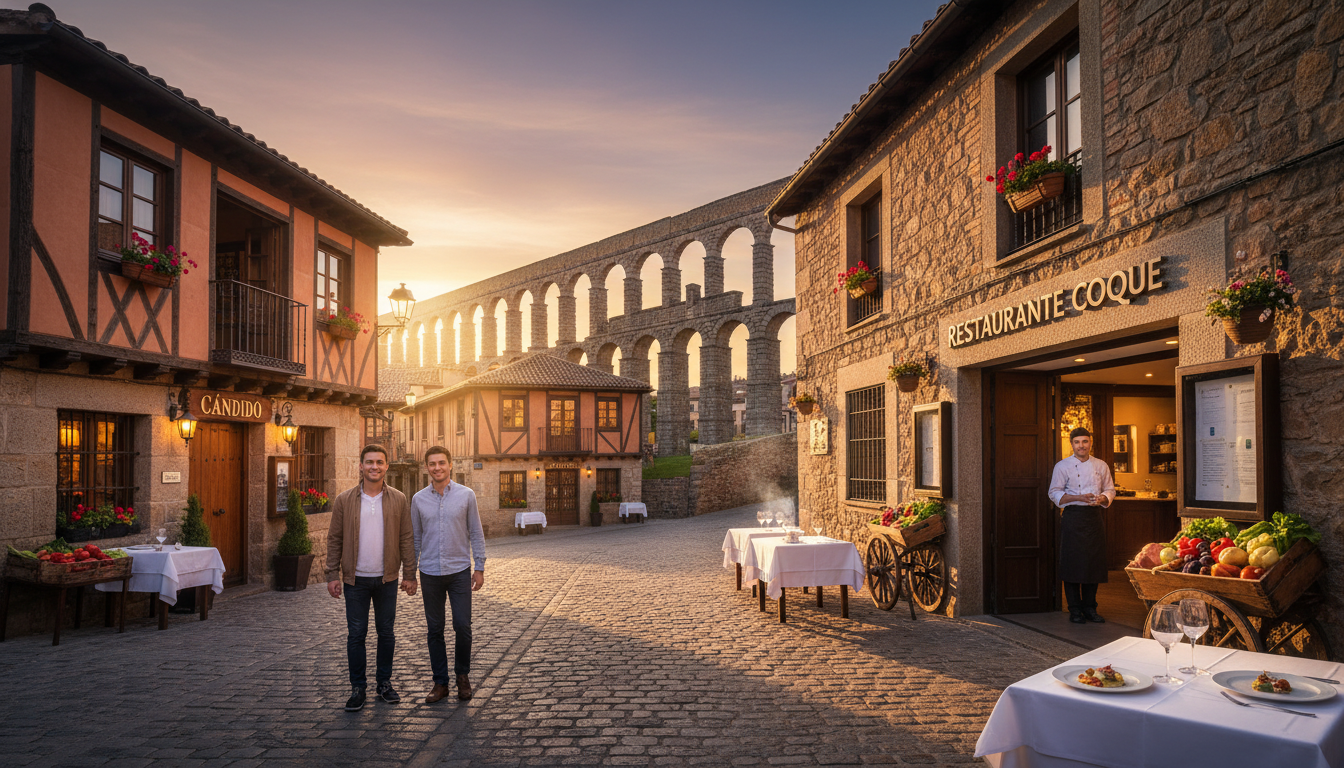
My ranking: 1) Villena (1 Michelin star, Plazuela de los Huertos) — Julio Reoyo's tasting menu at $95–$120 is the city's most ambitious cooking, playful with Castilian roots. 2) José María — no star but consistently the best cochinillo in town, book the lower dining room. 3) Casa Silvano-Maracaibo — modern Segovian, tasting around $70. 4) Mesón de Cándido — the tourist icon under the Aqueduct; the suckling pig is real but service is rushed. 5) Duque, oldest mesón in town, 1895.
Just outside the walls
6) La Portada de Mediodía in San Rafael, 20 minutes by car, refined Castilian at around $60. 7) El Fogón Sefardí inside Hotel La Casa Mudéjar in the Judería — Sephardic-Segovian crossover, menu $45. 8) La Cocina de Segovia at Hotel Los Arcos, reliable for a $50 lunch with Aqueduct views. 9) Claustro de San Antonio el Real — hotel restaurant inside a 15th-century convent, worth it for setting alone. 10) Restaurante Convento de Mínimos, tasting $55, sleeper hit locals actually book.
What's overrated
Cándido is a rite of passage, not a great meal — you’re paying $45 for pig plus $15 in atmosphere tax. Skip it if you’ve already had cochinillo elsewhere. Duque suffers similarly. For a first-time Segovia lunch, book José María's back room, order the half-portion of judiones de La Granja, then the cochinillo, and a bottle of Ribera del Duero from the list under $40. That's the meal people fly in for.
Hotels for this trip
Plan your days here
Cheap hotels in Segovia: how this site works
Segoviahotels is a curated guide to staying in Segovia and the wider province — not just the walled city with its Roman aqueduct and Alcazar, but also La Granja de San Ildefonso at the foot of the Guadarrama, the fortified village of Pedraza, the sandstone gorges of Sepulveda and Hoces del Duraton, and the pinewoods around Valsain. We cover where to sleep, what to see, and what actually rewards a detour once you have ticked off the aqueduct.
We are not the booking engine. When a room looks right, tapping See price hands you to app.impt.io, which aggregates over 8 million hotels at the same price or better than the big-name sites. The twist: every booking made through this site funds one verified tonne of carbon removal, at no extra cost to you. Same room, same price, one tonne of CO2 permanently removed. That is the whole model.
Where to stay: old town, Juderia, or beyond the walls
The old town between Plaza Mayor and the Alcazar is where most first-time visitors should sleep. You wake up two minutes from the cathedral, five from the aqueduct, and you can eat cochinillo at Meson de Candido without worrying about the last bus. Hotels here run from small three-stars on Calle Escuderos to the Parador-adjacent boutique places near Plaza San Martin. Expect noise on weekends when the tapas crawl along Calle Infanta Isabel gets going.
The Juderia, along Calle de la Juderia Vieja and toward the Puerta de San Andres viewpoint, is quieter and cheaper by roughly 15-25%. Families and drivers often prefer Nueva Segovia, south of the aqueduct — flatter, easier parking, and a 10-minute walk into the old town. For a rural stay, La Granja de San Ildefonso puts you next to the royal palace gardens and 20 minutes by bus (line 11 of La Sepulvedana) from central Segovia.
What a room in Segovia actually costs
In the old town, a comfortable three-star double runs 75-110 EUR most of the year, climbing to 130-160 EUR in July, August, Semana Santa and Titirimundi week in mid-May. Four-stars near Plaza Mayor — think Hotel San Antonio el Real or the Parador de Segovia looking back at the city — sit at 120-180 EUR off-peak and 200-260 EUR at the top. The Parador is a 15-minute walk out but has the postcard view of the Alcazar.
Budget travellers do well in Nueva Segovia and along the Carretera de Villacastín, where clean two-stars and hostales start at 45-60 EUR in February and November. La Granja and Pedraza have small rural hotels from 70-95 EUR midweek; both jump on weekends when Madrileños drive up. Note that cochinillo dinner for two at a proper asador costs 55-70 EUR — factor that in, because you are going to eat it at least once.
Getting around and when to go
From Madrid, the Avant high-speed train from Chamartin reaches Segovia-Guiomar in 27 minutes for about 13 EUR one way; urban bus 11 then covers the 6 km to the aqueduct for 2 EUR. The slower Cercanias-style regional train (1h 55min, around 9 EUR) arrives at the central Segovia station, five minutes from the aqueduct on foot. Driving from Madrid via the AP-6 and AP-61 takes roughly 75 minutes with tolls.
April-May and late September-October are the best combination of weather and price: dry, 15-22 C, and no coach tours blocking the aqueduct at midday. July and August are hot (mid-30s) and the old town empties by 3 pm siesta. Winter is cold — Segovia sits at 1,000 m and gets frost — but January and February are when you get the aqueduct almost to yourself and rooms dip below 60 EUR. Time a visit around San Frutos (25 October) or the Hay Festival in late September only if you book six weeks ahead.